
Thinking about buying a Ford with the 1.6 TDCi, or already own one and want to know what you're really dealing with? You've probably found the same thing everyone else does, a forum thread full of usernames arguing with each other, a glowing car review that never mentions reliability, or a listings page that tells you nothing useful at all.
Here's the answer those pages don't give you: the Ford 1.6 TDCi isn't one engine, it's two, with genuinely different reliability records. Treating every 1.6 TDCi the same is where most of the confusion online actually comes from.
This guide breaks it down properly, by engine generation, by mileage, by common fault, and by what to actually check before you buy or before your next service.
Is the Ford 1.6 TDCi a Reliable Engine?
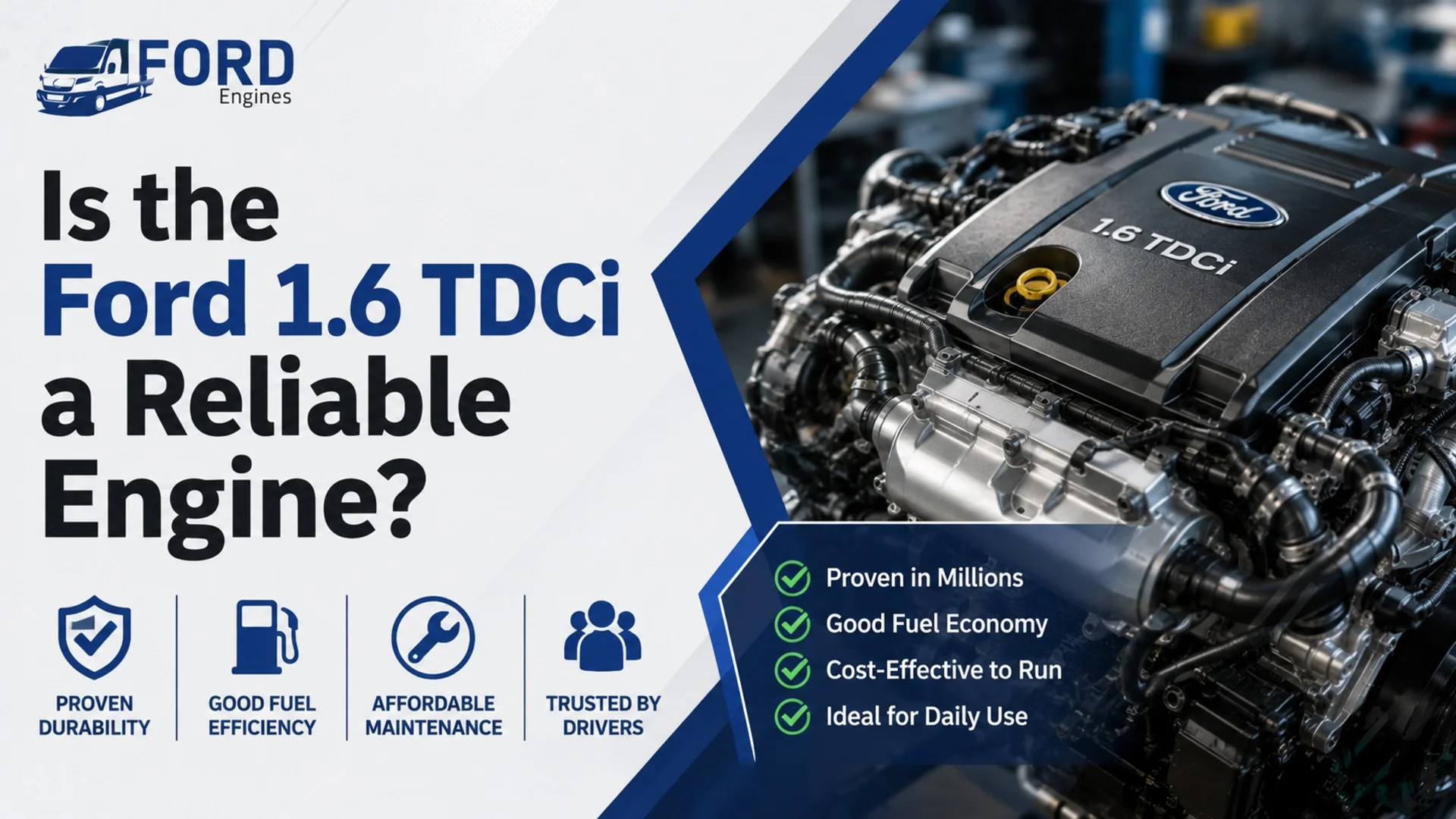
The honest answer is: it depends which version you're talking about. The Ford 1.6 TDCi went through a significant design change during its production life, and that change matters more to reliability than almost anything else on this list.
Ford 1.6 TDCi Reliability by Engine Generation
The 1.6 TDCi was developed jointly with PSA (Peugeot Citroën), and shares its roots with the 1.6 HDi/DV6 engine family. Across its lifespan, Ford used two distinct valve configurations, and they don't have the same reputation.
Early 16-Valve vs Later 8-Valve 1.6 TDCi, Which Is More Reliable?
- Early 16-valve 1.6 TDCi, generally associated with more turbo-related issues, particularly around carbon buildup restricting oil flow to the turbocharger. These earlier units tend to come up more often in reliability discussions when it comes to turbo failure.
- Later 8-valve 1.6 TDCi, widely considered the more dependable version of the two, with fewer widespread turbo lubrication issues, though injector, DPF, and drivetrain concerns still apply regardless of which version you're driving.
If you're looking at a used Ford Focus, Fiesta, C-Max, Mondeo, or B-Max with a 1.6 TDCi, checking which specific engine variant is fitted is one of the most useful things you can do before making a decision, the engine code on your V5C or logbook will confirm exactly which version you're dealing with.
How Long Does a Ford 1.6 TDCi Engine Last?
With proper maintenance, a well-cared-for 1.6 TDCi can realistically cover well over 150,000 miles, and many go significantly further. But the real driver of longevity isn't the number on the odometer, it's service history.
1.6 TDCi Reliability by Mileage, Under 100k to 200k+
Mileage Range | What to Expect |
| Under 100,000 miles | Generally low risk if serviced correctly; focus on confirming maintenance history |
| 100,000–150,000 miles | Turbo, injector, and DPF components start becoming more relevant checkpoints |
| 150,000–200,000 miles | Timing belt history becomes critical; clutch and dual-mass flywheel wear more likely |
| Over 200,000 miles | Entirely possible with strong service history, but expect closer inspection of turbo, injectors, and drivetrain components |
A 1.6 TDCi with 180,000 miles and a full, consistent service history is often a safer bet than one with 60,000 miles and no paperwork to back it up. Mileage alone tells you far less than most buyers assume.
Does Driving Style Affect 1.6 TDCi Reliability?
Yes, significantly, and this is one of the most overlooked factors in 1.6 TDCi reliability discussions. Diesel engines, and the 1.6 TDCi in particular, are genuinely better suited to regular longer journeys than short, stop-start urban driving.
Motorway driving lets the engine reach and sustain proper operating temperature, which supports healthy DPF regeneration and reduces the kind of carbon buildup that contributes to turbo problems. A 1.6 TDCi doing mostly short school-run journeys faces a fundamentally different wear pattern to one doing regular longer commutes.
What Are the Most Common Ford 1.6 TDCi Problems?
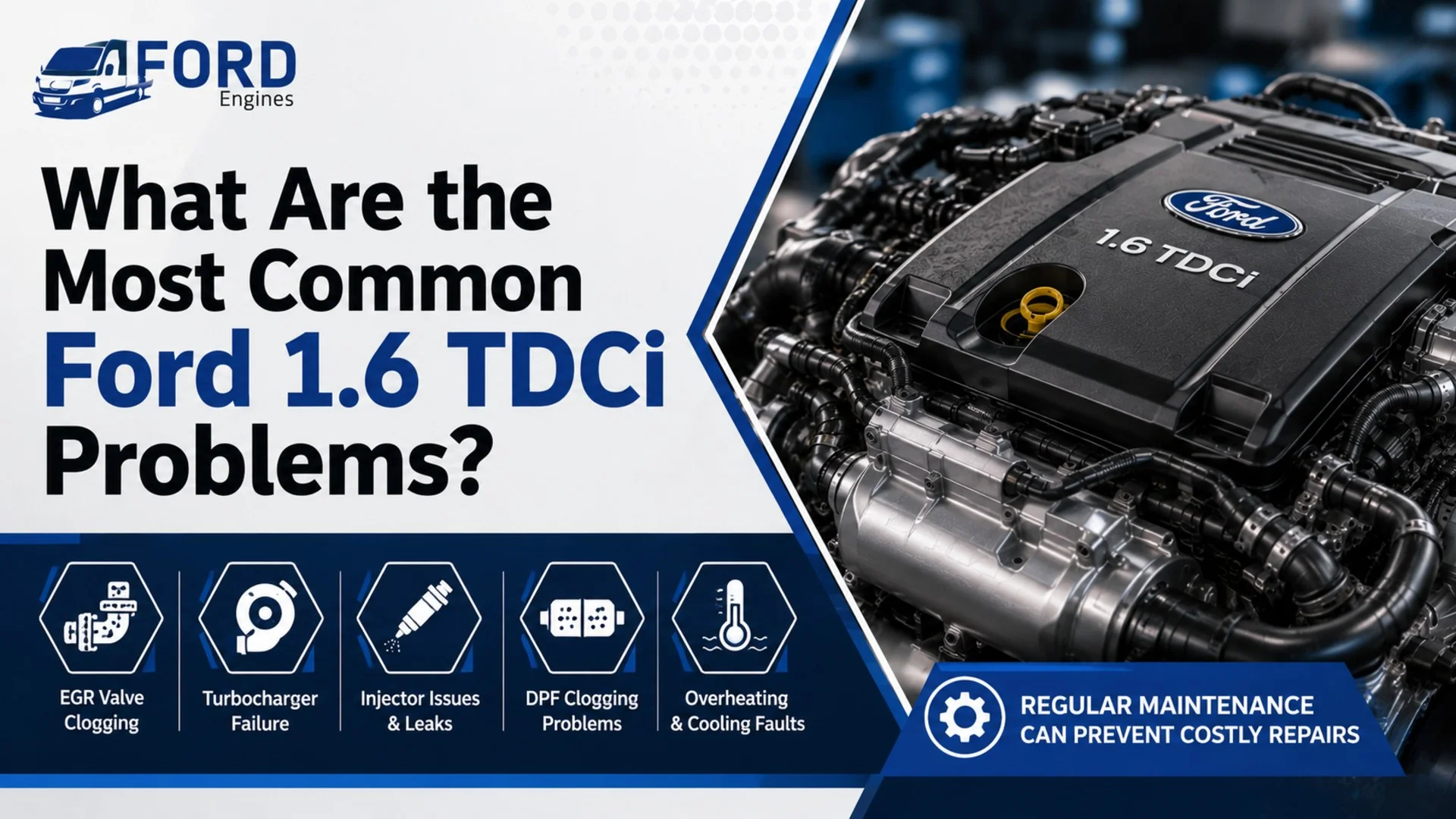
Every engine has weak points, and the 1.6 TDCi is no exception. Here's what actually shows up most often, and why.
Ford 1.6 TDCi Turbo Problems, Causes & Warning Signs
Turbo failure is one of the most discussed 1.6 TDCi problems, particularly on earlier 16-valve units, and it rarely happens without warning if you know what to look for.
Common turbo failure symptoms include:
- Whining or whistling noises under acceleration
- Loss of power or sluggish acceleration
- Excessive smoke, particularly blue or black smoke from the exhaust
- Oil consumption without an obvious external leak
How Carbon Buildup Leads to Turbo Oil Starvation and Failure
This is worth understanding properly, because it explains why turbo failures happen in the first place rather than just listing symptoms.
The sequence typically runs like this: carbon buildup and engine sludge accumulate within the oil supply pipe feeding the turbocharger. This restricts oil flow to the turbo bearings. With reduced lubrication, the turbo begins running without adequate oil supply, oil starvation. Over time, this damages the turbo's internal bearings, and in more serious cases, debris or oil contamination from a failing turbo can even work its way into the engine itself.
Regular oil changes, using the correct specification of oil, are the single biggest factor in preventing this chain of events from starting.
Ford 1.6 TDCi Injector Problems
The 1.6 TDCi uses a common-rail diesel fuel system, and its injectors, sometimes piezo-type depending on the specific variant, can develop faults over time. Common injector-related issues include:
- Rough idling or a noticeably uneven engine note
- Difficult starting, particularly in colder weather
- Reduced fuel economy
- Injector seal leaks, sometimes visible as fuel staining around the injector area
- Engine management light triggered by injector correction values falling outside normal range
Injector faults are diagnosed properly through a scan reading injector correction values, rather than guesswork, worth insisting on if you're troubleshooting a rough-running 1.6 TDCi.
Ford 1.6 TDCi DPF & EGR Problems
The diesel particulate filter and EGR valve are both emissions components that catch out a lot of 1.6 TDCi owners, particularly those doing predominantly short journeys.
Why Short Journeys Cause DPF Blockage
The DPF captures soot from the exhaust and needs to reach a high enough temperature periodically to burn that soot off, a process called regeneration. Short, low-speed urban journeys often don't give the engine enough time to reach and sustain that temperature, so soot keeps accumulating without being cleared. Over time, this leads to DPF restriction, a warning light, reduced performance, and in some cases, limp mode.
The EGR valve, meanwhile, can develop its own carbon buildup over time, particularly under the same short-journey driving pattern, which can affect performance and trigger its own fault codes.
Ford 1.6 TDCi Timing Belt, Clutch & Flywheel Weaknesses
A few other components are worth flagging specifically:
- Timing belt (cambelt), the 1.6 TDCi uses a timing belt rather than a chain, and missing the recommended replacement interval risks serious engine damage if the belt fails
- Clutch, can wear faster than expected on higher-mileage examples, particularly those used for a lot of stop-start driving
- Dual-mass flywheel, a known wear item on many diesel engines including the 1.6 TDCi, often flagged by a rattling noise at idle or during gear changes
What to Check Before Buying a Used Ford 1.6 TDCi

Buying a used 1.6 TDCi without checking the right things is how people end up with an expensive turbo or DPF repair within months. Here's what a proper inspection actually looks like.
Used 1.6 TDCi Inspection Checklist, Cold Start to Diagnostic Scan
Work through these checks in order, ideally with the engine cold at the start:
- Cold start, listen for how easily the engine starts and whether it runs smoothly from the first few seconds
- Smoke inspection, check for excessive blue, black, or white smoke during startup and under acceleration
- Turbo noise, listen for whining or whistling under load, which can indicate early turbo wear
- Injector correction values, ask for a diagnostic scan, or arrange one, to check these are within normal range
- DPF status, check current DPF condition and ask about regeneration history
- EGR operation, check for any related fault codes or performance symptoms
- Oil leaks, inspect around the turbo, oil cooler, and engine block for any signs of leaking
- Timing belt history, confirm when it was last replaced and at what mileage
- Service records, a full, consistent service history matters more than almost anything else on this list
- Clutch and gearbox behaviour, check for smooth engagement and no unusual noises during gear changes
- Diagnostic scan, a full scan for stored or pending fault codes gives you the clearest picture of the car's actual condition
Service History, Timing Belt Records & DPF Regeneration History
If a seller can't produce a service book, timing belt replacement record, or any information about DPF regeneration history, treat that as a genuine red flag rather than a minor gap in paperwork. These three records tell you more about the real condition of a 1.6 TDCi than a test drive ever will.
Warning Signs to Walk Away From
Some issues are worth being firm about:
- Excessive smoke that doesn't clear after a few seconds of driving
- A turbo whine that's clearly audible under normal acceleration
- Multiple stored fault codes the seller can't explain
- No service history at all, particularly on a higher-mileage example
- Evidence of a recent DPF or turbo replacement without a clear explanation of why
Ford 1.6 TDCi vs Other Ford Diesel Engines
If you're weighing up whether the 1.6 TDCi is the right choice compared to alternatives, here's a general comparison to work from.
1.6 TDCi vs 2.0 TDCi vs 1.6 HDi, Which Is More Reliable?
Engine | General Reliability Notes |
| 1.6 TDCi (8-valve) | Generally considered the more dependable 1.6 TDCi variant |
| 1.6 TDCi (16-valve) | More associated with turbo/carbon buildup issues on earlier examples |
| 2.0 TDCi | Larger capacity, generally robust, though with its own specific wear points |
| 1.6 HDi | Closely related to the 1.6 TDCi through the shared PSA partnership, with broadly similar characteristics and failure patterns |
None of these engines are without their weak points, the right choice usually comes down to your specific driving pattern, budget, and how well a particular used example has been maintained, rather than one engine being universally "better" than another.
How to Improve Ford 1.6 TDCi Reliability & When You Need Repair
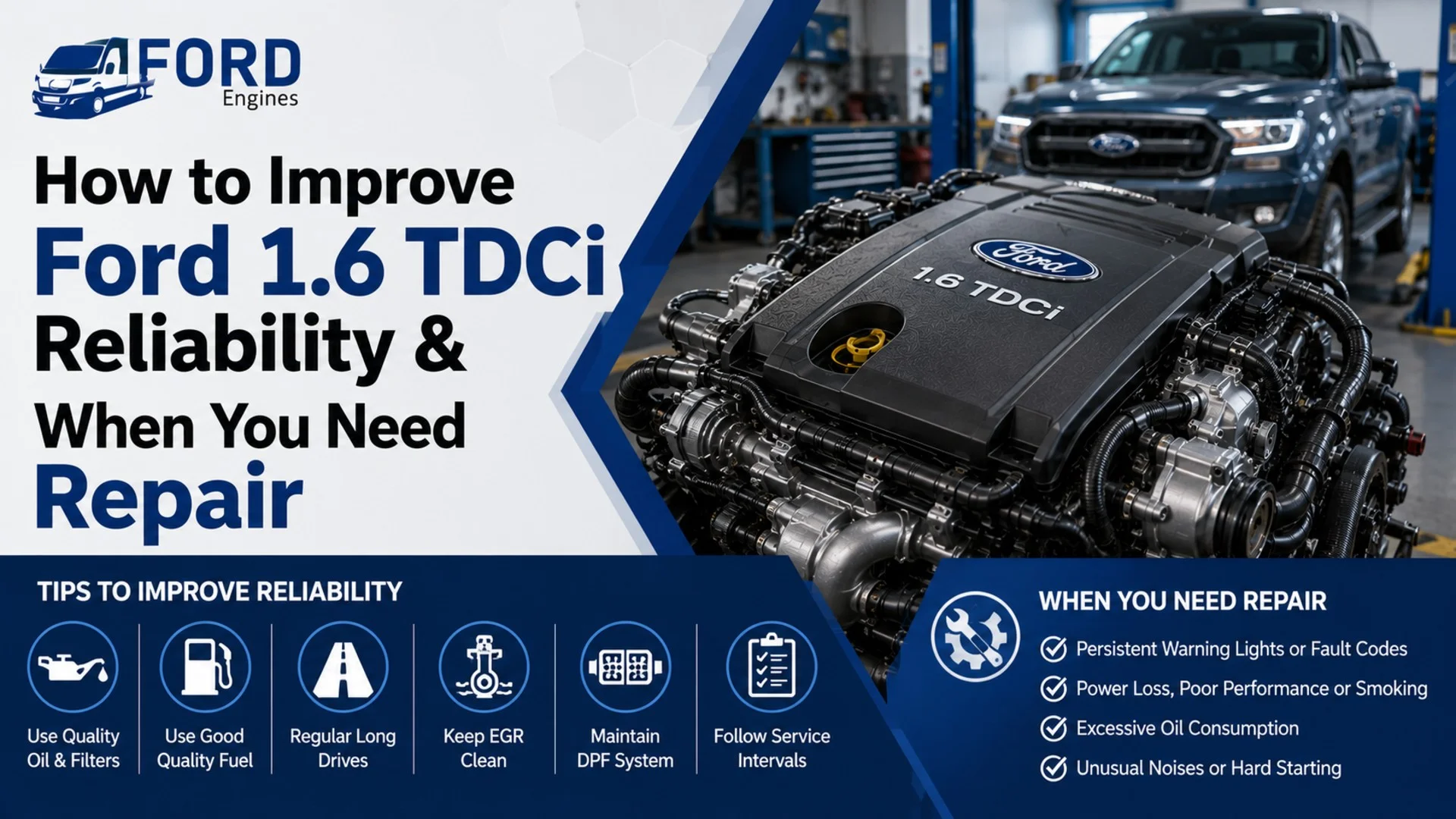
Whether you're already driving a 1.6 TDCi or about to buy one, there's a lot you can do to keep it running reliably for the long haul.
Preventative Maintenance, Oil Changes, Servicing & Timing Belt Intervals
Consistent, correct maintenance is genuinely the biggest factor separating a 1.6 TDCi that lasts 250,000 miles from one that needs an engine replacement at 100,000. Priorities include:
- Regular oil changes using the correct specification of oil for your specific engine variant
- Sticking to the recommended service schedule, rather than stretching intervals to save money short-term
- Replacing the timing belt on schedule, since a snapped belt can cause catastrophic engine damage
- Using quality diesel fuel from reputable filling stations to reduce fuel system contamination risk
How to Prevent Turbo and DPF Failure
A few specific habits make a real difference:
- Allow the turbo to cool briefly after hard or sustained driving before switching off the engine, rather than shutting down immediately
- Try to include regular longer journeys in your driving pattern, even occasionally, to support proper DPF regeneration
- Don't ignore a DPF warning light, early attention is far cheaper than a full blockage
- Keep oil changes on schedule specifically to protect the turbo's oil supply from the sludge buildup that leads to oil starvation
When Does a 1.6 TDCi Need Engine Replacement or Repair?
Not every problem calls for a full engine replacement, but knowing the difference matters. A repair, such as a turbo replacement, injector service, or DPF clean, is usually the right call when the fault is isolated to a specific component. A full engine replacement or rebuild becomes the more sensible option when there's significant internal damage, for example, if turbo failure has already led to debris contamination inside the engine itself.
Diagnosing Fault Codes and Warning Lights Properly
If your 1.6 TDCi throws a warning light or goes into limp mode, a proper diagnostic scan is the only reliable way to know what's actually wrong. Fault codes point toward specific systems, fuel injection, EGR, DPF, turbo boost pressure, and more, and guessing based on symptoms alone often leads to replacing the wrong part first.
Get Your Ford 1.6 TDCi Diagnosed by a Specialist
If you're seeing any of the symptoms covered in this guide, turbo noise, DPF warnings, rough running, or a warning light that won't clear, getting a proper diagnostic scan and inspection from someone who genuinely understands this engine is the fastest way to know exactly what you're dealing with, rather than guessing or replacing parts unnecessarily.
Reconditioned & Replacement 1.6 TDCi Engines
In cases where a 1.6 TDCi has suffered significant internal damage, a reconditioned or replacement engine can be a more cost-effective route than a full rebuild, particularly on higher-mileage vehicles. FordEngines supplies and fits reconditioned 1.6 TDCi engines, giving you a clear, straightforward path back to a reliable vehicle without the ongoing risk of repeated repairs.
Frequently Asked Questions About Ford 1.6 TDCi Reliability
Is the Ford 1.6 TDCi a good engine?
Generally, yes, particularly the later 8-valve version, which has a stronger reliability reputation than the earlier 16-valve variant. With proper maintenance, both versions can cover significant mileage reliably.
How many miles can a 1.6 TDCi do?
Well-maintained examples regularly cover 150,000–200,000 miles, and many go further still. Service history matters more to longevity than the mileage figure alone.
What are the most common 1.6 TDCi problems?
Turbo failure (particularly on earlier 16-valve units), injector faults, DPF blockage, EGR carbon buildup, timing belt failure if replacement is missed, and dual-mass flywheel wear are among the most commonly reported issues.
Why does the 1.6 TDCi turbo fail?
Carbon buildup and sludge can restrict oil flow to the turbocharger, leading to oil starvation and eventual bearing damage. Regular oil changes with the correct oil specification are the main preventative measure.
Does the 1.6 TDCi have DPF problems?
It can, particularly on vehicles used mostly for short journeys, since the DPF needs sustained higher engine temperatures to regenerate properly and clear accumulated soot.
Is the 8-valve or 16-valve 1.6 TDCi more reliable?
The 8-valve version is generally considered more reliable, with fewer widespread turbo-related issues compared to the earlier 16-valve variant, though other common faults like injector and DPF issues can affect both.
How often should a 1.6 TDCi be serviced?
Following the manufacturer's recommended service schedule is important, with particular attention to oil change intervals and timing belt replacement timing, since both directly affect long-term reliability.
Is a 1.6 TDCi suitable for short journeys?
It's not ideal. Frequent short, low-speed journeys can prevent proper DPF regeneration and contribute to carbon buildup, both of which increase the risk of the common problems covered in this guide.
Get an Honest Assessment of Your Ford 1.6 TDCi
The Ford 1.6 TDCi can be a genuinely dependable engine, but only when you understand which version you're dealing with, keep on top of maintenance, and catch warning signs early rather than hoping they resolve themselves.
Whether you're trying to decide if a used 1.6 TDCi is worth buying, dealing with a turbo or DPF warning light, or facing a bigger repair decision, getting a proper diagnostic assessment from a specialist who understands this engine's specific weak points makes all the difference. Get in touch with FordEngines for a diagnostic check, repair quote, or advice on reconditioned engine options, straightforward answers, no guesswork.