
There's a moment every Ford Focus diesel owner dreads, the engine warning light flickers on, there's a new knocking sound under the bonnet, or a garage tells you the 1.6 TDCi needs more than just a service. Suddenly you're facing a decision that feels bigger than it should: repair it, rebuild it, or replace it entirely.
The good news is that the 1.6 TDCi is one of the most widely used and well-understood diesel engines on UK roads. That means its common problems, realistic lifespan, and replacement options are all well documented, you don't have to guess. This guide covers everything from the technical specs to what actually goes wrong, and what your options genuinely are when it does.
Ford Focus 1.6 TDCi Engine Specifications and Reliability
Before deciding what to do about a problem engine, it helps to understand exactly what you're dealing with, because the 1.6 TDCi isn't actually a Ford-designed engine at all.
Is the Ford Focus 1.6 TDCi Reliable?
Generally, yes, with some important caveats. The 1.6 TDCi has a solid reputation for reliability when it's properly maintained, particularly around oil changes and timing belt intervals. Where it develops a poorer reputation is in cars that have been neglected: skipped services, ignored warning lights, and short urban journeys that never let the diesel particulate filter (DPF) regenerate properly.
In other words, the engine's reliability is heavily tied to how it's been treated. A well-serviced 1.6 TDCi with full service history is a genuinely dependable unit. One with a patchy history is far more likely to be the source of expensive problems.
What Is the Lifespan of a 1.6 TDCi Engine?
With regular maintenance, a 1.6 TDCi engine can comfortably reach 150,000 to 200,000 miles, and many well-cared-for examples go further still. The main factors that determine where your engine falls on that range include:
- Oil change frequency, diesel engines are particularly sensitive to oil quality, since contaminated or degraded oil accelerates wear on the turbocharger and internal components
- Timing belt maintenance, a snapped timing belt on this engine causes catastrophic internal damage, since it's an interference engine design
- Driving style, engines driven mostly on motorways tend to fare better than those doing frequent short, cold-start journeys, which strain the DPF and injectors
- DPF condition, a blocked or poorly maintained DPF puts additional strain on the engine and can contribute to reduced performance over time
An engine that's had consistent care will simply outlast one that hasn't, regardless of the badge on the bonnet.
Ford Focus 1.6 TDCi Engine Codes Explained (DV6, DV6TED4, DV6C)
Here's something a lot of owners don't realise: the "Ford" 1.6 TDCi isn't actually a Ford-engineered engine. It's part of the DV6 family, developed jointly through the Ford-PSA partnership and built on Peugeot-Citroën's Duratorq/HDi diesel technology.
You'll commonly see it referred to under a few different codes:
- DV6TED4, one of the earlier common variants, widely fitted across Focus, C-Max, and Fiesta models
- DV6C, a later revision with updates to injection and turbo components
- DV6 (general), the umbrella term covering the engine family across its various revisions
Getting the exact engine code right matters enormously when sourcing a replacement, since even small revisions between codes can affect compatibility with your specific vehicle's mounts, sensors, and wiring loom.
Which Ford, Peugeot, Citroën, Volvo & Mazda Models Share This Engine?
Because the DV6 was a joint development, it ended up powering a wide range of vehicles beyond the Focus:
Manufacturer | Models Using the DV6/1.6 TDCi Family |
| Ford | Focus, Fiesta, C-Max, Transit Connect |
| Peugeot | 307, 308 |
| Citroën | C4, Berlingo |
| Volvo | C30, S40, V50 |
| Mazda | 3 |
This shared platform is actually good news for owners, it means parts availability, specialist knowledge, and replacement engine supply are all more established than they would be for a manufacturer-exclusive engine.
Power, Torque and Fuel Consumption Figures
Output varies slightly depending on the specific engine revision and model year, but the 1.6 TDCi generally sits in a sensible middle ground, with enough torque for comfortable everyday driving without the higher running costs of a larger diesel. Fuel economy is one of the engine's genuine strengths, which is part of why it remained popular across so many manufacturers for so long. Exact figures for your specific model and year are worth checking against your V5C logbook or Ford's official specifications, since minor revisions across the production run did adjust output slightly.
Common Ford Focus 1.6 TDCi Engine Problems
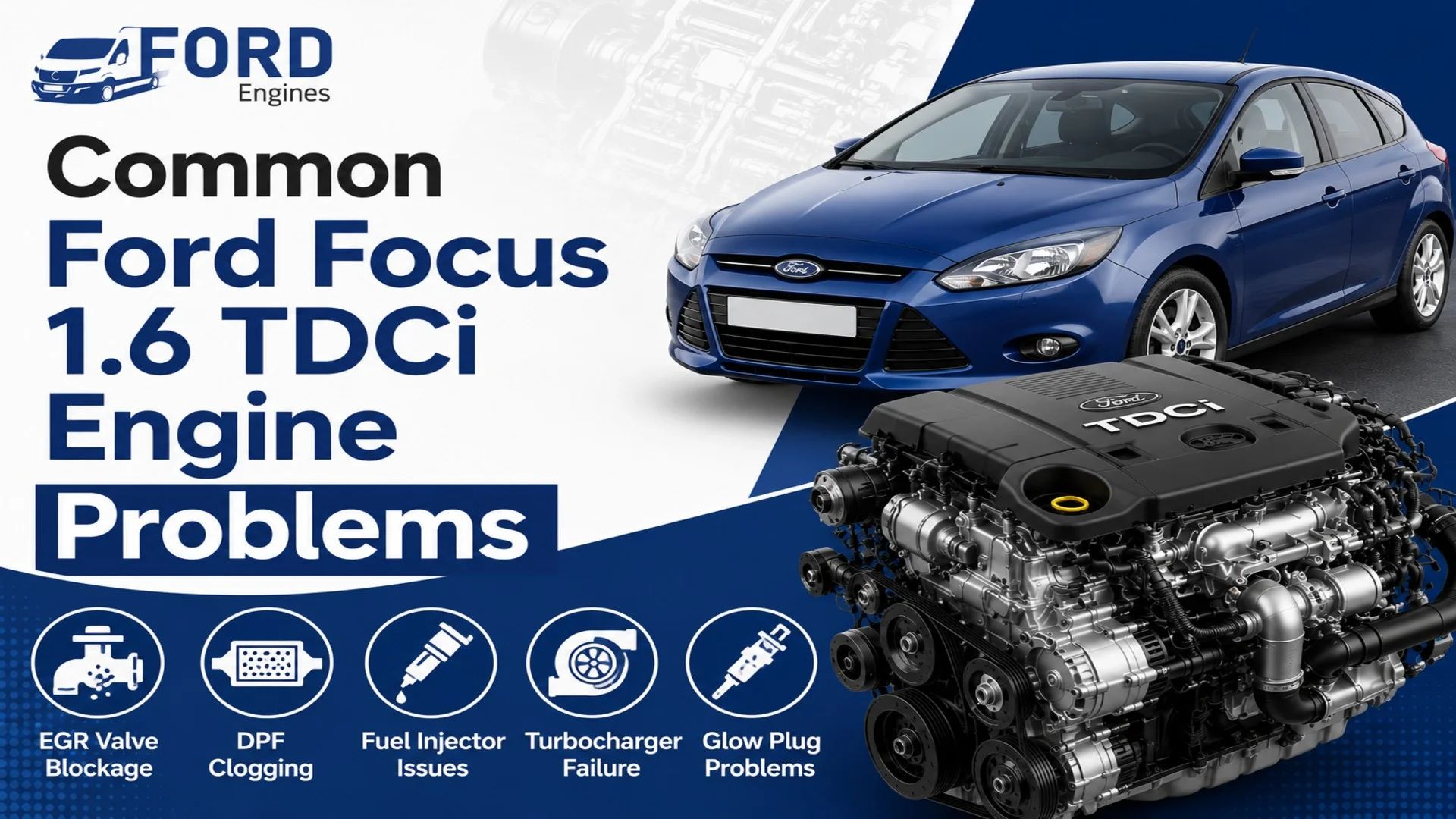
Knowing what typically goes wrong with this engine helps you catch problems early, often the difference between a moderate repair bill and a full engine replacement.
Turbocharger Failure Symptoms
The turbocharger is one of the more common failure points on the 1.6 TDCi, and it rarely fails without warning signs first:
- Loss of power or sluggish acceleration, often the first noticeable symptom
- Whining or whistling noise under acceleration, which changes pitch as boost builds
- Blue or grey smoke from the exhaust, indicating oil is entering the turbo and burning
- Engine warning light, sometimes accompanied by reduced power (limp) mode
Turbo failure is often linked to oil starvation, either from infrequent oil changes or a failing oil feed line, so a turbo problem is sometimes a symptom of a wider maintenance issue rather than an isolated fault.
Fuel Injector Fault Symptoms
The common rail diesel injection system on the 1.6 TDCi is precise, but injectors do wear over time, particularly with poor fuel quality or extended service intervals. Common signs of injector problems include:
- Rough idle or noticeable vibration at low revs
- Engine misfire or hesitation under load
- Increased fuel consumption without an obvious cause
- Diesel smell or visible smoke from the exhaust
- Engine management light with injector-related fault codes
Injector problems are worth addressing promptly, since a failing injector can affect combustion efficiency and, over time, contribute to increased DPF loading.
What Causes DPF Blockage on the 1.6 TDCi?
DPF blockage is one of the most common complaints on this engine, largely because of how many were driven predominantly on short, urban journeys. The DPF needs sustained higher-speed driving to reach the temperature required for passive regeneration, burning off trapped soot automatically. Cars that rarely get this kind of run gradually build up soot until the DPF becomes restricted, triggering warning lights and reduced performance. Regular motorway driving, or an occasional deliberate longer run, goes a long way toward preventing this issue entirely.
Timing Belt Failure and Replacement Intervals
This is arguably the single most important maintenance item on the entire engine. The 1.6 TDCi is an interference engine, meaning that if the timing belt fails, the pistons and valves collide, causing severe, often engine-destroying damage.
Manufacturer-recommended replacement intervals vary depending on model year and usage, but as a general rule, timing belts on this engine should be replaced well within the manufacturer's stated mileage or age interval, whichever comes first, and always alongside the water pump, since it's typically driven by the same belt and replacing them together saves on labour costs down the line.
There is genuinely no room for flexibility on this one. A snapped timing belt is one of the few 1.6 TDCi faults that regularly results in a full engine replacement rather than a repair.
Signs You Need a Replacement Engine
Not every fault means the end of the road, but certain signs point clearly toward needing a full engine replacement rather than a component-level repair:
- A snapped timing belt with confirmed valve or piston damage
- A seized engine, typically from severe oil starvation or catastrophic overheating
- Extensive internal damage found during a mechanic's inspection, affecting multiple components
- A cracked engine block, which generally can't be economically repaired
- Persistent, worsening symptoms despite multiple repairs, suggesting the underlying wear is too extensive to chase component by component
If you're facing repeated repairs that keep addressing symptoms without resolving the root cause, that's usually the clearest sign a replacement engine makes more financial sense than continuing to repair.
Ford Focus 1.6 TDCi Engine Replacement Options
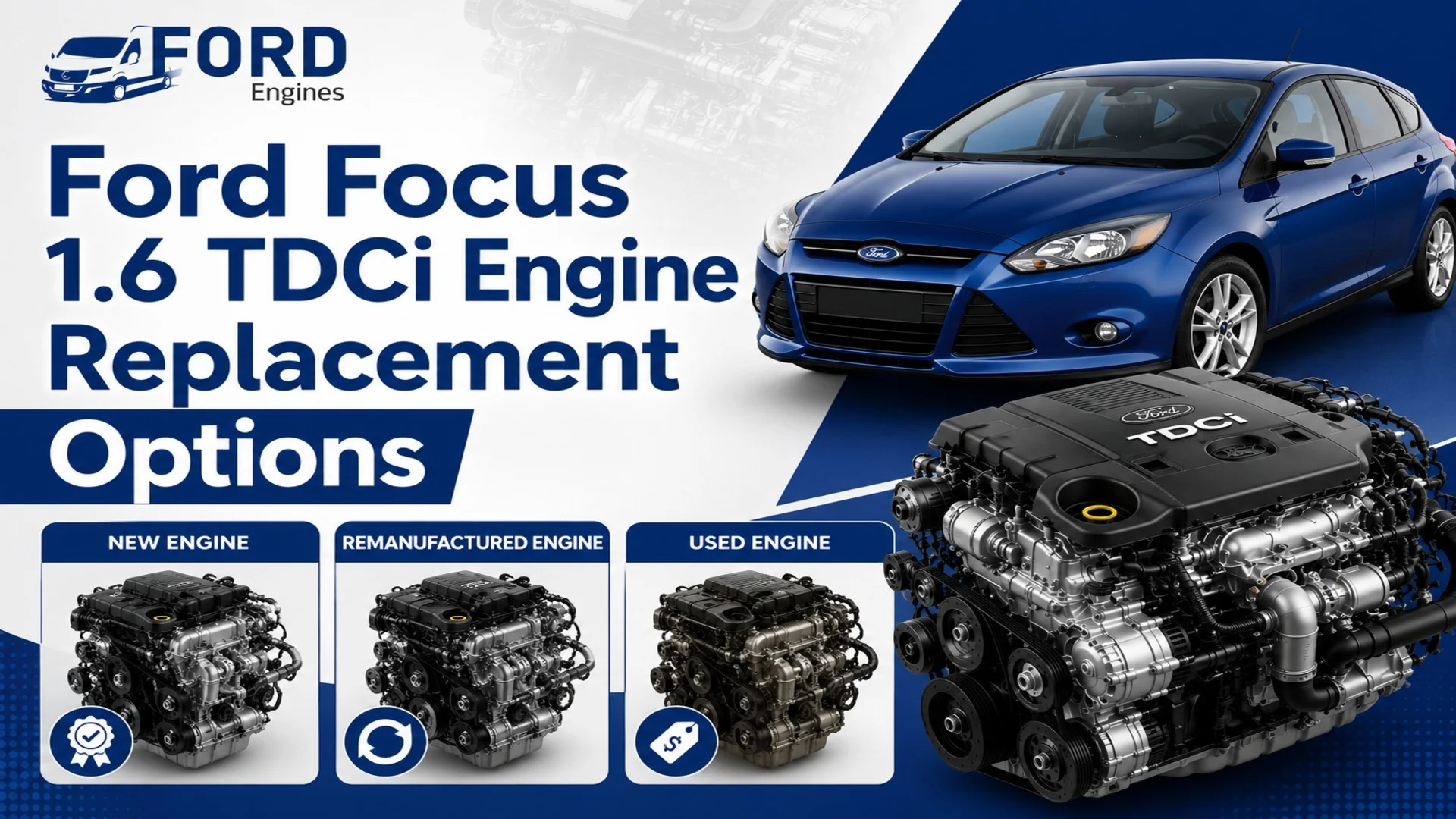
Once you've established that a replacement is genuinely the right call, the next question is which type of replacement engine actually makes sense for your situation.
Used vs Reconditioned vs Rebuilt Engines, Which Should You Choose?
These three terms get used loosely, but they mean genuinely different things, and the differences matter for both cost and peace of mind.
Type | What It Means | Best For |
| Used engine | Sourced from a donor vehicle, tested but not internally rebuilt | Budget-conscious buyers, lower-mileage donor units |
| Reconditioned engine | Stripped, inspected, and had worn components replaced as needed | A middle-ground option balancing cost and reliability |
| Rebuilt engine | Fully stripped and rebuilt with new pistons, rings, bearings, gaskets throughout | Buyers wanting the closest thing to a "new" engine at a lower cost |
| Remanufactured engine | Rebuilt to OEM specification, often with full quality testing and documentation | Buyers prioritising long-term reliability and warranty confidence |
A used engine can be a perfectly sensible choice if it's genuinely low mileage and well-documented, but it carries more uncertainty than a reconditioned or remanufactured unit, since you're relying on the donor vehicle's history rather than a controlled rebuild process.
How Much Does a Ford Focus Engine Replacement Cost?
Costs vary depending on the engine type you choose, the specific engine code, and whether you're paying for supply only or supply-and-fit. As a general pattern:
- Used engines tend to be the most affordable option upfront
- Reconditioned engines sit in the mid-range, reflecting the inspection and part-replacement work involved
- Rebuilt or remanufactured engines cost more, but often come with stronger warranties and greater confidence in long-term reliability
The honest answer is that exact pricing depends on your specific engine code and vehicle, which is why a proper quote based on your registration or VIN gives a far more accurate figure than a generic estimate.
What Warranty Comes With a Replacement Engine?
Warranty coverage varies significantly between suppliers, and it's one of the most important factors to check before committing to a purchase. A reputable supplier should offer:
- A clear warranty period, commonly ranging from a few months up to 12 months, depending on engine type
- Coverage details in writing, exactly what's included, and what would void the warranty (such as fitting by an unapproved installer)
- Parts and labour clarity, some warranties cover parts only, others cover fitting labour too, so it's worth confirming which applies
A rebuilt or remanufactured engine with a solid warranty generally offers more peace of mind than a cheaper used engine with minimal or no warranty backing, worth weighing against the upfront price difference.
Buying and Fitting Your Ford Focus 1.6 TDCi Engine

Getting the right engine is only half the job, making sure it's correctly matched to your specific vehicle, and properly fitted, is what determines whether the replacement actually solves your problem long-term.
How to Match Your Engine Using the VIN and Engine Code
This step is one that's genuinely overlooked by a lot of buyers, and it's a common source of costly mismatches. Your vehicle's VIN (vehicle identification number) and the specific engine code stamped on the block are the two pieces of information that confirm exact compatibility, not just the model and year.
Given how many manufacturers used variations of the DV6 engine family, and given that Ford itself used multiple revisions across the Focus's production run, matching by model name alone isn't reliable enough. Providing your VIN or registration when requesting a quote allows a specialist to confirm the exact engine code your car needs before you commit to a purchase.
What's Included in Our Engine Supply and Fit Service?
A proper supply-and-fit service should go well beyond simply dropping a replacement engine in. It typically includes:
- VIN/engine code verification before the engine is sourced, to guarantee correct fitment
- Full engine removal and installation, carried out by technicians experienced specifically with diesel engine swaps
- Ancillary component transfer or replacement, items like the turbo, injectors, and timing components, depending on condition
- Post-installation testing, including compression checks and a road test to confirm correct operation
- Warranty documentation, so you have clear evidence of coverage from day one
Choosing a specialist who handles both the supply and the fitting reduces the risk of miscommunication between separate suppliers and installers, and gives you a single point of accountability if anything needs addressing afterward.
Get a Quote for Your Ford Focus 1.6 TDCi Engine Today
If your Focus's 1.6 TDCi is showing signs of serious trouble, whether that's turbo failure, injector faults, or confirmation of a snapped timing belt, the most reliable next step is getting an accurate quote based on your specific vehicle, rather than guessing at options. Provide your registration or VIN, and you'll get a clear picture of exactly which engine you need and what it will cost.
Frequently Asked Questions
Is the Ford Focus 1.6 TDCi reliable?
Generally yes, particularly when serviced regularly and the timing belt is replaced within manufacturer intervals. Reliability issues are far more common in neglected examples than well-maintained ones.
What is the lifespan of a 1.6 TDCi engine?
With proper maintenance, 150,000 to 200,000 miles is realistic, with many well-cared-for engines exceeding that range.
How much does a replacement engine cost?
Costs depend on whether you choose a used, reconditioned, rebuilt, or remanufactured engine, plus your specific engine code. An accurate quote requires your vehicle's registration or VIN.
What oil does a 1.6 TDCi use?
The correct specification varies by model year, so always check your owner's manual or confirm with a specialist rather than assuming a generic diesel oil is suitable.
What are common 1.6 TDCi engine problems?
Turbocharger failure, fuel injector faults, DPF blockage, and timing belt-related damage are among the most frequently reported issues.
Is the DV6 engine reliable?
Yes, generally, it's a well-established engine family used across multiple manufacturers, with a solid reputation when properly maintained.
Does the 1.6 TDCi have a timing belt?
Yes, and it's an interference engine, meaning a snapped belt causes serious internal damage rather than the engine simply stopping safely.
When should the timing belt be changed?
Within the manufacturer's stated mileage or age interval, whichever comes first, always alongside the water pump for efficiency.
How long does a turbo last?
With good maintenance and regular oil changes, turbos on this engine can last well over 100,000 miles, though oil starvation significantly shortens their lifespan.
What causes injector failure?
Wear over time, poor fuel quality, and extended service intervals are the most common contributing factors.
Why does my Ford Focus smoke?
Blue or grey smoke often points to a turbo issue letting oil into the combustion process, while black smoke can indicate injector or fuelling problems.
What causes engine knocking?
Often related to worn bearings, low oil pressure, or in more serious cases, internal component damage, worth investigating promptly rather than continuing to drive.
Can a seized engine be rebuilt?
Sometimes, depending on the extent of internal damage, a full inspection is needed to determine whether rebuilding or replacement is the more sensible option.
Is rebuilding cheaper than replacing?
It depends on the extent of the damage. For contained issues, rebuilding can be more cost-effective; for extensive or catastrophic damage, a replacement engine is often the more practical route.
What causes DPF blockage?
Primarily short, low-speed journeys that don't allow the DPF to reach the temperature needed for regeneration, gradually building up trapped soot.
How often should engine oil be changed?
Following the manufacturer's recommended interval is essential for this engine specifically, since diesel components like the turbo are particularly sensitive to oil condition.
What engine code do I have?
Check the code stamped on the engine block itself, or provide your VIN to a specialist who can confirm the exact variant fitted to your vehicle.
Can I fit a used engine?
Yes, provided it's correctly matched to your vehicle's engine code and VIN, verification before purchase is essential to avoid compatibility issues.
What warranty comes with a rebuilt engine?
This varies by supplier, but reputable providers typically offer a defined warranty period covering parts, and sometimes labour, always confirm the specifics in writing before purchasing.
Which Ford models use the 1.6 TDCi?
The Focus, Fiesta, C-Max, and Transit Connect all used variants of this engine, alongside Peugeot, Citroën, Volvo, and Mazda models built on the same DV6 platform.
Get Your Ford Focus 1.6 TDCi Sorted With the Right Engine
A failing 1.6 TDCi doesn't have to mean the end of your Ford Focus. Whether the right move is a targeted repair, a rebuilt unit, or a full replacement engine, the key is getting an accurate diagnosis and a genuinely compatible engine matched to your specific vehicle, not a generic guess based on model and year alone.
If your Focus needs a replacement engine, get in touch with your registration or VIN for an accurate quote, and we'll confirm exactly which engine you need, what it costs, and what warranty comes with it.