
Bought a Ford Ranger with the 2.0 EcoBlue engine, or thinking about it? You've probably already stumbled across a forum thread or two mentioning wet belts, DPF warnings, or someone's Ranger suddenly dropping into limp mode on the motorway. It's enough to make any owner nervous, and it's exactly why "Ford Ranger 2.0 EcoBlue problems" gets searched so often.
Here's the straight answer: the 2.0 EcoBlue is a genuinely capable engine when it's properly serviced, but it does have known weak points, and pretending otherwise wouldn't do you any favours. This guide walks through every major issue owners actually report, what causes each one, how to spot it early, and what to do about it, so you're not left guessing whether that odd noise or warning light is nothing or the start of a very expensive problem.
Is the Ford Ranger 2.0 EcoBlue Engine Reliable?
What Are the Most Common Ford Ranger 2.0 EcoBlue Problems?
Reliability with this engine isn't a simple yes-or-no answer, it depends heavily on how the vehicle has been driven and maintained. A well-serviced Ranger with a clean oil history can rack up serious mileage without drama. One that's missed oil changes, done mostly short trips, or been pushed hard while towing is a different story entirely.
The problems that come up most consistently across owner reports and independent workshops fall into six categories, and they're rarely random, each one tends to follow a fairly predictable cause-and-effect pattern once you understand the engine.
Wet Belt, DPF, EGR, Turbo, Injectors & AdBlue, The Six Weak Points
Rather than treating these as an unrelated list of faults, it helps to see how each system actually breaks down:
- Wet belt/oil system, belt degradation sheds debris, which can block the oil pickup and starve the engine of oil pressure
- DPF (diesel particulate filter), short journeys prevent full regeneration, letting soot build up until the filter restricts exhaust flow
- EGR valve, recirculated exhaust gas deposits carbon over time, eventually restricting valve movement and combustion efficiency
- Turbocharger, boost leaks or actuator wear reduce boost pressure, cutting power and sometimes triggering limp mode
- Injectors, wear or fuel contamination affects spray pattern, leading to misfires and rough running
- AdBlue/SCR system, dosing injector or NOx sensor faults disrupt emissions dosing, triggering warnings and eventually a driving restriction
Each of these has its own detection signs, which we'll break down properly below.
Does the 2.0 EcoBlue Engine Variant (130 / 170 / Bi-Turbo) Affect Reliability?
The 2.0 EcoBlue has been offered in several outputs, single-turbo 130PS and 170PS variants, and a Bi-Turbo version producing more power. The Bi-Turbo setup adds an extra turbocharger stage, which means an additional component that can develop boost-related faults, though the core wet belt, DPF, EGR, and injector risks are shared across all variants. If you're comparing used Rangers, it's worth confirming which specific engine code and output you're looking at, since fault patterns and repair costs can differ slightly between them.
Ford Ranger 2.0 EcoBlue Wet Belt & Oil System Problems
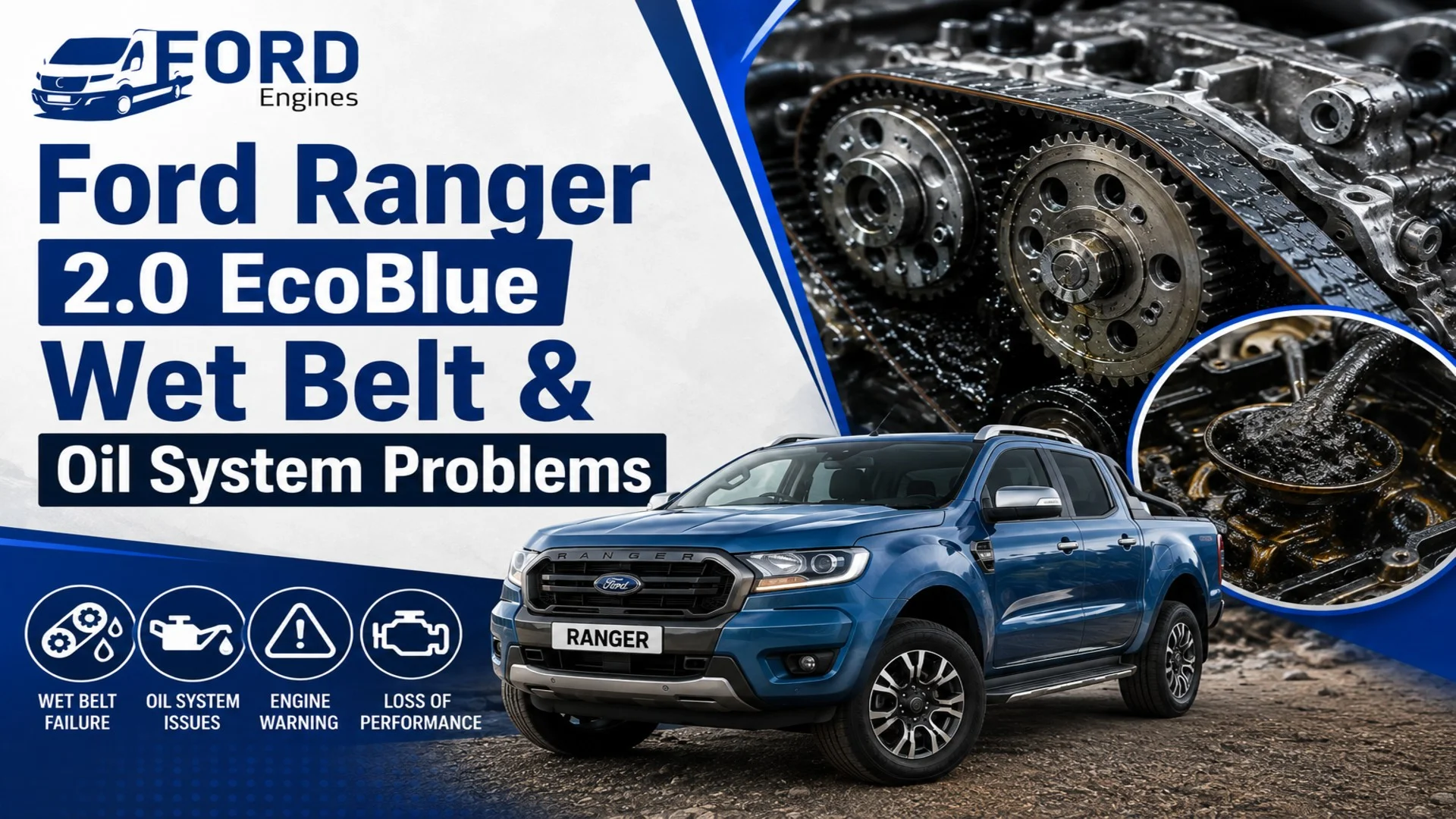
This is the issue that generates the most concern among owners, and for good reason, it has the potential to cause total engine failure if ignored.
What Causes Ford Ranger EcoBlue Wet Belt Failure?
Unlike a traditional external cambelt, the wet belt in the 2.0 EcoBlue runs submerged in engine oil. This belt-in-oil design reduces friction and improves efficiency, but it also means the belt's condition is directly tied to oil quality. Contaminated oil, extended oil change intervals, or the wrong oil specification all accelerate belt degradation.
As the belt wears, small rubber particles begin shedding into the oil. Left unaddressed, this becomes a compounding issue, degraded belt material contaminates the oil further, which in turn speeds up wear on the belt itself.
How Wet Belt Debris Blocks the Oil Pickup and Causes Oil Starvation
This is the part that turns a belt problem into an engine problem. Debris circulating in the oil can settle at the oil pickup or strainer, gradually restricting oil flow. When the pickup becomes sufficiently blocked, oil pressure drops, sometimes suddenly. Since the entire engine relies on consistent oil pressure for lubrication, this kind of restriction can starve bearings, the crankshaft, and the turbocharger of oil, leading to serious internal damage. In the worst cases, this results in complete engine seizure.
What Are the Symptoms of Wet Belt Failure?
Early warning signs are easy to dismiss, which is part of why this issue catches people off guard. Watch for:
- A rattling or ticking noise on cold start that fades once the engine warms up
- The oil pressure warning light illuminating, which should never be ignored
- Metallic or rubber debris visible in the oil during a service or oil change
- Rough running or a misfire that wasn't present before
- A sudden loss of power, which can indicate advancing timing failure
If you notice any combination of these, particularly the oil pressure warning, get the vehicle checked immediately rather than continuing to drive it.
When Should the Ford Ranger Wet Belt Be Replaced?
Replacement guidance for this belt has been revised over time as more data on real-world wear emerged, so relying on an old figure you've seen quoted online isn't reliable. The safest approach is confirming the current interval for your specific engine code and build date, and treating age and mileage as a "whichever comes first" limit rather than assuming you have longer because the mileage is still low. Vehicles used for towing or heavy commercial duty, common with the Ranger, often benefit from earlier inspection rather than waiting for a hard cutoff.
Ford Ranger 2.0 EcoBlue Emissions & Performance Faults
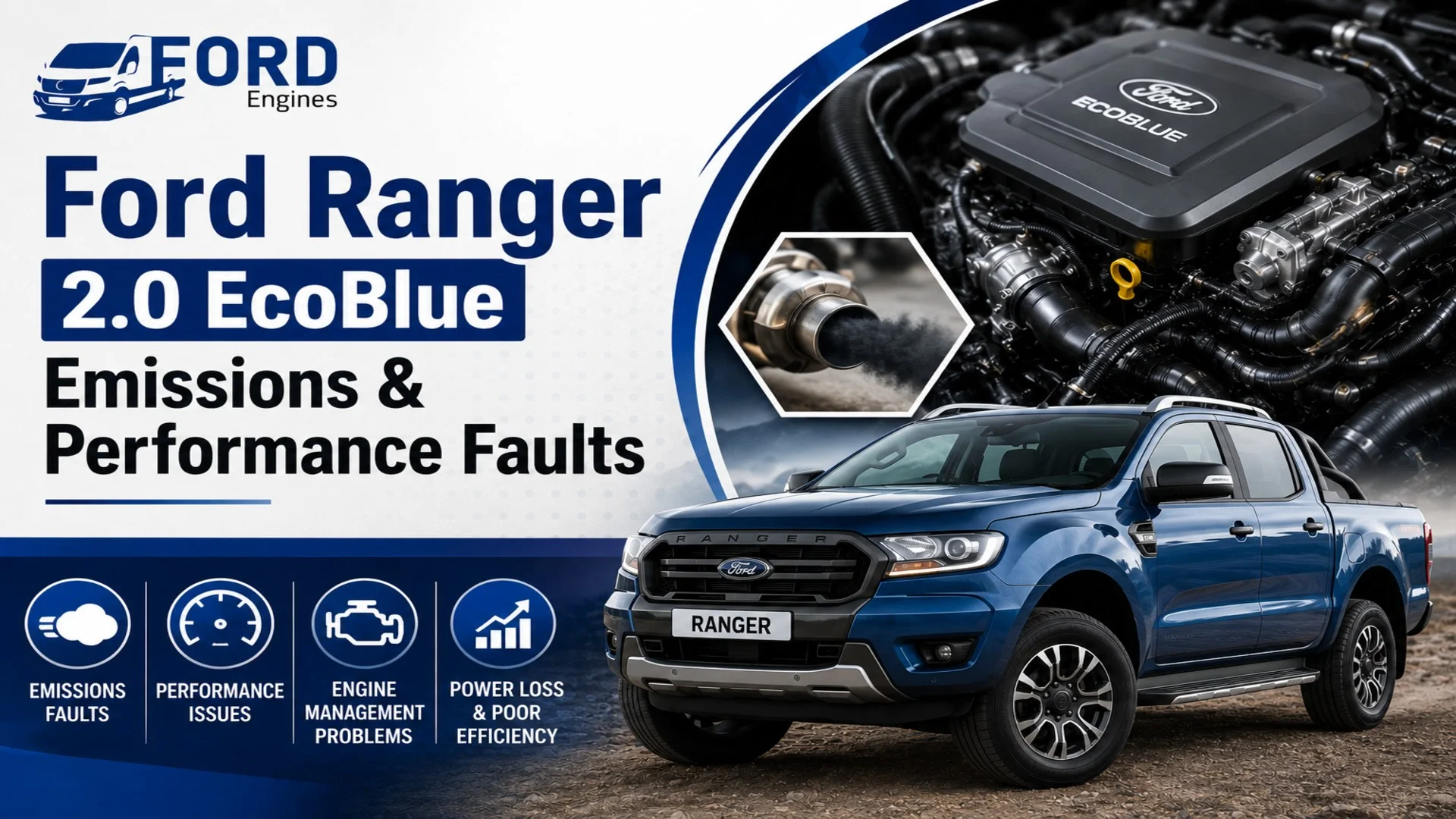
Why Does the Ford Ranger DPF Become Blocked?
The diesel particulate filter traps soot from the exhaust and periodically burns it off through a process called regeneration. This works well on longer drives where the engine reaches operating temperature and stays there. Problems start when a Ranger is used mostly for short trips or low-speed town driving, since the engine rarely gets hot enough for regeneration to complete properly.
Can Short Journeys Cause DPF Regeneration Problems?
Yes, this is one of the most common causes of DPF issues on the 2.0 EcoBlue. Incomplete regeneration allows soot to accumulate faster than it's cleared, gradually restricting exhaust flow. Over time this increases back pressure, reduces engine performance, and can trigger a DPF warning light or force the vehicle into a restricted power mode until the filter is addressed.
What Are the Symptoms of a Faulty EGR Valve?
The EGR (exhaust gas recirculation) valve redirects a portion of exhaust gas back into the engine to reduce emissions. Over time, carbon deposits build up around the valve, restricting its movement. A faulty EGR typically shows up as:
- Rough idle or hesitant acceleration
- A noticeable drop in power
- An illuminated engine warning light
- Increased fuel consumption
- Fault codes relating to EGR position or flow during a diagnostic scan
Left unaddressed, a sticking EGR valve can contribute to poor combustion and, in some cases, further stress on the DPF.
What Causes Ford Ranger 2.0 EcoBlue Turbo Problems?
Turbocharger issues on the EcoBlue usually stem from boost pressure irregularities, either a leak in the intercooler hoses and connections, or wear in the turbo's boost control actuator. Oil contamination from a degrading wet belt can also affect turbo lubrication, which is another reason the oil system issues discussed earlier shouldn't be treated in isolation.
Why Does the Ranger Go Into Limp Mode?
Limp mode is the engine management system's protective response to a detected fault, most commonly linked to low boost pressure, a DPF restriction, an EGR fault, or a sensor reading outside expected range. It deliberately reduces power to protect the engine from further damage while you get it checked. If your Ranger suddenly loses power and feels sluggish, a diagnostic scan is the fastest way to identify which specific system triggered it.
What Are the Signs of Injector Failure on the 2.0 EcoBlue?
The common rail injectors deliver precisely metered fuel into each cylinder, and even small deviations in spray pattern affect how smoothly the engine runs. Signs of injector wear or failure include:
- A rough idle or noticeable vibration at low revs
- Misfiring under load
- Increased fuel consumption without an obvious cause
- Excessive smoke from the exhaust
- An engine warning light with injector-related fault codes
Injector problems are sometimes mistaken for EGR or turbo issues since the symptoms overlap, which is exactly why a proper diagnostic scan matters more than guessing based on symptoms alone.
Why Does the Ranger Show an AdBlue or NOx Sensor Warning?
The Ranger's SCR (selective catalytic reduction) system injects AdBlue into the exhaust stream to neutralise NOx emissions before they leave the tailpipe. A NOx sensor monitors how effectively this is working. Common triggers for AdBlue-related warnings include a faulty dosing injector, a failing NOx sensor, or AdBlue crystallisation within the delivery lines, particularly if the vehicle has sat unused for extended periods. These faults often surface as specific diagnostic codes and, if ignored, the system will eventually restrict engine starting until resolved, so an AdBlue countdown warning shouldn't be left unaddressed.
Buying, Repairing & Maintaining a Ford Ranger 2.0 EcoBlue

What to Check Before Buying a Used Ford Ranger 2.0 EcoBlue
Buying a used Ranger with the 2.0 EcoBlue engine doesn't have to be a gamble if you know what to look for. Before handing over any money, check:
- Full service history, confirming oil changes were carried out on schedule with the correct specification oil
- Wet belt replacement history, if the vehicle is approaching or past the typical interval
- Any recorded injector, DPF, EGR, or turbo work, and how it was resolved
- A diagnostic scan for stored or pending fault codes, even if no warning light is currently showing
- Oil condition on the dipstick, dark, gritty, or diluted-smelling oil is a red flag
- Cold start behaviour, listening for rattling or unusual noise before the engine warms
- Exhaust smoke under acceleration, which can point to injector or turbo wear
- Towing history, since heavy or frequent towing accelerates wear across several of these systems
A vehicle that ticks these boxes with a clean, consistent service record is a genuinely reasonable buy. One with gaps in the history or an unclear oil-change record is a much bigger risk, regardless of how good it looks on the surface.
How to Prevent Ford Ranger 2.0 EcoBlue Engine Problems
Good ownership habits go a long way toward avoiding these faults altogether:
- Stick to the correct oil specification and never stretch oil change intervals
- Take the vehicle on a longer drive occasionally to allow full DPF regeneration if most of your journeys are short
- Don't ignore warning lights, even intermittent ones, get them scanned promptly
- Keep an eye on oil condition and top up AdBlue before it reaches a critical level
- Have the wet belt inspected as it approaches its interval rather than waiting for symptoms
When Does the Ranger Need Professional Diagnostics or Repair?
Any combination of an oil pressure warning, a persistent engine warning light, unexplained power loss, or limp mode warrants a proper diagnostic check rather than a wait-and-see approach. Given how many of these systems interact, oil condition affecting the wet belt and turbo, DPF condition affecting EGR strain, injector performance affecting combustion, an accurate diagnosis really does require proper equipment rather than guesswork based on symptoms alone.
Why Choose Ford Engines UK for EcoBlue Diagnostics & Repair?
At Ford Engines UK, we work on 2.0 EcoBlue engines across the full Ranger, Transit, Transit Custom, and Everest range, which means we're familiar with exactly how these faults present and interact. Whether it's a wet belt inspection, a full diagnostic scan for an unexplained warning light, or a complete engine rebuild after oil starvation damage, we diagnose the actual cause rather than replacing parts on a guess.
Frequently Asked Questions
Is the Ford Ranger 2.0 EcoBlue a good engine?
It's a capable, efficient diesel engine that performs well when properly maintained. The main risks come from the wet belt/oil relationship, DPF issues on short-journey use, and emissions component faults, all of which are manageable with correct servicing and early attention to warning signs.
How long does a Ford Ranger 2.0 EcoBlue engine last?
With consistent servicing, correct oil specification, and timely wet belt replacement, these engines can cover substantial mileage reliably. Neglected maintenance, particularly missed oil changes, significantly shortens that lifespan.
What is the most common Ranger 2.0 EcoBlue failure?
Wet belt-related oil starvation is widely regarded as the most serious failure mode due to its potential for catastrophic engine damage, though DPF and EGR issues are reported more frequently overall, especially on vehicles used mainly for short journeys.
Why does my Ford Ranger keep losing power?
Loss of power is most often linked to limp mode being triggered by a DPF restriction, EGR fault, turbo boost issue, or a sensor reading outside its expected range. A diagnostic scan will identify the specific cause.
Does the Ford Ranger 2.0 EcoBlue have a wet belt?
Yes, the 2.0 EcoBlue uses a belt-in-oil timing system rather than a traditional external cambelt. This applies across the Ranger, Transit, Transit Custom, and Everest models fitted with this engine.
What does an AdBlue warning on my Ranger mean?
It typically indicates low AdBlue level, a dosing injector fault, or a NOx sensor issue within the SCR system. If ignored, the vehicle will eventually restrict starting, so it's worth addressing as soon as the warning appears.
Final Thoughts
The Ford Ranger 2.0 EcoBlue isn't a fragile engine, but it is one that punishes neglect more than most. The wet belt, DPF, EGR, turbo, injectors, and AdBlue system all share one thing in common, early symptoms are easy to miss, but the systems themselves interact in ways that let a small issue snowball into a genuinely expensive one if it's left unchecked.
Whether you're troubleshooting a warning light on your current Ranger or checking a used one before you buy, understanding these fault patterns puts you well ahead of most owners searching for answers after something's already gone wrong.
Noticed a warning light, unusual noise, or loss of power on your Ranger? Get in touch with Ford Engines UK for a full diagnostic scan, we'll identify the actual cause and give you a clear, honest quote before any work begins.