
Your Ranger's lost its pull on hills it used to climb without a second thought. There's a haze in the mirror that wasn't there last month, and the engine light has been on for three days now while you've been telling yourself it'll probably sort itself out. It won't. Ford Ranger engine problems rarely fix themselves, and the difference between a manageable repair and a genuinely expensive one almost always comes down to how quickly the fault gets properly diagnosed.
This guide covers the most common Ford Ranger engine problems across the UK's diesel line-up, the 2.2 TDCi, 3.2 TDCi and 2.0 EcoBlue engines fitted across the T6, PX, PX1, PX2 and PX3 generations. We're focusing specifically on these diesel models because UK Rangers and North American petrol Rangers (2.3 EcoBoost, V6) are genuinely different vehicles under the skin, and mixing the two up is one of the more common ways owners end up chasing the wrong fault.
Whether you're trying to work out what's wrong with your own Ranger, or you're weighing up a used one before you buy, this page walks through the real engine-specific faults, the warning signs worth acting on, how proper diagnosis actually works, and what repair typically costs.
Common Ford Ranger Engine Problems by Engine Type
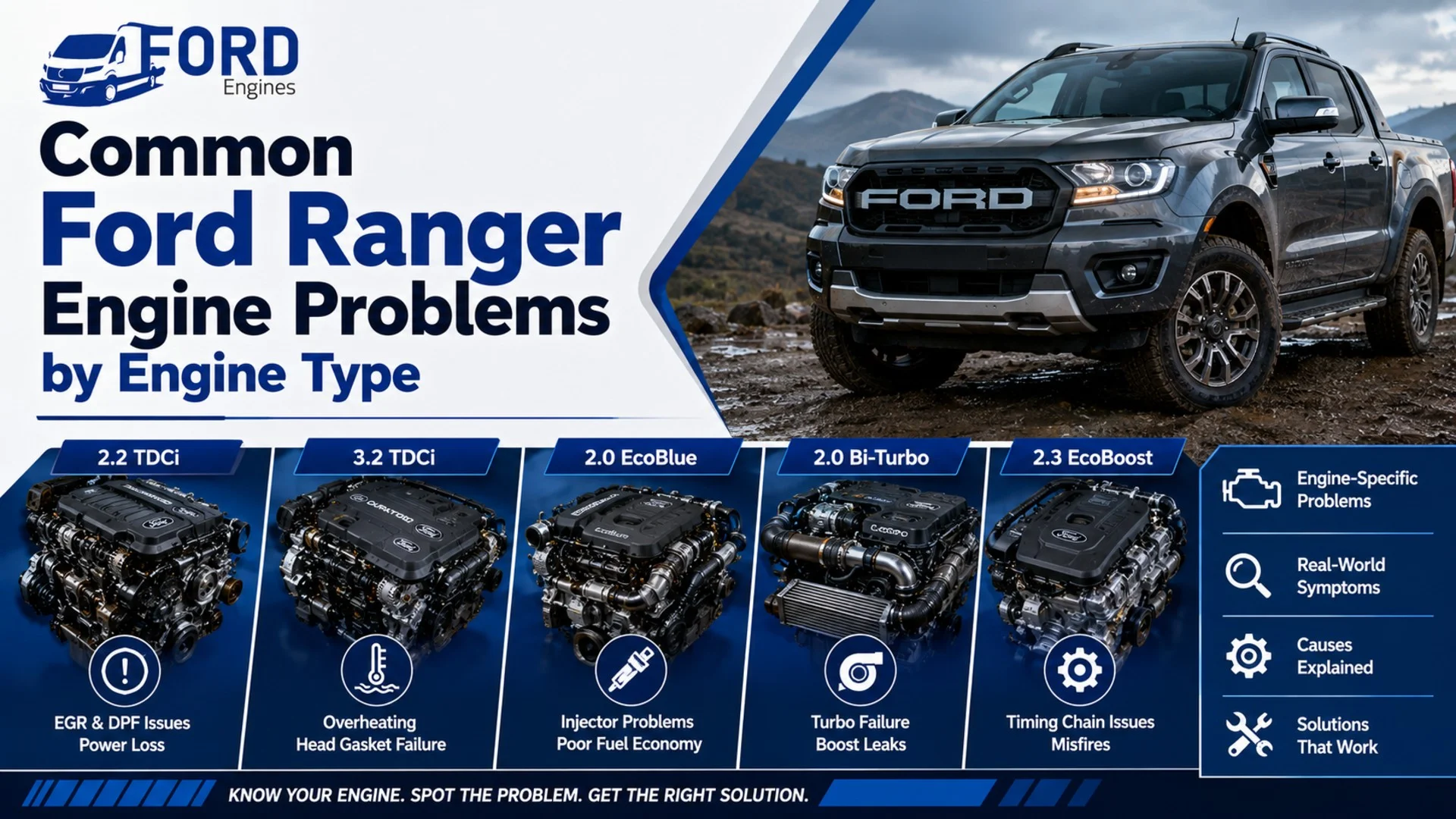
Not every Ranger engine fails in the same way. Each of the three main diesel units has its own well-documented weak points, and knowing which engine you're dealing with narrows down the likely cause considerably faster than a generic symptom checklist ever could.
Engine | Typical Problem Areas | Common Symptoms | Diagnostic Approach |
| 2.2 TDCi | Turbo, injectors, EGR valve, DPF | Smoke, power loss, rough idle | Fault code scan, boost and injector testing |
| 3.2 TDCi | Oil pump, turbocharger, injectors, EGR cooler | Low oil pressure, knocking, smoke | Oil pressure test, live data analysis |
| 2.0 EcoBlue | Timing system, turbo, emissions components | Cold-start rattle, warning lights, power loss | Live data, timing inspection, emissions diagnostics |
Ford Ranger 2.2 TDCi Engine Problems
The 2.2 TDCi is generally regarded as a solid, well-proven diesel unit, but it isn't immune to the wear patterns typical of any high-mileage turbo diesel. Fuel system and emissions-related faults are where we see most inquiries.
2.2 TDCi Turbo, Injector and EGR Faults
Turbocharger issues on the 2.2 TDCi typically show up as reduced power, a whining or whistling noise under acceleration, or visible smoke from the exhaust, often linked to worn bearings or a failing turbo actuator. Injector faults commonly cause rough idling, hesitation, and a noticeable drop in fuel economy, sometimes accompanied by white or black smoke depending on which injector is affected and how it's failing. EGR valve and EGR cooler problems are also a recurring theme, with a sticking or clogged EGR valve triggering warning lights, rough running, and occasionally limp mode.
Ford Ranger 3.2 TDCi Engine Problems
The larger 3.2 TDCi, fitted to the higher-output Ranger variants, carries a somewhat different fault profile, largely centred around the oil system and turbocharger.
3.2 TDCi Oil Pump and Oil Pressure Faults
This is arguably the most serious recurring issue on the 3.2 TDCi. Oil pump wear or failure leads to low oil pressure, and if left unaddressed, that translates directly into inadequate lubrication for the crankshaft, camshaft and bearings. Owners often report an unusual engine noise, sometimes described as a knock or rattle, alongside a low oil pressure warning. This is not a fault to drive through; oil starvation on a diesel this size can cause serious, expensive internal damage in a relatively short number of miles. Alongside oil pump concerns, the 3.2 TDCi also shows the same general pattern of turbo wear, injector faults and EGR cooler problems seen across the wider Ranger diesel range.
Ford Ranger 2.0 EcoBlue Engine Problems
The 2.0 EcoBlue is the newer of the three engines, introduced as Ford moved toward a smaller-capacity, more efficient diesel platform. It brings its own set of considerations, particularly around the timing system.
2.0 EcoBlue Timing System and Emissions Faults
On certain 2.0 EcoBlue applications, the oil pump drive runs as a belt submerged in oil, a design shared conceptually with Ford's wet belt system used elsewhere in the range. This is a different arrangement to the traditional timing belt or chain setup on the older 2.2 and 3.2 TDCi units, so it's worth confirming exactly which configuration your specific Ranger has rather than assuming it matches an older model. We've covered the mechanics of this wet belt design, including warning signs and replacement intervals, in more depth in our dedicated guide to Ford wet belt problems.
Beyond the timing system, 2.0 EcoBlue owners commonly report emissions-related faults involving the turbocharger, EGR system and DPF, along with occasional cold-start rattling that's worth having checked promptly rather than dismissed as normal engine character.
Warning Signs of a Failing Ford Ranger Engine
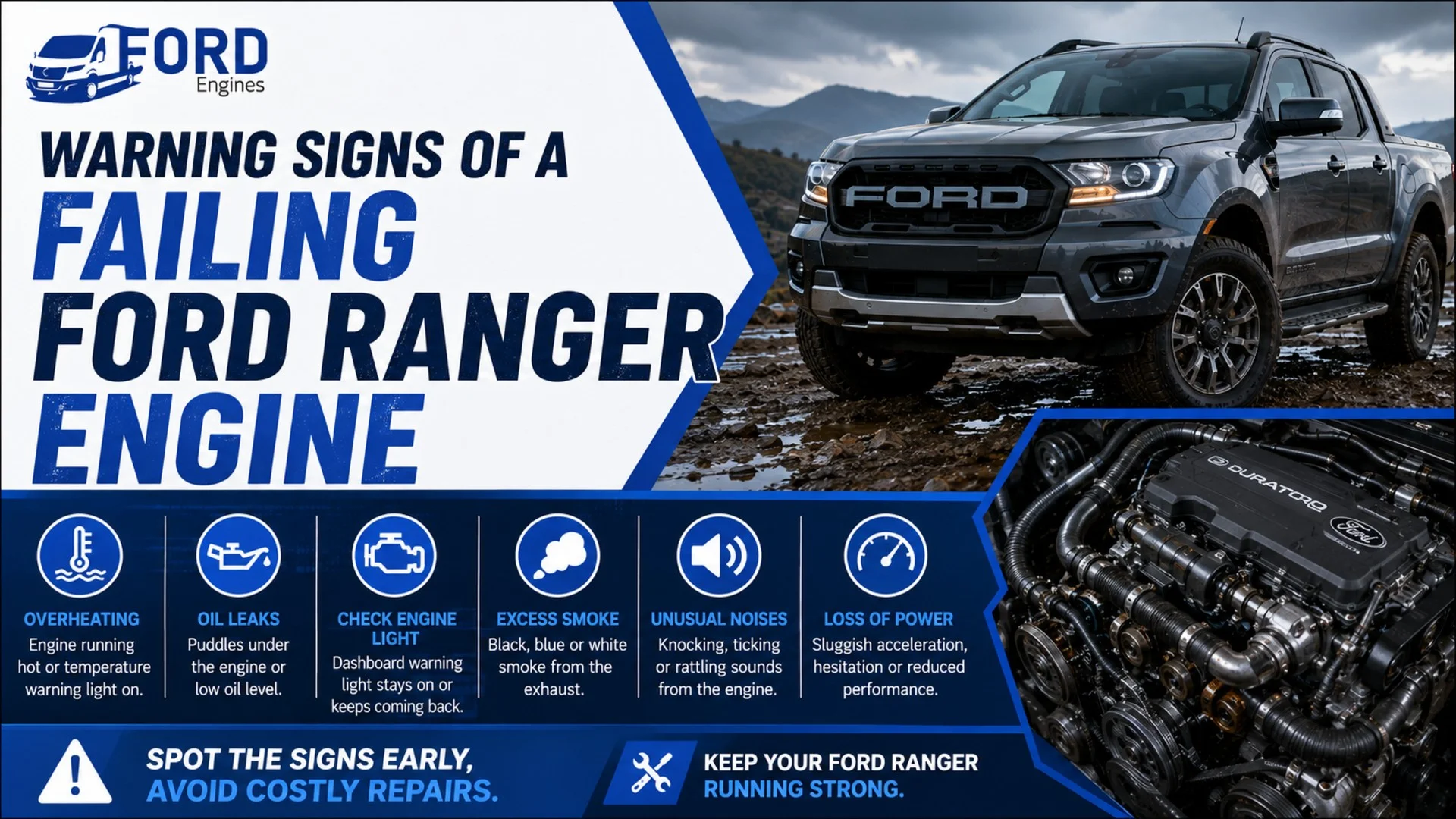
Most serious Ranger engine problems give some warning before they escalate. Recognising these signs, and understanding how urgently each one needs attention, makes a real difference to the eventual repair bill.
Loss of Power, Limp Mode and Poor Acceleration
A Ranger that's noticeably down on power, hesitant under load, or has dropped into limp mode is telling you the ECU has detected something it doesn't trust, often turbo boost pressure, an emissions sensor reading, or a fuelling inconsistency. Limp mode is a protective response, not a fault in itself, but it always points to something underlying that needs proper diagnosis.
Engine Smoke, Knocking or Unusual Noises
- Black smoke typically points to an overly rich fuel mixture, often linked to injector or turbo boost issues
- White smoke can indicate coolant entering the combustion chamber, a more serious sign worth investigating quickly
- Blue smoke usually means oil is being burned, often linked to turbo seal wear or piston ring wear
- Knocking or ticking noises, particularly on the 3.2 TDCi, can point toward oil pressure problems and should never be ignored
- Cold-start rattling, particularly relevant on the 2.0 EcoBlue, may relate to the timing system and is worth checking early
Overheating, Oil Consumption and Warning Lights
An engine warning light, a rising temperature gauge, unexplained coolant loss, or oil consumption that's noticeably higher than it used to be are all signs the engine needs attention. None of these are faults that improve by waiting.
How Serious Is the Fault? (Minor, Moderate, Serious or Stop-Driving-Now)
Not every warning sign carries the same urgency, and understanding where a symptom sits helps you make a sensible decision about whether to book a diagnostic this week or head straight to a workshop.
- Minor, occasional warning light with no performance change; worth booking a diagnostic soon, not urgent
- Moderate, reduced power, rough idling, or intermittent smoke; get it checked within days, avoid heavy loads or towing
- Serious, persistent limp mode, consistent smoke, or a warning light alongside performance loss; book an inspection promptly
- Stop-driving-now, low oil pressure warning, severe knocking, overheating, or visible coolant/oil loss; these can escalate to major engine damage within a small number of miles if driven through
If you're seeing anything in that last category, particularly a low oil pressure light on a 3.2 TDCi, the safest move is to stop the vehicle and arrange recovery rather than continue the journey.
How We Diagnose and Repair Ford Ranger Engine Problems
How Ford Ranger Engine Problems Are Diagnosed
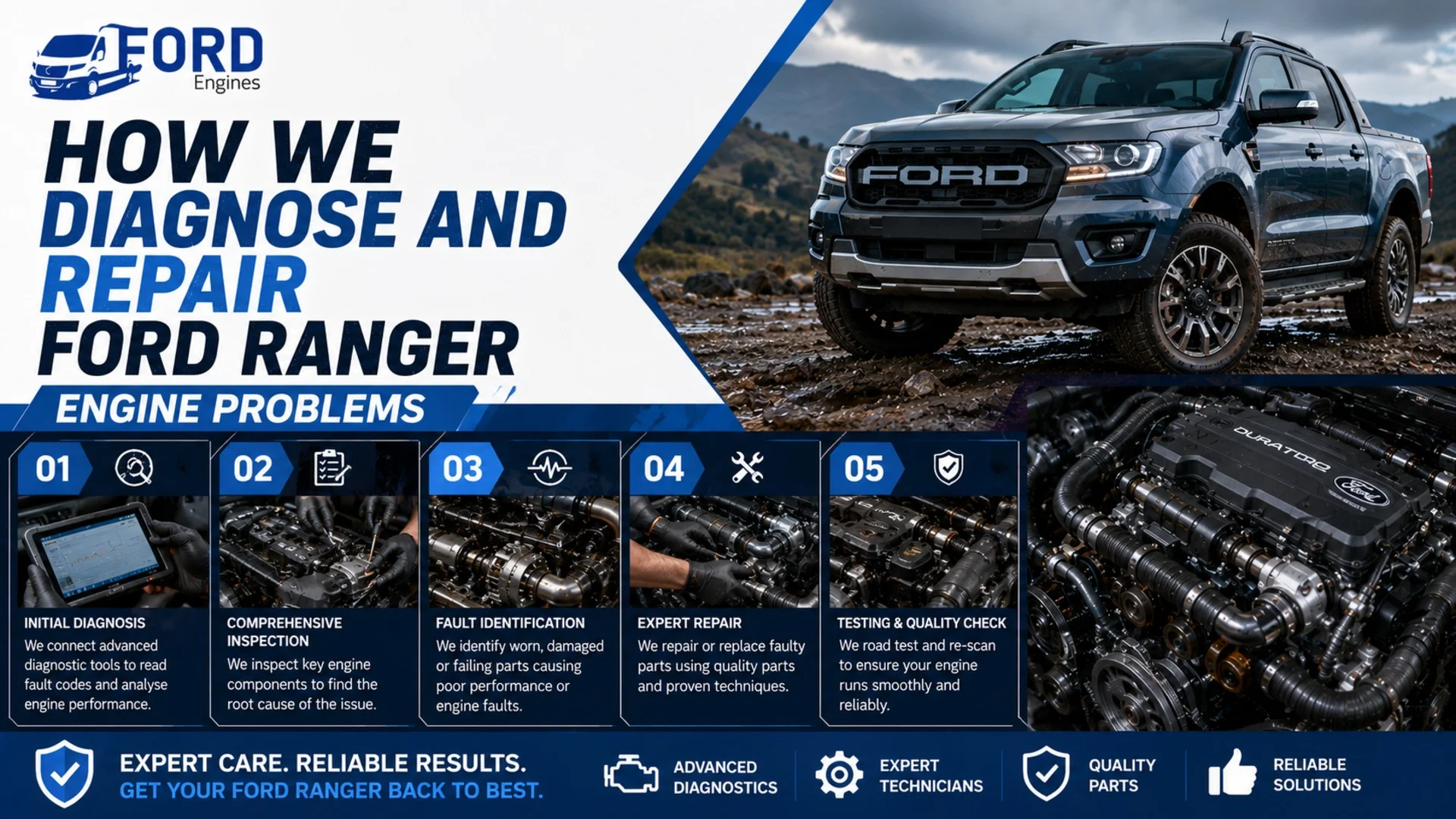
A fault code alone rarely tells the whole story, which is why proper diagnosis always goes further than plugging in a scanner and reading whatever comes up.
Fault Codes, Live Data and Pressure Testing
Diagnosis starts with a full fault code scan, followed by live data analysis, watching real-time readings from the turbo, fuel system and emissions sensors as the engine runs. Depending on the suspected fault, this is backed up with physical testing: oil pressure testing on suspected 3.2 TDCi oil pump issues, boost pressure testing for turbo faults, injector balance testing for fuelling problems, and a physical inspection of the timing system where the 2.0 EcoBlue's oil pump belt is a possible factor. This combination is what separates an accurate diagnosis from an educated guess based on a code alone.
How Much Does Ford Ranger Engine Repair Cost?
Repair costs vary considerably depending on the fault, the engine, and whether the issue has been caught early or has already caused secondary damage.
- Targeted repairs, a single injector, turbo actuator, or EGR valve replacement, sit at the more affordable end, particularly when caught before the fault causes any knock-on wear
- Turbocharger replacement costs more, reflecting both parts and labour, and rises further if oil contamination from a failed turbo has affected other components
- Oil pump replacement on the 3.2 TDCi, caught early, is a considerably smaller job than the cost of repairing an engine that's suffered oil starvation damage
- Engine rebuild or replacement becomes necessary once internal damage has occurred, bearing wear, piston damage or a scored bore, and this is comfortably the most expensive outcome on this list
The consistent pattern across every one of these scenarios: catching the fault early is dramatically cheaper than waiting for it to escalate. A written, itemised quote following proper diagnostics is the only reliable way to know what your specific repair will cost.
When Does a Ford Ranger Need an Engine Rebuild or Replacement?
A rebuild or replacement becomes the sensible option once the damage has moved beyond a single component, worn bearings from oil starvation, a damaged turbo that's introduced debris into the oil system, or significant internal wear on a high-mileage engine. In these cases, a full strip-down rebuild, or in more severe circumstances a reconditioned replacement engine, is often more cost-effective than trying to patch individual symptoms as they appear.
How to Prevent Ford Ranger Engine Problems
Prevention comes down to consistency more than anything technical:
- Stick to manufacturer-specified oil and service intervals, this matters particularly on the 3.2 TDCi given its oil pump sensitivity
- Don't ignore early warning signs, a small noise or a brief warning light is far cheaper to investigate now than after it's escalated
- Keep the EGR and DPF systems maintained, since blocked or sticking components create knock-on strain elsewhere in the engine
- Have the timing system inspected proactively, particularly on the 2.0 EcoBlue given its wet belt configuration
- Avoid consistently short journeys where possible, since they prevent the engine and emissions system from reaching full operating temperature
None of this eliminates risk entirely on a working vehicle, but it consistently keeps repair costs in the routine-maintenance category rather than the major-fault category.
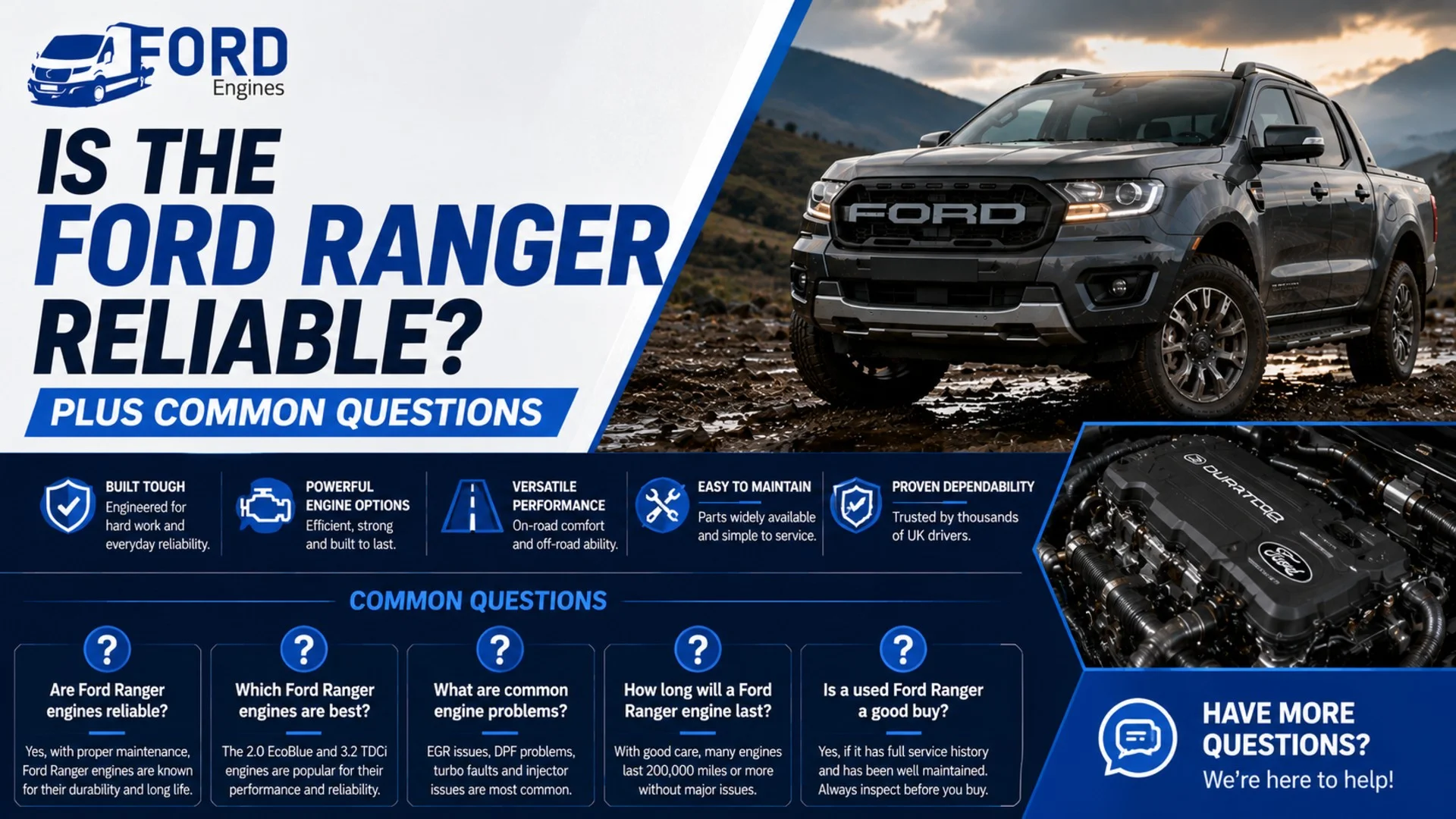
Is the Ford Ranger Reliable? Plus Common Questions
Which Ford Ranger Engine Is Most Reliable?
All three diesel engines have a solid reputation when properly maintained, but they're not interchangeable in terms of risk profile. The 2.2 TDCi has a strong track record for straightforward reliability, provided fuel system and EGR maintenance keeps pace. The 3.2 TDCi is a capable, torquey engine, but its oil pump sensitivity means service history and oil pressure history matter more than with the other two. The 2.0 EcoBlue is newer and generally well-regarded, though its timing system design means proactive inspection is worth factoring into ownership costs, much as it is with Ford's wet belt engines elsewhere in the range.
Should You Buy a Used Ford Ranger with a Diesel Engine?
Yes, with the right checks. Before committing to a used Ranger:
- Confirm the exact engine, 2.2 TDCi, 3.2 TDCi or 2.0 EcoBlue, since this determines what to look for
- Check full service history, particularly oil change intervals on 3.2 TDCi models
- Ask about any warning lights, oil pressure warnings, or timing system work, especially on the 2.0 EcoBlue
- Listen for cold-start noise, and don't dismiss a rattle as "normal" without having it checked
- Get a pre-purchase inspection from someone familiar with Ranger-specific engine faults, not just a general used-vehicle check
A well-documented Ranger with consistent servicing is a fundamentally different proposition to one with a patchy history, even at the same mileage and price point.
Frequently Asked Questions About Ford Ranger Engine Problems
Are Ford Ranger engines reliable? Generally yes, particularly with consistent servicing. Each of the three UK diesel engines has known weak points, but none of them are inherently unreliable when maintained properly and any early warning signs are addressed promptly.
Why is my Ford Ranger losing power? Loss of power is commonly linked to turbo faults, injector problems, or an emissions system issue (EGR or DPF) triggering the ECU to restrict performance. A proper diagnostic scan combined with live data analysis will identify the specific cause.
Why does my Ford Ranger go into limp mode? Limp mode is triggered when the ECU detects a fault it considers serious enough to restrict performance and protect the engine, commonly linked to boost pressure, sensor readings, or fuelling inconsistencies. It always warrants a proper diagnostic rather than being reset and ignored.
How much does a Ford Ranger engine repair cost? It depends entirely on the fault and how early it's caught. Targeted component repairs are considerably cheaper than repairs involving secondary damage, which is why prompt diagnosis matters so much financially.
What causes Ford Ranger turbo failure? Turbo failure is typically caused by worn bearings, failing seals, or oil contamination reaching the turbo, sometimes linked to a wider oil system issue rather than the turbo being an isolated fault.
Is the Ford Ranger 3.2 TDCi reliable? It's a capable engine overall, but its oil pump is a known sensitivity point. Regular oil changes and prompt attention to any low oil pressure warning are particularly important on this engine.
How do I diagnose Ford Ranger engine problems? Proper diagnosis combines a fault code scan with live data analysis and, where relevant, physical testing such as oil pressure or boost pressure checks. A code alone rarely confirms the actual cause.
Book a Ford Ranger Engine Diagnostic Today
A warning light, an unfamiliar noise, or a Ranger that's lost some of its usual pull are all worth taking seriously, the earlier a fault is properly diagnosed, the more likely it stays a straightforward, affordable repair. Waiting rarely makes the underlying problem cheaper to fix.
If your Ranger is showing any of these signs, get in touch with the team at Ford Engines for a proper diagnostic assessment, an honest explanation of what's actually wrong, and a clear, written quote for the repair, whether that's a targeted component fix, a full engine rebuild, or a replacement engine supplied and fitted. Contact us today to get your Ranger booked in.