

You're driving along, or maybe you've just turned the key on a cold morning, and there it is, a rattle from somewhere under the bonnet that definitely wasn't there before. Your first instinct is probably somewhere between "is this normal?" and "how much is this about to cost me?"
Both are fair questions, and the honest answer is: it depends on what's causing it. A Ford Ranger engine rattling noise can mean anything from a completely harmless startup sound to an early warning of serious internal engine damage. The trick is knowing which one you're dealing with, and that comes down to when the noise happens, where it's coming from, and what engine you've got.
This guide walks through exactly that, in plain language, so you can work out what's likely going on with your Ranger before you decide whether to keep driving, book a check-up, or pull over right now.
Why Is My Ford Ranger Engine Making a Rattling Noise?
Engine rattles aren't random. They follow patterns, and those patterns are your best diagnostic tool before a mechanic even opens the bonnet.
What Does a Ford Ranger Engine Rattle Sound Like?
Not all engine noises are created equal, and the type of sound you're hearing narrows things down considerably.
Metallic Rattle vs Ticking vs Knocking
- Metallic rattle, often loose, jangly, and inconsistent. Commonly linked to timing components, worn guides, or a loose heat shield.
- Ticking, a lighter, faster, more rhythmic sound, frequently associated with hydraulic lifters, valve train wear, or minor injector noise.
- Knocking, a deeper, heavier thud, usually tied to combustion issues, diesel knock, or in more serious cases, bearing wear.
If you're not sure which category your Ranger falls into, don't worry, most owners aren't. What matters more is the next few sections: when the noise happens.
Ford Ranger Rattle at Startup
A rattle that appears the moment you turn the key and fades within a few seconds is one of the most commonly reported patterns among Ranger owners, and it's also one of the most important to pay attention to, because timing chain and wet belt issues tend to show up first at exactly this moment.
Cold Start Rattle
A rattle on a cold start, particularly one that clears up within 2–3 seconds as oil pressure builds, is often linked to a timing chain tensioner that's slow to take up slack, or in EcoBlue engines, early wet belt wear. It's not something to ignore, but it's also not necessarily an emergency the first time you notice it.
Warm Engine Rattle
A rattle that persists after the engine has warmed up, or one that appears only once the engine is hot, points toward a different set of causes, often something more mechanical, like a worn component that expands under heat, an injector, or in some cases, oil pressure that's dropping under normal operating temperature.
Ford Ranger Rattle When Accelerating
If the rattle gets louder or more noticeable specifically under acceleration, this usually means the noise is load-related. This pattern is commonly reported alongside injector knock on 2.2 TDCi and 3.2 TDCi engines, and can also indicate a timing component under increased strain as engine speed and load rise together.
Ford Ranger Rattle at Idle
A rattle that's present at idle but disappears, or changes character, as revs increase can suggest a loose component like a pulley, tensioner, or heat shield vibrating at a specific frequency, rather than a core engine problem. That said, idle rattles linked to low oil pressure are also common enough that it's worth checking your oil level as a first step.
Ford Ranger Rattle at Different RPMs
Here's a pattern worth paying close attention to: does the rattle disappear when you rev the engine?
If it does, that's often a sign of a loose or worn component rather than something structurally serious, timing chains under proper tension, for example, tend to get quieter, not louder, as revs climb. A rattle that gets worse and more pronounced as RPM increases is generally more concerning, since it suggests the fault is directly tied to engine speed and mechanical load.
Noise Location Guide, Where Is the Rattle Coming From?
Before you book anything, it's worth spending two minutes with the bonnet up (engine off, obviously) trying to pinpoint roughly where the sound is coming from. Here's a simple reference table.
Noise Location | Likely Cause |
| Front of engine | Belt, pulley, or tensioner |
| Timing cover area | Timing chain or timing belt/wet belt |
| Top of engine | Injectors, hydraulic lifters, valve train |
| Bottom of engine | Bearing or connecting rod wear |
| Exhaust area | Heat shield or catalytic converter rattle |
| Turbo area | Turbocharger or turbo actuator |
This table won't give you a certain diagnosis, but it's often enough to tell whether you're dealing with something minor (a loose heat shield) or something that needs urgent attention (a bottom-end knock).
Common Causes of Ford Ranger Engine Rattling Noise
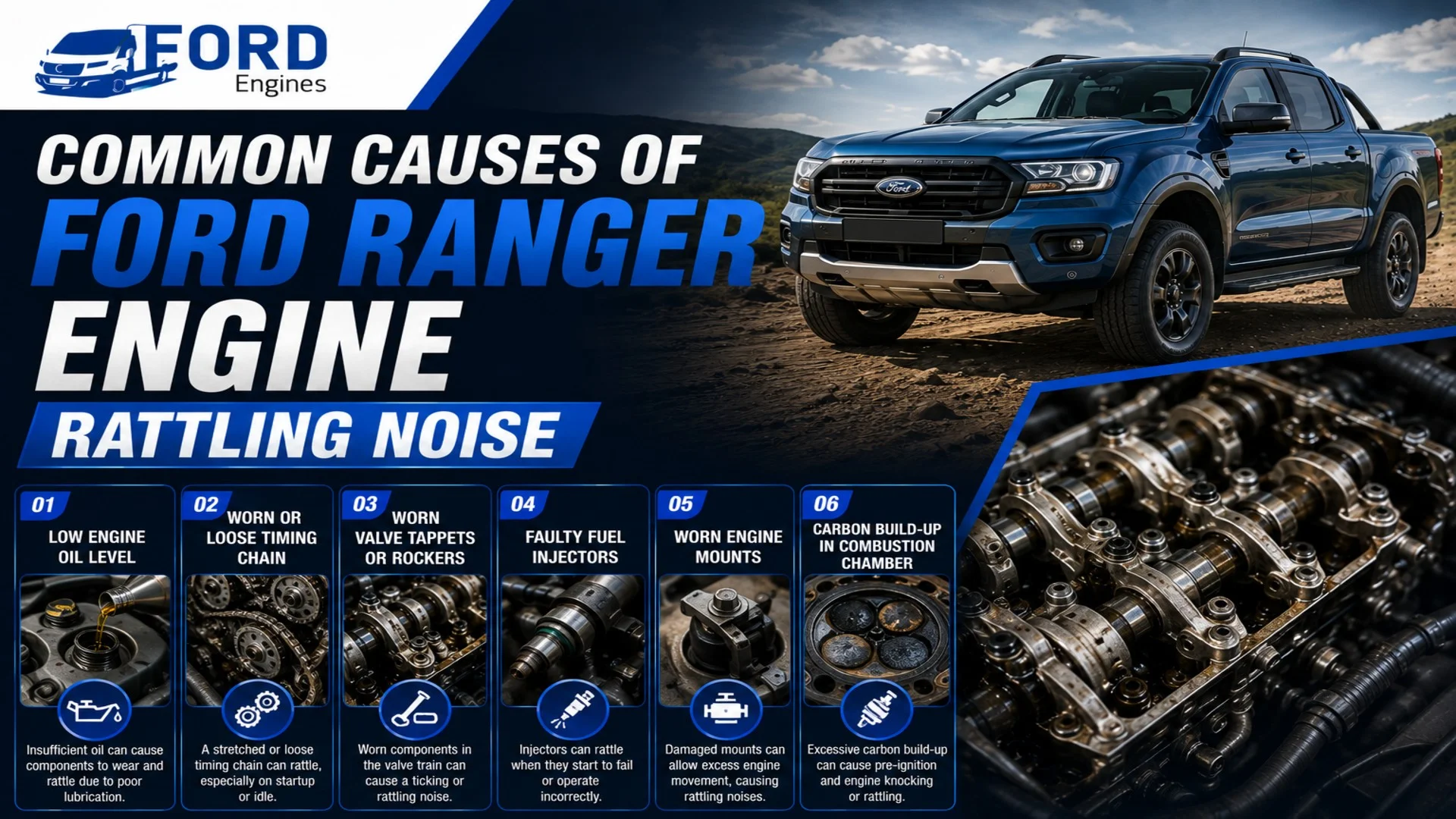
Now that you've got a sense of when and where your Ranger is rattling, let's look at what's actually causing it.
Ford Ranger Timing Chain Rattle
The timing chain keeps your engine's camshaft and crankshaft working in sync. Unlike a wet belt or timing belt, chains are generally more durable, but they're not immune to wear, especially on higher-mileage Rangers.
Worn Timing Chain Guides
The plastic or composite guides that keep the chain running smoothly can wear down over time, particularly on engines that have gone long stretches between oil changes. Worn guides often produce a rattling or slapping noise, especially on cold start.
Faulty Timing Chain Tensioner
The tensioner's job is to keep the chain under correct tension at all times. When it starts to fail, often due to oil pressure issues or general wear, the chain can develop slack, leading to a rattle that's particularly noticeable at idle or on startup.
Stretched Timing Chain or Damaged Cassette
Over very high mileage, the chain itself can stretch slightly, or on engines using a full timing chain cassette assembly (common on the 4.0L SOHC V6), the guides and tensioner housed within the cassette can wear as a unit. This tends to produce a more persistent rattle rather than one that only shows up on cold starts.
Ford Ranger Wet Belt Rattling Noise
If your Ranger is fitted with a 2.0 EcoBlue engine, this section deserves your full attention.
Ford Ranger 2.0 EcoBlue Wet Belt
Unlike a traditional timing chain, the 2.0 EcoBlue uses a wet belt, a timing belt that runs submerged in engine oil rather than sitting externally. It's a design chosen for efficiency, but it comes with a real trade-off: the belt degrades over time, and because it's hidden inside the engine, you can't inspect it visually the way you could a conventional external belt.
Wet Belt Deterioration and Oil Contamination
As a wet belt wears, small rubber particles begin shedding into the engine oil. This debris can travel through the oil system, potentially blocking the oil pickup strainer and reducing oil pressure to critical components. A rattling or ticking noise, especially combined with an oil pressure warning light, is one of the clearest signs that wet belt degradation may already be underway, and it's a scenario where quick action genuinely matters.
For a full breakdown of wet belt engines, symptoms, and replacement intervals, our Ford wet belt guide covers everything Ranger owners need to know.
Ford Ranger Injector or Diesel Knock
Diesel engines make more mechanical noise than petrol engines by nature, some knock is completely normal. But injector-related knock is a step beyond that baseline noise, and it's worth learning to tell the difference.
3.2 TDCi Injector Rattle
The 3.2 TDCi has a well-documented history of injector-related rattling, often linked to injector seal leakage or general wear at higher mileage. This typically presents as a knocking noise that's more pronounced under acceleration and may be accompanied by rough idle, reduced fuel economy, or a slight loss of power.
2.2 TDCi Injector Rattle
The smaller 2.2 TDCi can show similar symptoms, though generally to a lesser degree. Injector rattle on this engine is often more noticeable at idle and tends to smooth out slightly under load, which is a useful distinguishing feature versus timing-related noise.
Other Mechanical Causes
Not every rattle points to something as serious as the timing system or fuel injectors. Several more routine, and often cheaper to fix, culprits are worth ruling out first.
Low Oil Pressure and Oil Starvation
Insufficient oil pressure, whether from a low oil level, a failing oil pump, or a blocked pickup strainer, reduces lubrication throughout the engine and can cause rattling from multiple areas at once. This is one of the simplest things to check yourself, and one of the most important, since continuing to drive with genuinely low oil pressure risks serious engine damage.
Turbocharger, Pulley, and Belt Tensioner Noise
- Turbocharger noise, often a whining or rattling sound tied closely to engine RPM and boost pressure.
- Idler pulley or tensioner pulley bearing wear, produces a rattle or grinding noise, usually most noticeable at idle.
- Serpentine belt issues, a worn or misaligned belt can slap or rattle, particularly on startup.
- Alternator bearing wear, a less common but genuine cause of a persistent rattle from the front of the engine.
- Exhaust heat shield rattle, a loose or corroded heat shield vibrating against the exhaust, often mistaken for a more serious engine noise.
These sound similar to more serious problems on the surface, which is exactly why a proper inspection, rather than guesswork, is worth the money.
Ford Ranger Engine Rattle by Engine Type
Different Ranger engines are prone to different issues, and knowing your engine narrows the list considerably.
2.0 EcoBlue / 2.2 TDCi / 3.2 TDCi / 4.0 SOHC Comparison
Engine | Most Common Rattle Cause | Typical Pattern |
| 2.0 EcoBlue | Wet belt degradation | Rattle/tick, often with low oil pressure |
| 2.2 TDCi | Injector rattle, timing chain wear | Rattle at idle, smooths under load |
| 3.2 TDCi | Injector knock, timing chain rattle | Knock under acceleration |
| 4.0L SOHC V6 | Timing chain cassette/guide wear | Persistent rattle, higher mileage |
Knowing your engine code before you call a specialist saves time and helps you ask the right questions from the outset.
Is My Ford Ranger Engine Rattle Serious?
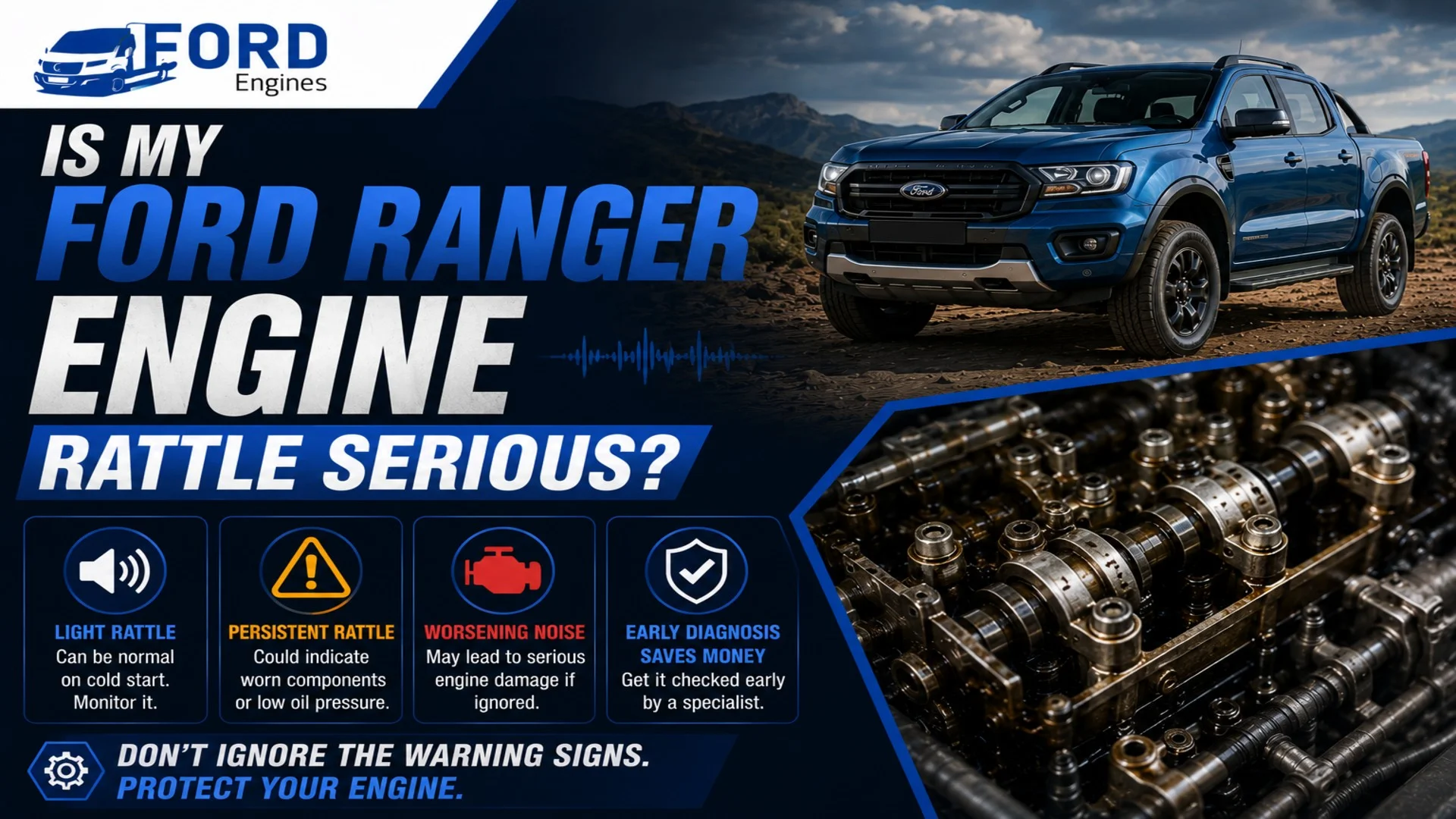
This is usually the question underneath all the others, so let's address it directly.
Is Ford Ranger Engine Rattle Normal?
Some noise is completely normal. Diesel engines are inherently louder and clatter more than petrol engines, and a very brief rattle on cold start that clears within a couple of seconds is common across many vehicles, not just Fords. What's not normal is a noise that's new, that's getting louder, that persists once the engine is warm, or that's accompanied by a warning light, rough running, or reduced performance.
Can You Drive a Ford Ranger With an Engine Rattle?
This depends entirely on the type and severity of the noise, and on whether it's paired with other symptoms.
Severity Scale, Monitor, Inspect, Stop
- Monitor, Brief cold-start rattle that clears quickly, no warning lights, no performance change. Keep an eye on it and mention it at your next service.
- Inspect soon, Persistent rattle, especially one that changes with RPM or load, but no warning lights or performance loss. Book a diagnostic within the next week or two.
- Stop unnecessary driving, Rattle combined with rough idle, reduced power, or an intermittent warning light. Get it checked as soon as possible and avoid long journeys until you do.
- Stop the engine immediately, Rattle combined with a low oil pressure warning light, a sudden loud knock, or a noticeable loss of power. Continuing to drive risks turning a repair into a full engine rebuild.
When Does a Rattle Mean Serious Engine Damage?
The combination of symptoms matters more than any single sign on its own. A rattle plus a low oil pressure warning, for instance, is a much stronger indicator of impending damage than a rattle on its own. Similarly, a rattle that's accompanied by visible metallic debris in the oil, a check engine light, or a sudden change in engine sound after an oil change all warrant prompt attention rather than a wait-and-see approach.
How to Diagnose a Rattling Ford Ranger Engine
Getting a proper diagnosis doesn't have to start with a garage visit, a few checks at home can help you describe the problem accurately when you do book one.
What to Check First (Oil, Fault Codes, Noise Location)
- Check your oil level and condition, low oil, or oil that looks contaminated with metallic or rubber debris, is a major clue.
- Check for warning lights, particularly oil pressure and check engine lights, which point toward more urgent causes.
- Note when the noise happens, startup, idle, acceleration, or under load, using the patterns covered earlier in this guide.
- Try to locate the noise, front, top, bottom, or rear of the engine bay, using the noise-location table above.
- Get a diagnostic scan, a proper OBD scan can pick up fault codes that aren't yet triggering a visible warning light, giving a specialist a real head start.
None of this replaces a hands-on inspection, but walking into a garage with this information tends to get you a faster, more accurate diagnosis.
How to Fix a Ford Ranger Engine Rattle, Repair & Cost
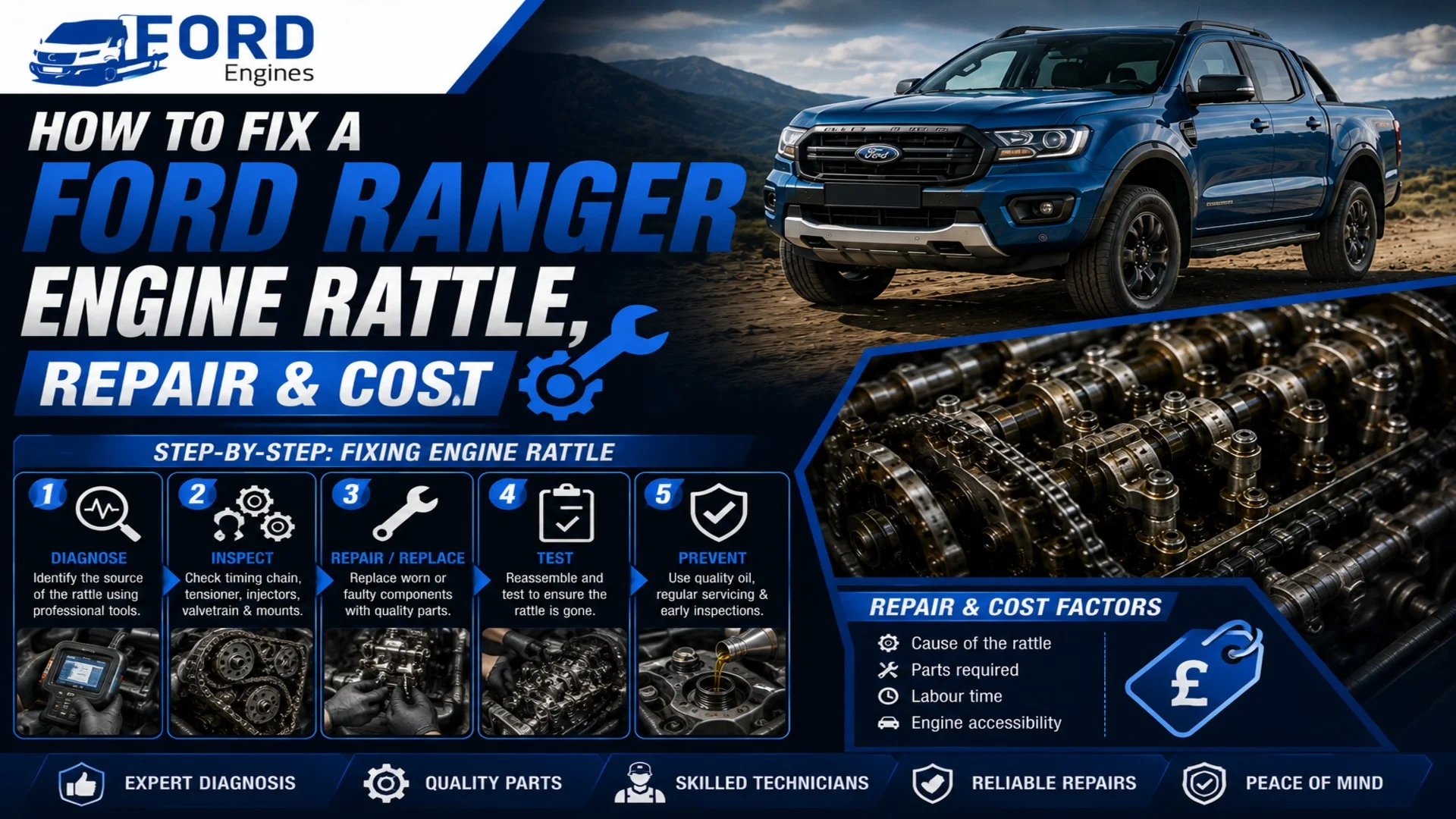
Once the cause is confirmed, the next question is naturally what it's going to cost to put right.
How Much Does Ford Ranger Engine Rattle Repair Cost?
Costs vary significantly depending on the cause, the engine, and how early the problem was caught, which is really the key takeaway from this entire guide.
Timing Chain Replacement Cost
Timing chain repairs, particularly on engines using a full cassette system like the 4.0L SOHC, tend to be a more involved job due to the labour required to access the timing components. Catching guide or tensioner wear early, before the chain itself is affected, generally keeps costs significantly lower.
Wet Belt Replacement Cost
Wet belt replacement on the 2.0 EcoBlue typically includes the belt itself, a full oil and filter change, and inspection of the oil pickup strainer for debris contamination. If the belt has already started shedding material into the oil, additional cleaning or component replacement may be needed, another reason early diagnosis pays off.
In both cases, waiting until the noise becomes impossible to ignore is the most expensive option. A rattle caught early is a maintenance job. A rattle ignored for months can become an engine rebuild.
When Should You Book a Ford Ranger Engine Diagnostic?
As a general rule: book a diagnostic the moment a rattle is new, persistent, or paired with any other symptom, rough idle, warning lights, reduced power, or visible debris in the oil. Waiting rarely makes the diagnosis cheaper, and it often makes the repair more extensive.
Why Choose Ford Engines UK for Your Ranger Diagnostic
At Ford Engines UK, we work with Ford Ranger engines across the full range, from the 2.0 EcoBlue and its wet belt system, through to the 2.2 TDCi, 3.2 TDCi, and the older 4.0L SOHC V6. We know the specific rattle patterns each engine is prone to, we don't guess, and we won't recommend a repair your Ranger doesn't actually need.
Whether your rattle is a brief cold-start noise you want checked out of caution, or something more concerning you've been putting off dealing with, our team can give you a clear, honest diagnosis and a straightforward plan from there.
Get a Free Ford Ranger Engine Rattle Diagnostic Quote
Don't wait for a rattle to turn into a repair bill you could have avoided. Get in touch with our team today for a free, no-obligation diagnostic quote, based on your exact Ranger model and engine.
Frequently Asked Questions About Ford Ranger Engine Rattling Noise
Why is my Ford Ranger engine rattling?
The most common causes include timing chain wear, wet belt degradation on the 2.0 EcoBlue, injector-related knock on TDCi engines, and low oil pressure. The exact cause depends heavily on when the noise happens and which engine you have.
Why does my Ford Ranger rattle on startup?
A brief rattle on cold start that clears within a few seconds is often linked to the timing chain tensioner or, on EcoBlue engines, early wet belt wear. If it persists beyond a few seconds or gets worse over time, it's worth having checked.
Is a rattling engine serious?
It depends on the type of rattle and what else is happening alongside it. A brief, consistent cold-start rattle with no other symptoms is generally lower risk, while a rattle paired with a low oil pressure warning or loss of power should be treated as urgent.
Can low oil cause engine rattling?
Yes. Low oil level or low oil pressure reduces lubrication throughout the engine, which can cause rattling, ticking, or knocking noises from multiple components. Checking your oil is one of the simplest first steps in diagnosing any rattle.
Can injectors cause a rattling noise?
Yes, particularly on the 2.2 TDCi and 3.2 TDCi diesel engines, where injector wear or seal leakage commonly produces a rattling or knocking noise, especially under acceleration.
Does the Ford Ranger 2.0 EcoBlue have wet belt problems?
The 2.0 EcoBlue uses a wet belt timing system, which is known to degrade over time and, in some cases, contribute to rattling noises alongside low oil pressure. Regular servicing and early inspection significantly reduce the risk of major failure.
Can I drive my Ford Ranger with a rattling engine?
It depends on the severity. A minor, brief cold-start rattle with no other symptoms is usually safe to monitor short-term, but a persistent rattle combined with warning lights or reduced performance means you should get it checked before continuing to drive normally.
How much does Ford Ranger timing chain replacement cost?
Costs vary depending on the engine and extent of wear, but catching guide or tensioner issues early, before the chain itself is damaged, typically keeps repair costs considerably lower than a full replacement.
Final Thoughts: Don't Let a Rattle Become a Repair Bill
A rattling noise from your Ford Ranger's engine isn't something to panic about immediately, but it's also not something worth ignoring. The pattern of the noise, when it happens, where it's coming from, and what else is going on with your engine, tells you far more than the sound alone ever could.
If you've worked through this guide and you're still not sure what you're dealing with, that's exactly the situation a proper diagnostic exists for. Get in touch with Ford Engines UK today for a free, no-obligation assessment of your Ranger's engine rattle, and get a clear answer instead of a guessing game.