

If you're staring at a fault code, a quote for engine repairs that made your eyes water, or you're simply trying to work out whether your Transit's engine is worth saving, you're in the right place. The Ford Transit 2.2 Puma engine has powered hundreds of thousands of vans across the UK, and whether you're troubleshooting a problem or shopping for a replacement, you need straight answers, not marketing fluff.
This guide covers exactly what the 2.2 Puma engine is, how reliable it actually is, when it's worth repairing versus replacing, and how to buy a properly reconditioned unit without getting caught out by low-quality suppliers.
What Is the Ford Transit 2.2 Puma Engine?
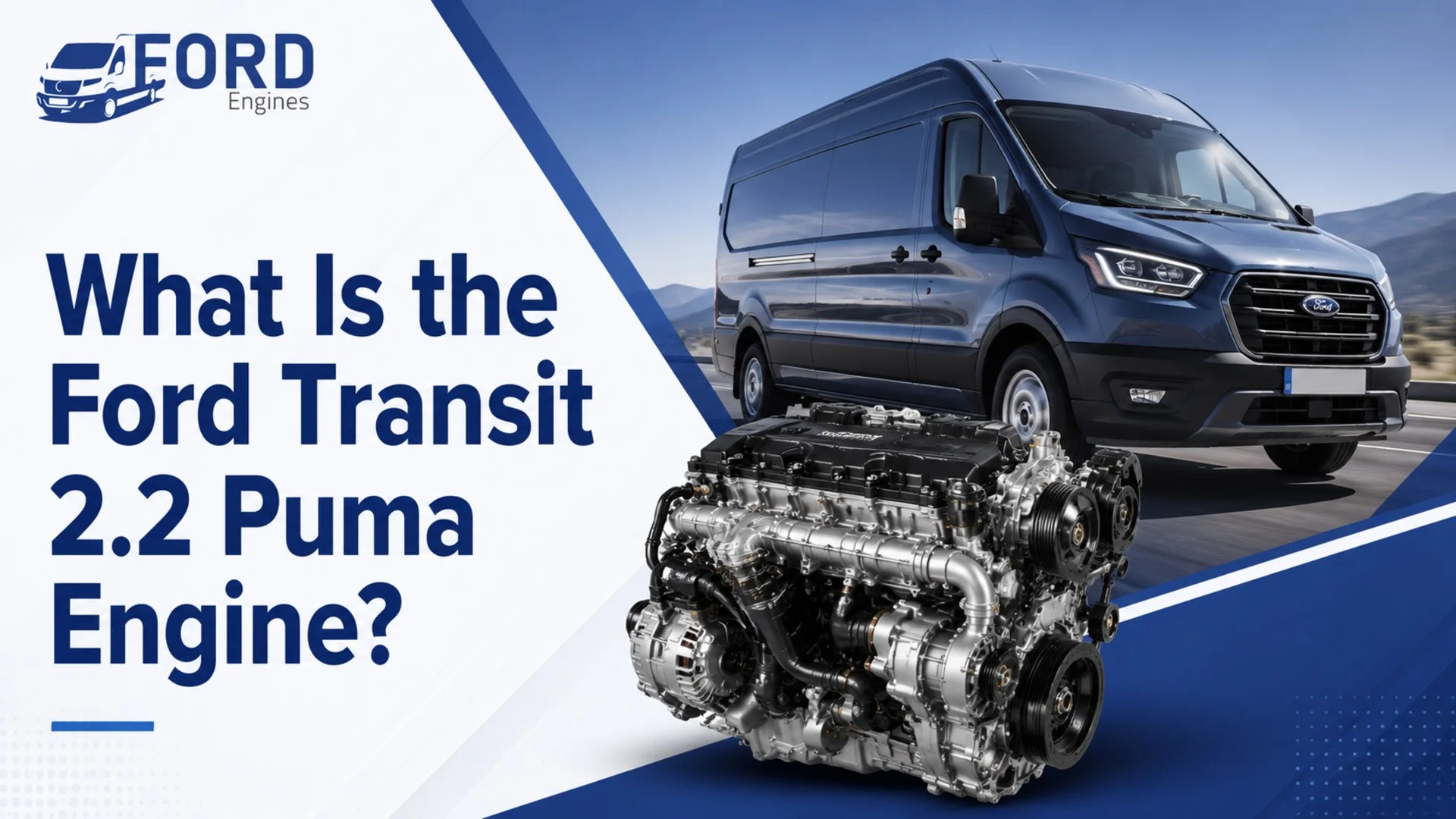
The 2.2 Puma is a diesel engine that's been at the heart of Ford's commercial vehicle range for well over a decade. It's part of the Duratorq TDCi family, Ford's badge for its turbocharged common rail diesel engines, and it's earned a reputation as a genuine workhorse rather than a fragile, overcomplicated unit.
Engine Code ZSD-422 Explained
Under the bonnet, this engine is officially known by its internal code: ZSD-422. If you've ever seen this string of characters on a parts invoice or engine plate and wondered what it meant, now you know, it's Ford's internal identifier for the 2.2-litre Duratorq Puma diesel unit, and it's the number you'll want when ordering parts or confirming compatibility.
Which Ford and Land Rover vehicles share this engine? The Puma platform wasn't built exclusively for the Transit. This same engineering lineage (with variations) has found its way into:
- Ford Transit (MK6 and MK7)
- Ford Transit Custom
- Ford Ranger pickups
- Land Rover Defender (a well-known application, particularly post-2007)
- Jaguar X-Type (in a smaller displacement variant)
This cross-platform use is actually good news for owners, it means parts availability and specialist knowledge are widespread, and reconditioned units are easier to source than for more obscure engines.
Duratorq TDCi and the Puma Engine Family
"Duratorq" is Ford's umbrella name for its diesel engines, while "Puma" refers specifically to this engine architecture's design lineage. TDCi stands for Turbocharged Direct injection Common rail, essentially telling you it's a turbo diesel with common rail fuel injection, which was a significant refinement over older direct-injection diesels when it launched. This combination gave the Transit noticeably better fuel economy and refinement compared to its predecessors.
Ford Transit 2.2 Puma Engine Specifications
Specifications vary slightly by model year and output tune, but here's what you're generally working with:
Power output and torque figures by model year
Output Tune | Power (bhp) | Torque (Nm) | Common Application |
| Base tune | 100 bhp | 285 Nm | Entry-level Transit vans |
| Mid tune | 125-130 bhp | 310-320 Nm | Most common Transit Custom fitment |
| High tune | 140-155 bhp | 350-385 Nm | Heavier load Transit and Custom variants |
Bore, stroke and compression ratio The 2.2 Puma uses a bore and stroke configuration that balances torque delivery with reasonable fuel efficiency for a commercial diesel, running a compression ratio typically around 15.5:1 to 16.5:1 depending on the specific variant, figures consistent with most common rail diesels of this era designed for both power and emissions compliance.
Oil capacity and recommended oil grade Most 2.2 Puma engines take approximately 6.4 to 7 litres of oil including the filter, depending on the exact variant. Ford specifies a low-SAPS 5W-30 diesel oil for Euro 5 compliant versions to protect the DPF and reduce ash contamination, using the wrong grade isn't just a technicality, it genuinely accelerates wear on the timing chain and turbo bearings over time.
Is the Ford Transit 2.2 Puma Engine Reliable?

This is the question most people actually want answered before they spend a penny on repairs or a replacement, and the honest answer is: mostly yes, with some well-known weak points.
Common Ford Transit 2.2 Puma Engine Problems
Timing chain wear and failure symptoms This is arguably the most talked-about issue with this engine family. Early production models, in particular, were prone to timing chain stretch, usually presenting as a rattling noise on cold start that can worsen over time. If ignored, a stretched or jumped timing chain can cause valve damage, turning a moderate repair into a full engine rebuild.
Common rail injector issues (Delphi and Continental systems) Depending on production year, the 2.2 Puma has used injectors from different suppliers, including Delphi and Continental fuel systems. Both are generally robust, but as mileage climbs, injector wear leads to rough idling, increased fuel consumption, and excessive smoke under acceleration. Leaking injectors can also wash oil from cylinder walls, accelerating internal wear if left unaddressed.
Turbocharger and variable geometry turbo faults Higher-output variants of this engine use a variable geometry turbocharger (VGT), which adjusts the turbine vanes to optimise boost across the rev range. It's a clever system, but the actuator mechanism can stick or fail with age and heat cycling, leading to sluggish power delivery, whistling noises, or in some cases, limp mode.
Beyond these three headline issues, owners also commonly report:
- EGR valve carbon build-up affecting idle quality and power delivery
- DPF blockages on vans used mostly for short, low-speed journeys
- Dual mass flywheel wear, particularly on high-mileage examples with a lot of stop-start driving
How Many Miles Does the 2.2 Puma Engine Typically Last?
With reasonable maintenance, it's genuinely common to see 2.2 Puma engines running well past 150,000 to 200,000 miles. Fleet vans with strict servicing schedules often exceed this comfortably. The engines that fail early are almost always the ones with skipped oil changes, ignored warning noises, or a history of cheap fuel and neglected filters.
Is the 2.2 Puma More Reliable Than the EcoBlue Engine?
Ford's newer EcoBlue engine replaced the Puma/Duratorq lineage in later Transit models, and it's a fair question to ask which is the safer bet. The Puma has the advantage of a much longer track record, its faults, fixes, and typical failure mileage are extremely well documented after over a decade in service. EcoBlue is a more modern, efficient design, but as a newer engine it simply has less long-term reliability data behind it. For buyers prioritising predictability and parts availability, the 2.2 Puma remains a known quantity in a way EcoBlue hasn't fully proven yet.
Should You Repair, Rebuild, or Replace Your Transit Engine?

Once you know what's wrong, the next decision is financial as much as it is mechanical.
Signs Your Transit 2.2 Puma Engine Needs Replacing
Consider replacement seriously if you're seeing:
- A jumped or badly stretched timing chain with evidence of valve contact
- Multiple simultaneous faults (injectors, turbo, and internal wear together)
- Persistent overheating that's damaged the head gasket or cylinder head
- An engine with very high mileage and a patchy or unknown service history
A single isolated fault, one injector, a turbo actuator, an EGR valve, is usually worth repairing on its own merits. It's when problems start compounding that a full engine swap becomes the more sensible financial decision.
Reconditioned vs Remanufactured vs Used Engines
These terms get used loosely across the industry, and the differences matter more than most sellers let on.
Engine Type | What It Actually Means | Typical Warranty |
| Reconditioned | Worn components replaced or machined, engine rebuilt to spec | 12 months typical |
| Remanufactured | Fully stripped, cleaned, and rebuilt to OEM tolerances with new wear parts | 12 months typical |
| Used/salvage | Removed from a donor vehicle, tested but not rebuilt | Rarely warrantied |
What's included in our reconditioned Ford Transit 2.2 Puma engine? A properly reconditioned unit from a reputable specialist should include new bearings, a refurbished or replaced cylinder head, new gaskets and seals throughout, and a full compression and pressure test before it ever leaves the workshop.
Genuine OEM parts vs aftermarket components Not all reconditioned engines are built the same. Genuine Ford or Motorcraft parts typically offer tighter tolerances and better long-term durability, while quality aftermarket components can still perform well if sourced from a reputable manufacturer. What you want to avoid is a rebuild using unknown-origin parts with no traceability, always ask your supplier exactly what's genuine and what's aftermarket before you buy.
Engine Warranty and Fitting Service
A warranty is only as good as the company standing behind it. Look for a minimum 12-month warranty on any reconditioned engine, and confirm whether fitting is included or arranged separately, this can significantly affect your total cost and downtime.
Buy a Reconditioned Ford Transit 2.2 Puma Engine From Ford Engines

If you've worked through the diagnosis and decided replacement is the right call, here's what you need to know before ordering.
Check Engine Compatibility Before You Order
How to find your engine code and confirm the right fit Before ordering any replacement engine, locate your engine code, usually stamped on the block itself or listed on a plate near the front of the engine bay. Cross-reference this against your vehicle's VIN if you're unsure, since Transit and Transit Custom models span multiple engine tunes across their production run, and getting the wrong variant can mean mismatched mounts, wiring, or ECU compatibility issues.
Delivery, Pricing and How to Order
Reconditioned Ford Transit 2.2 Puma engines are typically priced according to output tune and whether ancillaries (turbo, injectors, sensors) are included in the exchange unit. UK-wide delivery is standard practice among established suppliers, with most orders dispatched within a few working days once compatibility is confirmed.
Get in Touch for a Quote
Whether you're dealing with a persistent fault you can't shake or you've already decided replacement is the right move, getting an accurate quote is the fastest way to move forward. Contact our team at Ford Engines with your vehicle's engine code and mileage, and we'll help you find the right reconditioned unit, backed by a genuine warranty and honest advice, not a hard sell.
Frequently Asked Questions
What is the Ford Puma engine?
The Ford Puma is the internal engineering name for a family of Duratorq TDCi diesel engines, with the 2.2-litre variant (engine code ZSD-422) used extensively in the Ford Transit, Transit Custom, Ranger, and Land Rover Defender.
Is the Ford 2.2 Puma engine reliable?
Generally, yes. With proper servicing, it's common for these engines to exceed 150,000-200,000 miles. Known weak points include timing chain wear, injector degradation, and turbo actuator faults, but these are well documented and manageable with regular maintenance.
Does the 2.2 Puma have a timing chain?
Yes, it uses a timing chain rather than a belt. While generally durable, early production units in particular were known for chain stretch issues, so unusual rattling on cold start is worth investigating promptly.
What oil does a 2.2 Puma use?
Ford specifies a low-SAPS 5W-30 diesel engine oil for Euro 5 compliant versions, with an oil capacity of roughly 6.4 to 7 litres including the filter, depending on the exact variant.
Can the 2.2 Puma engine be rebuilt?
Yes. Provided the cylinder block and head aren't cracked or severely damaged, a full rebuild replacing bearings, seals, and worn timing components is a viable and often cost-effective alternative to a full engine replacement.
How much does a replacement engine cost?
Costs vary depending on the output tune and whether you choose a reconditioned, remanufactured, or used unit. Reconditioned engines typically offer the best balance of cost, reliability, and warranty coverage.
What vehicles use the ZSD-422 engine?
The ZSD-422 code applies to the 2.2-litre Duratorq Puma diesel fitted across various Ford Transit and Transit Custom models, as well as Ford Ranger and certain Land Rover Defender variants.
Final Thoughts
The Ford Transit 2.2 Puma engine has earned its reputation as a dependable commercial workhorse, but like any diesel with hundreds of thousands of miles on the clock, it has known weak points worth understanding before they turn into expensive surprises. Whether you're troubleshooting a rattle, weighing up a repair against a full replacement, or ready to order a reconditioned unit outright, getting accurate information upfront saves both money and downtime.
Ready to get your Transit back on the road? Get in touch with Ford Engines today for a genuine reconditioned Ford Transit 2.2 Puma engine, backed by a solid warranty and straightforward advice from people who know this engine inside and out.