

If your Ford Transit has just gone into limp mode on the M6, or you're staring at a used van listing wondering whether that 2.2 TDCi engine will last another 100,000 miles, you're not alone. This engine has powered thousands of UK vans, courier fleets, and tradesmen's workhorses since it replaced the older Duratorq units, and it's earned a mixed reputation along the way.
Some owners rack up 250,000 miles with nothing more than routine servicing. Others end up staring at a warning light before 100,000 miles, wondering what went wrong. The difference usually isn't luck. It's maintenance history, driving conditions, and knowing what to look for before small problems become expensive ones.
This guide walks through exactly that, how reliable the 2.2 TDCi really is, the problems that show up most often, how to keep yours running longer, and what to check before you buy, rebuild, or replace one.
Is the Ford Transit 2.2 TDCi Reliable?

Short answer: yes, reasonably, but with conditions attached.
The 2.2 TDCi part of Ford's Duratorq diesel family is generally considered one of the more dependable engines Ford has fitted to the Transit range, particularly compared to some of the wet-belt Ecoblue units that followed in later Transit Custom models. It's a conventional common rail diesel with a timing chain rather than a belt in most configurations, which already removes one common failure point that plagues newer engines.
That said, "reliable" doesn't mean "bulletproof." Reliability here depends heavily on three things:
- Service history — vans serviced on time with correct oil specifications last dramatically longer than neglected ones.
- Driving pattern — short stop-start city runs cause more DPF and injector issues than steady motorway mileage.
- Age and Euro emissions standard — Euro 5 versions introduced additional emissions hardware (like more complex EGR and DPF systems) that add extra failure points compared to earlier Euro 4 units.
How Does the 2.2 TDCi Compare to Other Ford Diesel Engines?
Compared to the 2.4-litre Duratorq that came before it, the 2.2 TDCi is generally smoother, more fuel-efficient, and benefits from more advanced fuel injection. Compared to the newer 2.0-litre EcoBlue engine used in later Transit Customs, the 2.2 TDCi has a real advantage: a timing chain instead of a wet timing belt running in oil, which has caused well-documented premature failures in EcoBlue units.
Euro 4 vs Euro 5 Transit Reliability: What's the Difference?
This is one of the most searched comparisons among Transit owners, and for good reason, it directly affects long-term reliability.
Feature | Euro 4 Transit 2.2 TDCi | Euro 5 Transit 2.2 TDCi |
| Emissions hardware | Simpler EGR, no DPF on most models | DPF fitted as standard, more complex EGR |
| Common failure points | Injector wear, turbo actuator issues | DPF blockage, EGR carbon build-up, injector failure |
| Ideal use case | Longer motorway runs, less regen dependency | Needs regular extended driving for DPF regeneration |
| General owner sentiment | Slightly simpler, fewer emissions-related faults | More efficient but higher risk of DPF/EGR issues on short trips |
In practice, many independent Transit specialists and forum discussions (including long-running threads on Ford Transit owner forums) suggest Euro 4 engines tend to suffer fewer emissions-related headaches simply because there's less to go wrong. Euro 5 engines are cleaner and more efficient but punish stop-start driving more severely through DPF and EGR issues.
How Many Miles Will a Ford Transit 2.2 TDCi Last?
This is the question every buyer really wants answered, and the honest response is: it depends on how it's been treated, not just the number on the odometer.
Reliability at 100k–150k Miles
At this stage, a well-maintained 2.2 TDCi should still be running close to factory performance. You might start seeing the first signs of injector wear or turbo actuator stiffness, but major failures are uncommon if servicing has been consistent.
Reliability at 200k–300k+ Miles
Plenty of fleet vans and couriers push these engines well past 250,000 miles. At this mileage, expect wear-related issues: reduced compression, increased oil consumption, and a higher likelihood of needing injector or turbo attention. This is also the mileage bracket where the rebuild-vs-replace decision becomes relevant, something we'll cover later in this guide.
Common Ford Transit 2.2 TDCi Engine Problems
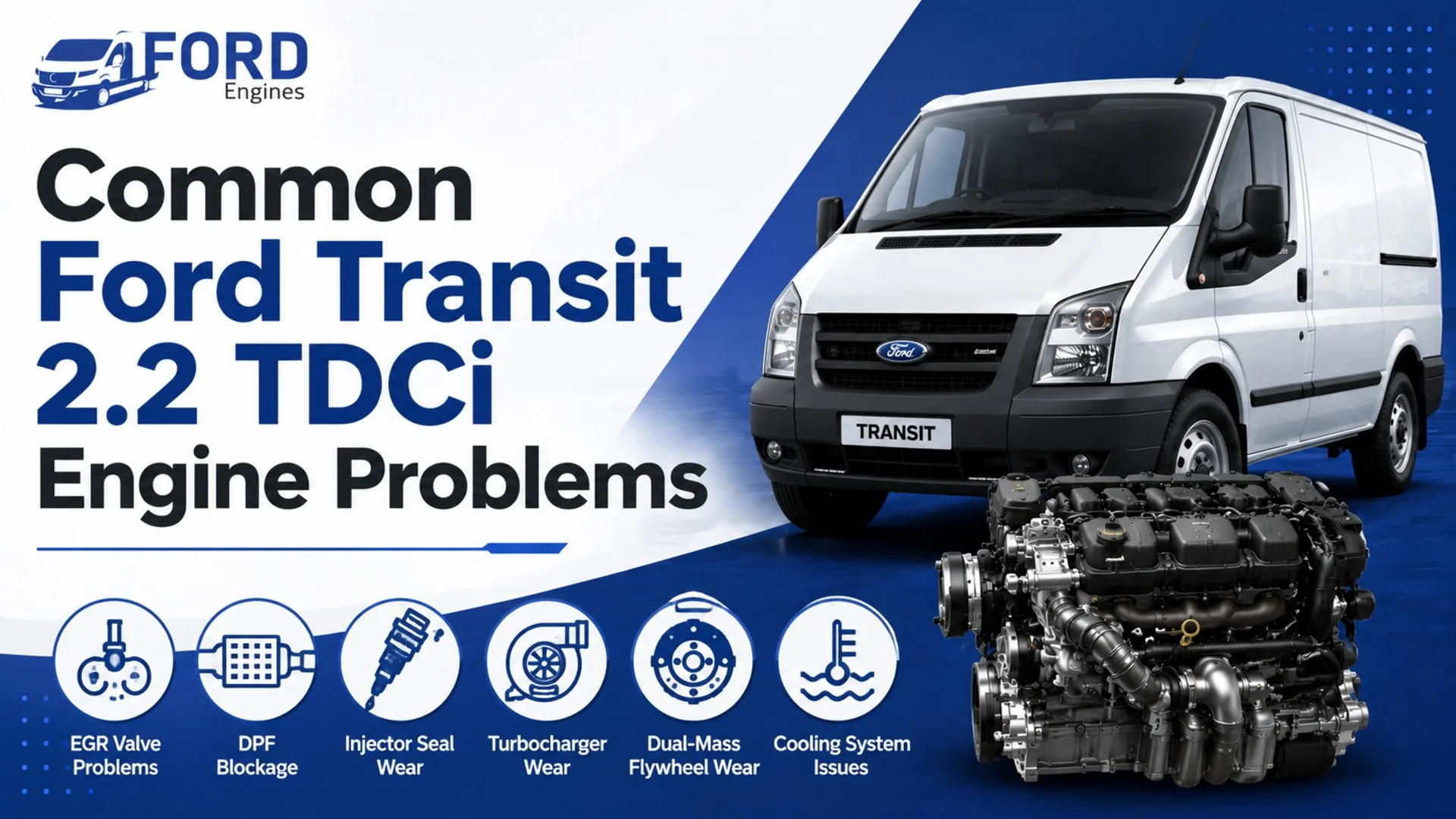
Knowing what typically fails, and why, puts you in a much stronger position, whether you're troubleshooting your own van or inspecting one before purchase.
Fuel Injector Failure
Injector problems are consistently one of the most reported 2.2 TDCi engine faults, and they're often misdiagnosed early on because the symptoms overlap with other issues.
Signs of Injector Failure
- Rough or uneven idle
- Excessive black smoke under acceleration
- Noticeable drop in fuel economy
- Engine misfiring or hesitating under load
- A ticking or knocking noise from the injectors themselves
Left unaddressed, a failing injector can cause unburnt fuel to wash down the cylinder bore, diluting the oil and accelerating wear on pistons and rings, turning a relatively cheap injector replacement into a much bigger engine problem.
Denso vs Siemens Injectors: Which Is More Reliable?
Ford fitted both Denso and Siemens (later Continental) injectors across different 2.2 TDCi production runs. Denso units are generally regarded by independent diesel specialists as slightly more tolerant of poor fuel quality and marginally more durable long-term, though both brands can suffer failure if the van has a history of running low-quality fuel or extended idling.
Turbocharger Problems & Failure Symptoms
Turbo issues on the 2.2 TDCi are usually linked to oil starvation (often from delayed servicing) or a sticking turbo actuator rather than the turbo unit itself failing outright.
Watch for:
- Whining or whistling noises under acceleration
- Noticeable power loss or hesitation
- Blue-tinged exhaust smoke (a sign of oil getting into the turbo)
- The van entering limp mode unexpectedly
Turbo actuator faults are particularly common and, encouragingly, often cheaper to resolve than a full turbo replacement if caught early.
DPF Blockage and Regeneration Issues
The Diesel Particulate Filter, standard on Euro 5 models, traps soot from the exhaust. It needs periodic high-temperature "regeneration" to burn that soot off, something that mainly happens during sustained higher-speed driving.
Vans used mostly for short urban trips rarely reach the temperatures needed for regeneration, leading to:
- Warning lights for DPF blockage
- Reduced power or forced limp mode
- Increased fuel consumption
- In severe cases, complete DPF blockage requiring replacement
EGR Valve Problems
The Exhaust Gas Recirculation valve reduces NOx emissions by recycling a portion of exhaust gas back into the intake. Over time, carbon deposits build up and cause the valve to stick.
Typical symptoms include rough idling, a noticeable drop in performance, and occasionally a failed emissions test (MOT). EGR cleaning or replacement is a routine and relatively inexpensive fix if caught early, an example of why regular diagnostics matter more than people assume.
Piston Damage and Oil Starvation
This is the failure mode owners dread most, because it's expensive and often terminal for the engine. Piston damage typically stems from one of two root causes: prolonged oil starvation (from delayed oil changes or a failing oil pump) or fuel dilution from a leaking injector, as mentioned earlier.
Warning signs include unusual knocking noises, a sudden drop in compression, and excessive white or blue smoke on startup.
Timing Chain Issues
Unlike the wet-belt design in newer Ford diesel engines, the 2.2 TDCi's timing chain is generally durable — but it isn't maintenance-free. Chain stretch or tensioner wear can occur, particularly on high-mileage or poorly serviced engines, producing a rattling noise on cold start that fades as oil pressure builds.
How to Maintain and Extend the Life of Your 2.2 TDCi Engine
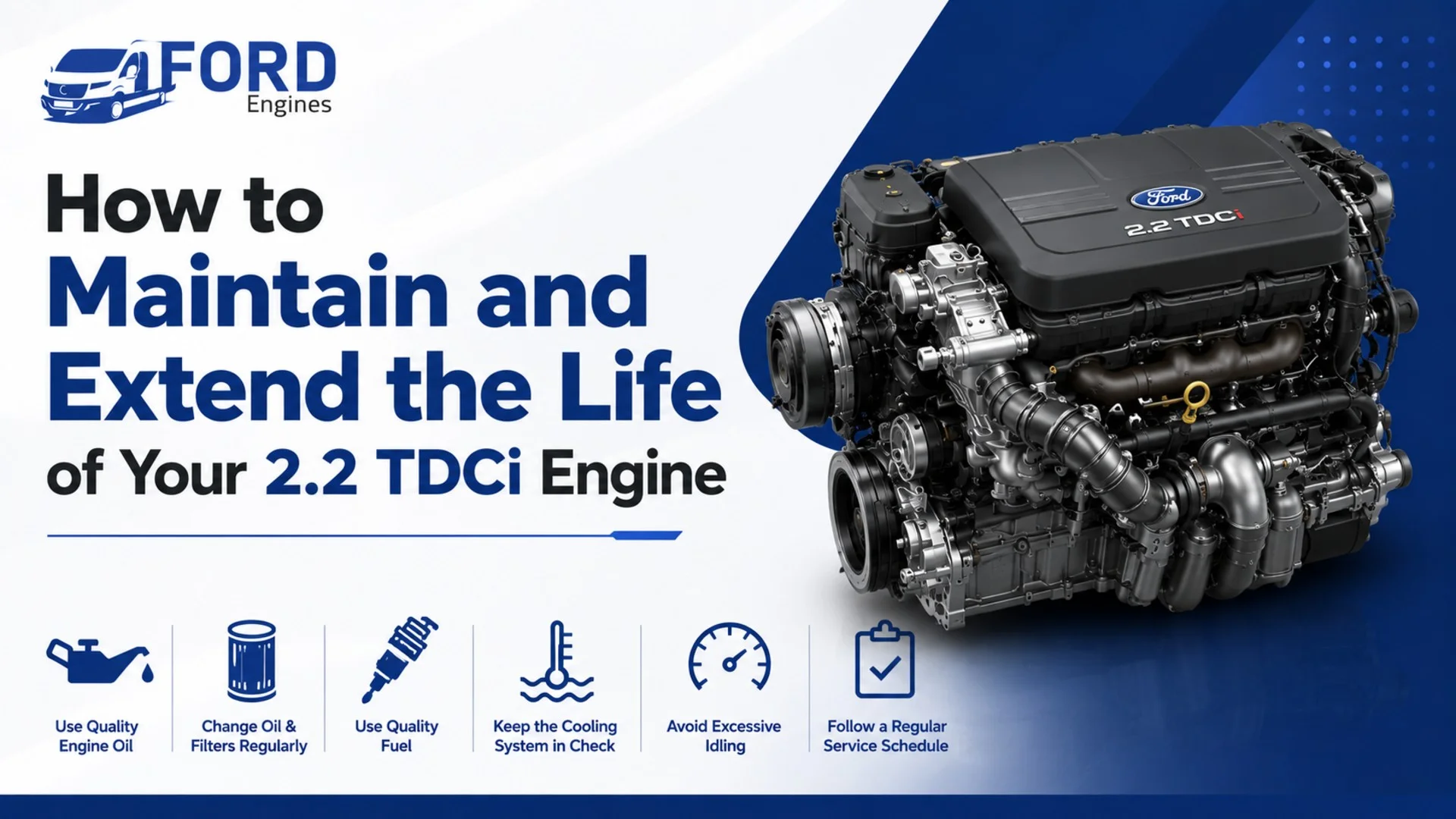
Most of the problems above share a common thread: they're either caused or accelerated by missed servicing. A well-maintained 2.2 TDCi genuinely can outlast expectations; this is where consistent care makes the biggest difference of all.
Recommended Service Intervals for the 2.2 TDCi
Ford's official guidance typically recommends oil and filter changes every 12,000–18,000 miles or annually, whichever comes first, though vans used hard in stop-start conditions benefit from shorter intervals. Fuel filters should be changed roughly every 24,000 miles, and it's worth having the EGR and DPF system inspected during major services rather than waiting for a warning light.
Best Engine Oil for the Ford Transit 2.2 TDCi
Using the correct oil specification isn't optional on this engine, it directly affects DPF and turbo longevity. Ford specifies a low-SAPS (low ash) fully synthetic oil, typically 5W-30, meeting Ford's WSS-M2C913 specification. Using the wrong oil, particularly a high-ash conventional oil, accelerates DPF clogging significantly.
Preventative Maintenance Checklist
A little consistency goes a long way with this engine. Owners who stay on top of the following tend to avoid the majority of major failures:
- Servicing on time with the correct low-SAPS oil
- Replacing fuel filters at recommended intervals
- Allowing the engine to reach full operating temperature regularly (avoiding constant short trips where possible)
- Getting the EGR and DPF inspected annually, even without warning signs
- Addressing any dashboard warning light immediately rather than waiting
Warning Signs Your Engine Needs Immediate Attention
Certain symptoms shouldn't be put off until the next scheduled service:
- Sudden loss of power or limp mode activation
- Knocking noises that persist beyond a cold start
- Excessive smoke of any colour
- Rapidly increasing oil consumption
- Coolant loss without an obvious external leak
Any of these point to a developing fault that gets more expensive the longer it's ignored.
Buying, Repairing or Replacing Your Ford Transit 2.2 TDCi Engine
Whether you're inspecting a used van or deciding what to do with a struggling engine you already own, this is where the practical decisions get made.
Used Ford Transit 2.2 TDCi Buying Checklist
Before handing over money for a used Transit, take the time to check:
- Full service history, ideally with consistent intervals and correct oil specification noted
- Cold start behaviour listen for knocking or excessive rattling
- Exhaust smoke colour during a test drive under load
- Evidence of recent injector, turbo, or EGR work (a good sign of proactive ownership, not a red flag)
- DPF warning history via a diagnostic scan, if possible
- Oil level and condition on the dipstick milky or gritty oil is a serious warning sign
A van with a documented service history and 200,000 miles is often a safer bet than a low-mileage example with patchy records.
Engine Rebuild vs Engine Replacement: Which Is Right for You?
This decision usually comes down to the extent of the damage and your van's overall condition.
A rebuild makes sense when the damage is contained, worn injectors, a failing turbo, or head gasket issues, and the rest of the van is in good shape and worth keeping on the road long-term.
A full replacement (typically with a reconditioned unit) tends to be the better option when there's been piston damage, oil starvation, or when multiple systems have failed simultaneously, making a rebuild cost comparable to or higher than a quality replacement engine.
Reconditioned Ford Transit 2.2 TDCi Engines from Ford Engines UK
If your Transit's 2.2 TDCi has reached the point of piston damage, turbo failure, or a rebuild simply isn't cost-effective anymore, a fully reconditioned engine is often the most reliable long-term route, restoring your van to like-new performance without the ongoing risk of patching an ageing unit.
At fordengines.co.uk, we supply reconditioned and remanufactured Ford Transit 2.2 TDCi engines, built and tested to the standards your van needs for genuine longevity, whether it's back on daily fleet duty, tradesman work, or long-distance driving. Get in touch with our team to discuss availability, warranty terms, and fitting options for your specific Transit model.
Frequently Asked Questions
Is a Used Transit 2.2 TDCi Worth Buying?
Yes, provided it has a genuine, consistent service history. Mileage alone isn't the deciding factor, maintenance record and driving history matter far more.
How Much Does an Engine Rebuild Cost?
Costs vary significantly depending on the extent of the damage, but a rebuild is generally worthwhile when the block, crankshaft, and cylinder head are still in good condition and only specific components (injectors, turbo, gaskets) need attention.
Which Transit Engine Is Most Reliable, Euro 4 or Euro 5?
Euro 4 engines tend to have fewer emissions-related issues due to simpler EGR systems and, in many cases, no DPF. Euro 5 units are cleaner and more efficient but more sensitive to short-trip driving.
Can Injector Failure Really Destroy the Whole Engine?
Yes — if left unresolved. A failing injector can dilute engine oil with unburnt fuel, accelerating wear on pistons and bearings until a relatively minor fault becomes a major mechanical failure.
What Mileage Is Considered "High" for a 2.2 TDCi?
There's no fixed cutoff, but many specialists consider 200,000+ miles the point where rebuild-vs-replace decisions become more relevant, particularly if service history is inconsistent.
Final Thoughts
The Ford Transit 2.2 TDCi has earned its reputation as a dependable diesel workhorse, but that reputation is built on consistent maintenance, not luck. Injectors, turbos, EGR valves, and DPF systems all have known failure patterns, and nearly all of them are cheaper to prevent than to repair after the fact.
If you're buying used, the service book matters more than the odometer. If you already own one, staying ahead of oil changes, fuel filters, and early warning signs will get you significantly more miles out of the engine than reacting after something fails.
And if your 2.2 TDCi has reached the point where a rebuild no longer makes financial sense, a properly reconditioned engine from fordengines.co.uk gets your Transit back to reliable, daily-use condition, built to last, not just patched over. Get in touch with our team today to find the right engine solution for your van.