
There's a particular kind of frustration that comes with a work van that won't cooperate. You've got jobs to get to, deliveries to make, and a Transit sitting there with the engine light on, or worse, stuck in limp mode on the hard shoulder. If you're searching for answers about the Ford Transit 2.2 TDCi, chances are you're either trying to understand what you're dealing with, figure out why something's gone wrong, or work out what a fix is actually going to cost you.
This guide covers all of it. We'll walk through exactly what the 2.2 TDCi is, how it compares across model years, the problems that genuinely affect this engine (and the ones that get overblown on forums), how to keep it running well past six figures on the odometer, and what your options look like if it's time for a replacement or rebuild. No vague generalities, just the details that actually matter when you're the one who has to keep this van on the road.
Ford Transit 2.2 TDCi Overview & Engine Specifications
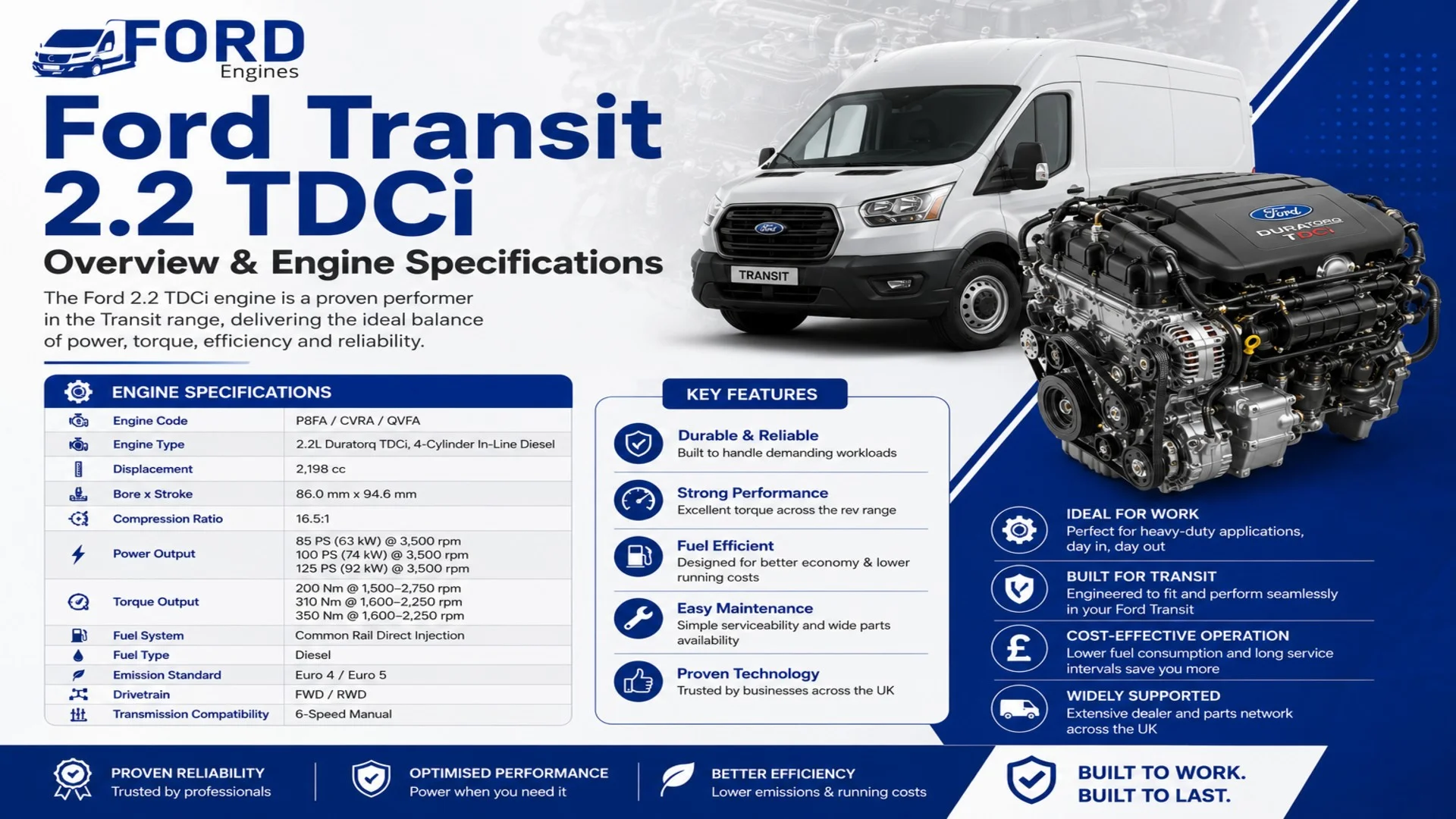
The 2.2 TDCi is part of Ford's Duratorq engine family, built on what's internally known as the Puma platform, a lineage that stretches back through several generations of Ford diesel engines. It replaced the older 2.4 TDCi in the Transit range and was later succeeded by the 2.0 EcoBlue, making it the middle chapter in the Transit's diesel engine evolution.
You'll find the 2.2 TDCi fitted across both the Transit Mk7 and Transit Mk8, as well as early versions of the Transit Custom 2.2. It's a turbocharged, common rail diesel using variable geometry turbo technology, which was a genuine step forward in efficiency and responsiveness compared to its predecessor.
Engine Code Identification & Duratorq/Puma Origins
If you're trying to confirm exactly which engine sits in your Transit, the engine code is your most reliable reference point, it's stamped on the block itself and also referenced on your V5C logbook. The 2.2 TDCi shares its architecture with the Puma diesel family, a design Ford used extensively across both commercial and passenger vehicles through the 2000s and 2010s.
Euro 4 vs Euro 5 Differences
Emissions standards changed meaningfully between the Euro 4 and Euro 5 versions of this engine:
- Euro 4 Transit models generally have simpler emissions control systems, without a diesel particulate filter in many configurations
- Euro 5 Transit models introduced DPF systems as standard, along with refined EGR valve calibration to meet stricter NOx limits
This matters practically because Euro 5 vans are more likely to experience DPF-related issues (more on that shortly), while Euro 4 vans tend to have simpler, and arguably more robust, emissions systems, though with the trade-off of higher local emissions output.
Transit Mk7 vs Mk8 Engine Variants
The Mk7 Transit (roughly 2006–2014) was the primary home for the 2.2 TDCi, while the Mk8 (2014 onwards) largely transitioned toward the 2.0 EcoBlue, though some early Mk8 and Transit Custom variants retained the 2.2 TDCi during the changeover period. If you're comparing a used Mk7 against a used Mk8, engine architecture is one of the clearest differentiators beyond bodywork and styling.
Power and Torque Figures Across Model Years
Ford offered the 2.2 TDCi in multiple power outputs, generally ranging from 100 PS up to 155 PS, depending on the specific model year and van configuration. Torque figures scale accordingly, with higher-output variants delivering noticeably stronger low-end pulling power, a genuinely important factor if your Transit spends its life loaded or towing.
For context, the 125 PS and 155 PS variants were the most common choices for panel van and Transit Custom 2.2 configurations aimed at trade and fleet use, offering a solid balance between everyday drivability and load-carrying capability.
Does the 2.2 TDCi Have a Timing Belt or Chain?
This is one of the most searched, and most consequential, questions about this engine, and the answer depends on which variant you have.
Earlier 2.2 TDCi engines used a timing belt, not a chain. This is a critical distinction because belts have a finite service life and require replacement at manufacturer-specified intervals, typically around 100,000 miles or 10 years, whichever comes first. Missing this interval is one of the most common causes of catastrophic, unrecoverable engine failure on this platform, if the belt snaps, the pistons and valves collide, and you're looking at a full rebuild or replacement engine, not a simple repair.
If you're unsure whether your van has a belt or chain, checking the engine code or consulting a Ford dealer or specialist is worth doing well before you approach a major service milestone.
Fuel Economy & Real-World MPG
Ford Transit 2.2 TDCi owners typically report real-world fuel economy in the range of 28 to 34 mpg, depending on load, driving style, and whether the van is mostly doing motorway miles or stop-start urban work. Heavier loads and short journeys, the classic delivery van pattern, will pull that figure down, while consistent motorway driving tends to bring it up toward the higher end of that range.
Is the Ford Transit 2.2 TDCi Reliable? Common Problems Explained
Here's the honest answer: the 2.2 TDCi has a generally strong reliability reputation among trade users and independent garages, but it's not without known weak points. Understanding these upfront means you can catch problems early, rather than being blindsided by an expensive repair.
Turbocharger Issues & Failure Signs
Turbo problems are among the more commonly reported issues on this engine, particularly on higher-mileage examples. Watch for:
- Whistling or whining noises under acceleration, often an early sign of turbo bearing wear
- Loss of power or sluggish acceleration, particularly noticeable when trying to build boost under load
- Blue or grey smoke from the exhaust, which can indicate oil getting past worn turbo seals
Turbo Actuator & Boost Pressure Faults
Many 2.2 TDCi turbo complaints actually trace back to the turbo actuator rather than the turbocharger itself. The actuator controls the variable geometry vanes, and when it fails or sticks, you'll often see symptoms that mimic a full turbo failure, reduced boost pressure, hesitant acceleration, and sometimes an engine management light referencing boost pressure faults. This is worth ruling out with a proper diagnostic scan before committing to a full turbo replacement, since actuator repairs are considerably cheaper.
Injector Problems & Leak Symptoms
Diesel injectors on the 2.2 TDCi are a genuine wear item, and symptoms of injector problems typically include:
- Rough idle or a noticeable knocking sound, especially when cold
- Hard starting, particularly in colder weather
- Reduced fuel economy and a general sense the engine's lost some of its usual smoothness
- Visible fuel or oil leaks around the injector seals, which is a common failure point as seals age and harden
Bosch vs Delphi Injector Comparison
Depending on model year, Ford fitted both Bosch and Delphi injectors to the 2.2 TDCi across its production run. Anecdotally, both brands have a reasonable reliability track record when maintained properly, though injector coding requirements differ between the two, meaning a replacement injector often needs to be coded to the vehicle's ECU to run correctly. This is a detail worth confirming with whoever's doing the replacement work, as incorrect coding can lead to rough running even with a perfectly good new injector.
DPF & EGR Valve Warning Signs
Euro 5 Transit models with a diesel particulate filter can run into DPF-related issues, particularly on vans used mostly for short journeys that never get hot enough for the DPF to regenerate naturally. Common signs include:
- A DPF warning light on the dashboard
- Reduced power as the engine protects itself
- Increased fuel consumption during regeneration cycles
The EGR valve is another frequent culprit, especially on higher-mileage vans. Carbon build-up on the EGR valve can cause rough idling, hesitation, and occasionally trigger limp mode. Regular EGR cleaning as part of routine maintenance can meaningfully reduce the frequency of these problems.
Diagnosing Limp Mode, Loss of Power & Smoke
Limp mode is the engine's built-in protection response, deliberately restricting power when it detects a fault serious enough to risk damage if you keep driving normally. It's not a fault in itself, it's a symptom pointing to something else, commonly:
- Turbo or boost pressure faults
- MAF or MAP sensor issues
- EGR valve problems
- Injector faults
Reading OBD Fault Codes at Home
A basic OBD diagnostic scanner can save you a significant amount of guesswork, and money, before you even book the van in. Fault codes won't always give you the exact cause, but they'll point you toward the right system (fuel, emissions, boost, sensors), which narrows down the diagnostic process considerably. For anyone running a Transit regularly for work, a decent code reader is a genuinely worthwhile investment.
Maintenance, Servicing & Engine Lifespan
Reliability on the 2.2 TDCi comes down almost entirely to maintenance discipline. This is not a "fit and forget" engine, but it rewards proper care with genuinely impressive longevity.
Recommended Service Schedule by Mileage
Ford's recommended service intervals for the 2.2 TDCi typically follow this general pattern, though always check your specific handbook for exact figures based on your van's age and usage classification:
- Oil and filter changes roughly every 10,000–15,000 miles, or annually, whichever comes first
- Fuel filter replacement at similar intervals, more frequently if you regularly use lower-quality fuel sources
- Timing belt replacement (belt-driven variants) at approximately 100,000 miles or 10 years
- Air filter checks at every service, replaced as needed based on operating conditions
Vans doing predominantly short, low-speed journeys, classic urban delivery work, often benefit from slightly more frequent servicing than the standard interval suggests, since this driving pattern is harder on both the DPF and EGR systems.
Best Engine Oil & Oil Capacity
The 2.2 TDCi requires a fully synthetic diesel engine oil meeting Ford's specification, typically 5W-30, with oil capacity generally sitting between 6 and 7 litres including the filter, though this varies slightly by exact engine code and model year. Using the correct specification oil, not just the right viscosity, but the correct approval rating, matters more on this engine than owners often realise, particularly for protecting the turbocharger and maintaining DPF performance.
How Long Does a 2.2 TDCi Engine Last?
With consistent maintenance, the 2.2 TDCi is genuinely capable of reaching 200,000 to 250,000 miles, and there are well-documented examples in fleet and trade use exceeding 300,000 miles. The engines that fail early are almost always let down by missed timing belt intervals, neglected oil changes, or continuous short-journey use without any longer runs to help the DPF regenerate, not by inherent design weaknesses.
High-Mileage Ownership Tips
If you're running a high-mileage 2.2 TDCi, a few habits go a long way:
- Take the van on a sustained motorway run periodically to help DPF regeneration
- Don't ignore small oil leaks, they're often cheaper to fix early than after they've caused wider damage
- Keep a service log, even informally, so you know exactly when the timing belt is due
Preventative Maintenance Checklist
A sensible baseline maintenance routine for the 2.2 TDCi includes: regular oil and filter changes on schedule, timing belt replacement without delay at the specified interval, periodic EGR valve cleaning, fuel filter changes to protect the injectors and fuel pump, and keeping an eye on coolant levels and condition to avoid overheating-related stress on the cylinder head. None of this is complicated, but skipping it consistently is exactly how otherwise solid engines end up needing expensive intervention.
Engine Replacement, Rebuild & Buying Guide
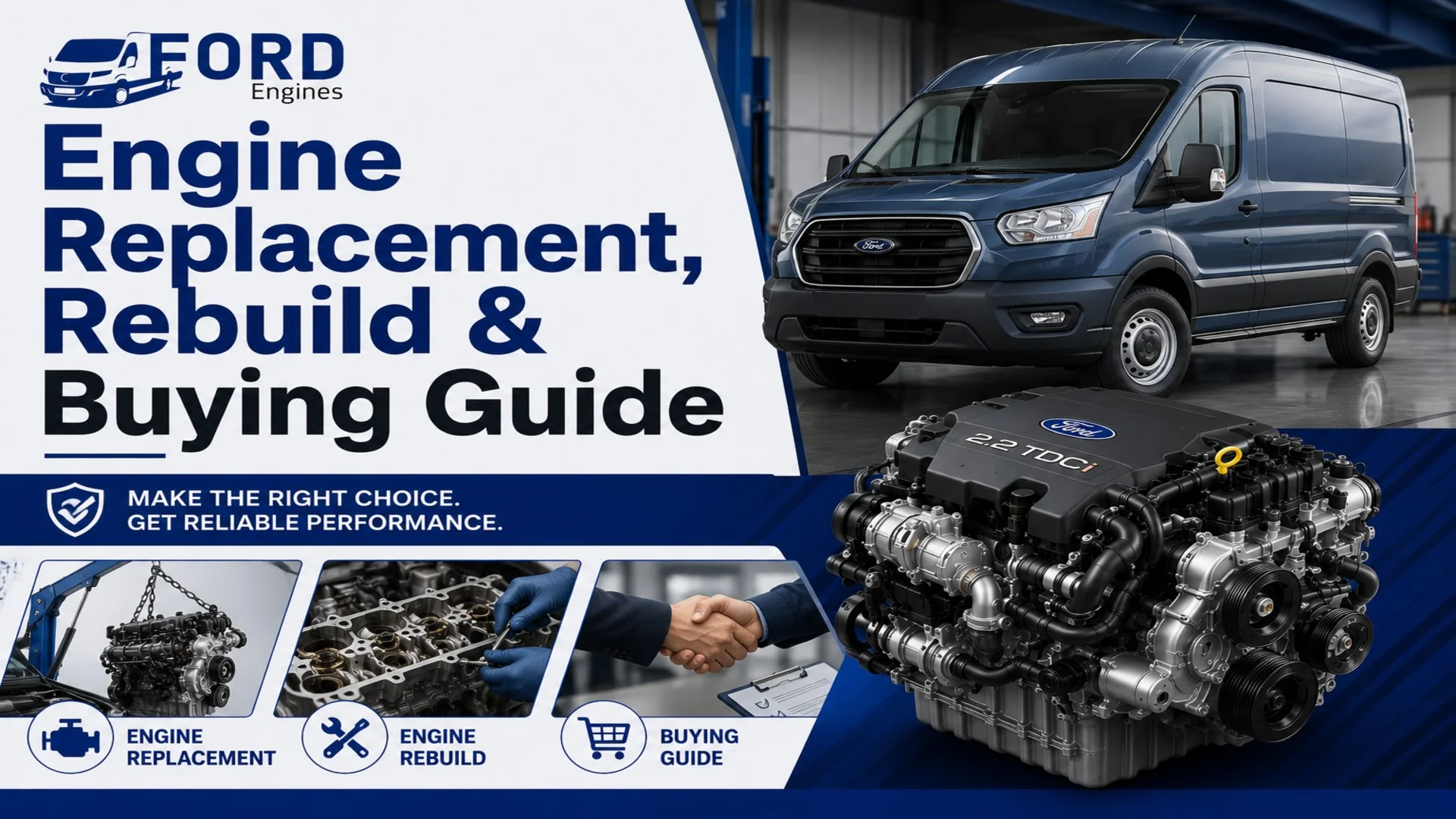
Eventually, some 2.2 TDCi engines reach a point where ongoing repairs no longer make financial sense. Knowing your options, and their real costs, helps you make that call with confidence rather than guesswork.
Rebuild vs Replacement: Which Makes Sense?
The right choice depends heavily on what's actually failed:
- Rebuilding makes sense when the core engine block and major components are sound, but specific parts, pistons, rings, bearings, head gasket, have worn or failed. It's typically more labour-intensive but can be cost-effective if the block itself is in good condition.
- Replacement tends to make more sense when damage is severe (such as a snapped timing belt causing valve damage) or when the cost of a proper rebuild approaches or exceeds the cost of a quality reconditioned unit.
Reconditioned vs Used vs New Engine Costs
Option | Typical Cost Position | Best For |
| Used engine | Lowest upfront cost | Budget-conscious repairs, shorter-term ownership plans |
| Reconditioned engine | Mid-range, often warrantied | Best balance of reliability, cost, and peace of mind |
| New engine | Highest cost | Long-term ownership, maximum lifespan expectation |
For most Transit owners and trade users, a reconditioned engine hits the sweet spot, rebuilt to proper tolerances with new wear components, usually backed by a warranty, without the premium price tag of a brand-new unit.
What to Check When Buying a Used Transit 2.2 TDCi
If you're buying rather than repairing, a few checks can save you considerable grief:
- Ask for a full service history, particularly proof the timing belt has been replaced on schedule
- Check for oil leaks around the cylinder head, sump, and turbo housing during a cold start
- Listen for unusual engine noise at idle and under load
- Confirm whether the van has a DPF and EGR valve, and ask about any related warning lights in its history
VIN-Based Engine Verification
Cross-referencing the van's VIN number confirms the exact engine fitted, which is particularly useful if a seller's description is vague or if the van has had an engine swap at some point in its history, something that happens more often than buyers expect on high-mileage commercial vehicles.
Get a Ford Transit 2.2 TDCi Engine Quote
If your Transit's 2.2 TDCi has reached the point of needing a rebuild or replacement, getting clear numbers in front of you before committing to any repair path is the smart move. At fordengines.co.uk, you can get a straightforward quote on reconditioned and replacement engines matched to your exact engine code, helping you weigh up rebuild versus replacement with real costs, not guesswork.
Frequently Asked Questions
Is the Ford Transit 2.2 TDCi reliable?
Yes, generally. With proper maintenance, particularly timely timing belt replacement and regular servicing, the 2.2 TDCi has a strong reliability record among fleet and trade operators.
How long does a Ford Transit 2.2 engine last?
Most well-maintained examples reach 200,000 to 250,000 miles, with some documented cases exceeding 300,000 miles.
What engine is in the Ford Transit 2.2?
It's a Ford Duratorq 2.2 TDCi, part of the Puma diesel engine family, fitted across the Transit Mk7, Transit Mk8, and early Transit Custom 2.2 models.
Does the 2.2 TDCi have a timing belt or chain?
Earlier variants use a timing belt requiring replacement at roughly 100,000 miles or 10 years. Always confirm your specific engine code, as this affects whether belt replacement is due.
Why is my Transit losing power?
Common causes include turbo or boost pressure faults, EGR valve problems, injector issues, or the engine entering limp mode as a protective response to a detected fault.
Why is my Transit smoking?
Blue or grey smoke often points to oil getting past worn turbo seals or piston rings, while black smoke typically indicates a fuelling or injector issue.
What oil does a 2.2 TDCi use?
A fully synthetic 5W-30 diesel engine oil meeting Ford's approved specification, with capacity typically around 6–7 litres including the filter.
How often should the fuel filter be changed?
Generally in line with standard service intervals, though more frequent changes are sensible if the van regularly uses lower-quality fuel or does heavy short-journey work.
What causes injector failure?
Wear over time, contaminated fuel, and hardened injector seals are the most common causes, leading to rough idling, hard starting, and reduced economy.
How much does a replacement engine cost?
Costs vary depending on whether you choose used, reconditioned, or new, with reconditioned engines typically offering the best balance of cost and reliability.
Is the 2.2 better than the 2.0 EcoBlue?
Both have strengths, the 2.2 TDCi is known for mechanical simplicity and strong low-end torque, while the 2.0 EcoBlue offers improved efficiency and lower emissions. The "better" choice depends on your priorities: raw durability and towing versus modern efficiency.
What MPG does a Transit 2.2 get?
Typically between 28 and 34 mpg in real-world use, depending on load and driving conditions.
Final Thoughts
The Ford Transit 2.2 TDCi has earned its reputation as a dependable workhorse, but that reliability isn't automatic, it's the result of respecting service intervals, catching early warning signs before they become expensive failures, and understanding exactly what you're dealing with when something does go wrong. Whether you're troubleshooting a turbo fault, weighing up a rebuild against a full replacement, or checking over a used Transit before you buy it, knowing the specifics of this engine puts you in a far stronger position than guessing.
If your 2.2 TDCi has reached the point where repair costs no longer stack up, fordengines.co.uk can help you find the right reconditioned or replacement engine for your exact Transit, with clear quotes and no pressure. Get in touch to talk through your options and get your van back on the road properly.