
If your Transit's engine light just came on, or you're hearing a knock that wasn't there last week, you're probably not looking for another generic listicle. You want to know if it's serious, what it'll cost, and whether your van is worth fixing. Fair enough, a Transit off the road is lost income, missed jobs, and a headache you don't have time for.
We've supplied and fitted Ford Transit engines for years from our base in Grays, Essex, and the questions we get asked are almost always the same three: which engine is actually reliable, what's gone wrong with mine, and how much is this going to cost me. This guide answers all three, in plain English, without the sales fluff.
Which Ford Transit Engine Is the Most Reliable?
This is the question every Transit owner asks eventually, usually right after something's gone wrong. The honest answer depends on which generation and engine code you're dealing with, so let's break it down properly.
Ford Transit 2.0 EcoBlue, Is It Reliable?
The 2.0 EcoBlue replaced the older Duratorq units and, on the whole, it's a solid engine. It's more efficient, meets Euro 6 emissions standards, and performs well when it's maintained properly. Where it falls down is with owners who skip servicing or ignore early warning signs.
Common EcoBlue engine complaints:
- DPF (Diesel Particulate Filter) blockages on vans used mostly for short, stop-start city runs
- EGR valve issues that trigger limp mode
- Occasional turbo actuator faults on higher-mileage examples
None of these are deal-breakers. They're mostly a consequence of how the van is driven, not a fundamental design flaw. A Transit doing regular motorway miles will usually treat its EcoBlue engine far better than one stuck in stop-start traffic all day.
Ford Transit 2.2 TDCi vs 2.4 TDCi, Which Lasts Longer?
Both engines have a strong reputation among fleet operators and tradesmen, and it's rare to hear of either failing outright without warning.
Feature | 2.2 TDCi | 2.4 TDCi |
| Typical lifespan | 200,000+ miles with good maintenance | 250,000+ miles, known for durability |
| Common weak point | Injector wear over high mileage | Turbocharger on early Euro 4 models |
| Best suited for | Lighter loads, mixed driving | Heavy-duty, long-distance use |
| Timing setup | Belt (interval-dependent) | Chain (less scheduled maintenance) |
If you're buying used and torn between the two, the 2.4 TDCi generally has the edge for sheer longevity, particularly in older Transit vans built for heavy commercial use. The 2.2 TDCi is no slouch either, but injector wear tends to creep in earlier if oil changes have been neglected.
Does the Ford Transit Have a Timing Belt or Timing Chain?
This is one of the most searched Transit engine questions, and for good reason, it directly affects your maintenance bill.
Why this affects long-term reliability:
- Timing belt engines (like many 2.2 TDCi variants) need the belt replaced at set mileage or age intervals, regardless of how the van looks or drives. Miss this and you risk catastrophic engine damage if the belt snaps.
- Timing chain engines (common in 2.4 TDCi and some EcoBlue units) don't have a fixed replacement interval, but they're not maintenance-free, chains can stretch over very high mileage, causing rattling on startup.
If you're unsure which your van has, check your handbook or give us a call, it's a five-minute conversation that could save you a very expensive mistake.
Common Ford Transit Engine Problems (And What They Mean)
Most Transit engine issues give warning signs before they become serious. Catching them early is the difference between a repair bill and a full engine replacement.
Turbocharger and Injector Failures, Warning Signs
Turbo problems and injector faults are two of the most frequent reasons Transit owners end up in our garage.
Signs of turbocharger trouble:
- Whining or whistling noise under acceleration
- Blue or black smoke from the exhaust
- Noticeable loss of power, especially at higher revs
- Engine management light with a boost pressure fault code
Signs of injector problems:
- Rough idle or engine misfiring
- Poor fuel economy that's crept up gradually
- A distinct knocking noise, particularly on cold starts
- Failed emissions or excessive smoke on MOT testing
Both faults tend to worsen quickly if ignored, and a failing turbo can send debris into the engine oil system, causing wider damage. If you've noticed any of the above, it's worth getting it looked at before your next long drive.
EGR Valve and DPF Blockage Symptoms
The EGR valve and DPF work together to keep your Transit's emissions in check, and they're a common source of complaints, particularly on vans doing lots of short trips.
A sticking EGR valve usually shows up as rough idling, stalling at junctions, or a sudden drop in performance. A blocked DPF often triggers a dashboard warning and can put the van into limp mode until it's cleared or regenerated. Neither is usually catastrophic on its own, but both point to an engine that needs attention soon rather than later.
Why Is My Transit Engine Losing Power or Knocking?
Loss of power and knocking noises are two of the most common complaints we hear, and they can stem from several different causes.
When a warning light means something serious
Not every dashboard light means disaster, but some combinations are worth taking seriously straight away:
- Engine management light plus a noticeable power drop, often turbo, injector, or sensor-related
- Oil pressure warning combined with knocking, stop driving immediately, this can indicate serious internal wear
- Coolant temperature warning with steam or a sweet smell, points to a coolant leak or head gasket issue
Should you repair or replace at this point?
This depends on mileage, the specific fault, and your van's overall condition. A minor sensor fault on a well-maintained engine is worth repairing every time. But if you're looking at a cracked block, extensive internal damage, or a string of expensive repairs on a high mileage engine, a replacement engine often works out more cost-effective in the long run than chasing repair after repair.
Ford Transit Engine Replacement Cost & Options
Once repair costs start stacking up, most Transit owners start asking the same question: is it cheaper to just replace the engine?
How Much Does a Ford Transit Engine Replacement Cost in the UK?
Costs vary depending on the engine size, whether you go reconditioned, remanufactured, or used, and whether you're paying for supply only or supply and fit. As a general guide, budget for a meaningful investment, but it's almost always significantly less than a brand-new van, and a properly fitted replacement engine can add many years of reliable service.
The exact figure depends on:
- Engine type (2.0 EcoBlue, 2.2 TDCi, 2.4 TDCi, 3.2 TDCi, or EcoBoost)
- Whether the engine is reconditioned, remanufactured, or a low-mileage used unit
- Labour costs for supply and fit versus supply only
- Any additional parts needed during fitting, such as gaskets, timing components, or ancillaries
For an accurate quote based on your specific van and engine code, it's always best to speak directly with a specialist rather than rely on a generic online estimate.
Reconditioned vs Remanufactured vs Used Engines, What's the Difference?
These terms get used interchangeably online, but they're not the same thing, and the difference matters when you're spending your money.
Engine Type | What It Means | Typical Warranty |
| Reconditioned | Rebuilt using a mix of original and new components; worn parts replaced as needed | Usually 6-12 months |
| Remanufactured | Fully stripped, cleaned, and rebuilt to close to original specification with new wear parts | Often longer, sometimes 12+ months |
| Used | A tested engine taken from another vehicle, generally with lower mileage than your current one | Shorter, sometimes limited |
Which option comes with the best warranty?
Remanufactured engines generally carry the strongest warranties because every wear component has been replaced rather than reused where possible. Reconditioned engine are a solid middle ground, often more affordable while still offering decent peace of mind. Used engines are the budget option and can work well if you're simply looking to extend the van's life a few more years without a big outlay.
Genuine vs Aftermarket Ford Transit Engines, What Should You Choose?
Genuine Ford components are built to original specification and tend to offer the most predictable fit and performance. Aftermarket options can be more affordable and, from reputable suppliers, perfectly reliable, but quality varies considerably between suppliers. If cost is a major factor, ask your supplier directly about the origin of the parts used in any rebuild, and don't be afraid to request evidence of testing or quality control.
Get Your Ford Transit Engine Supplied & Fitted in Grays, Essex
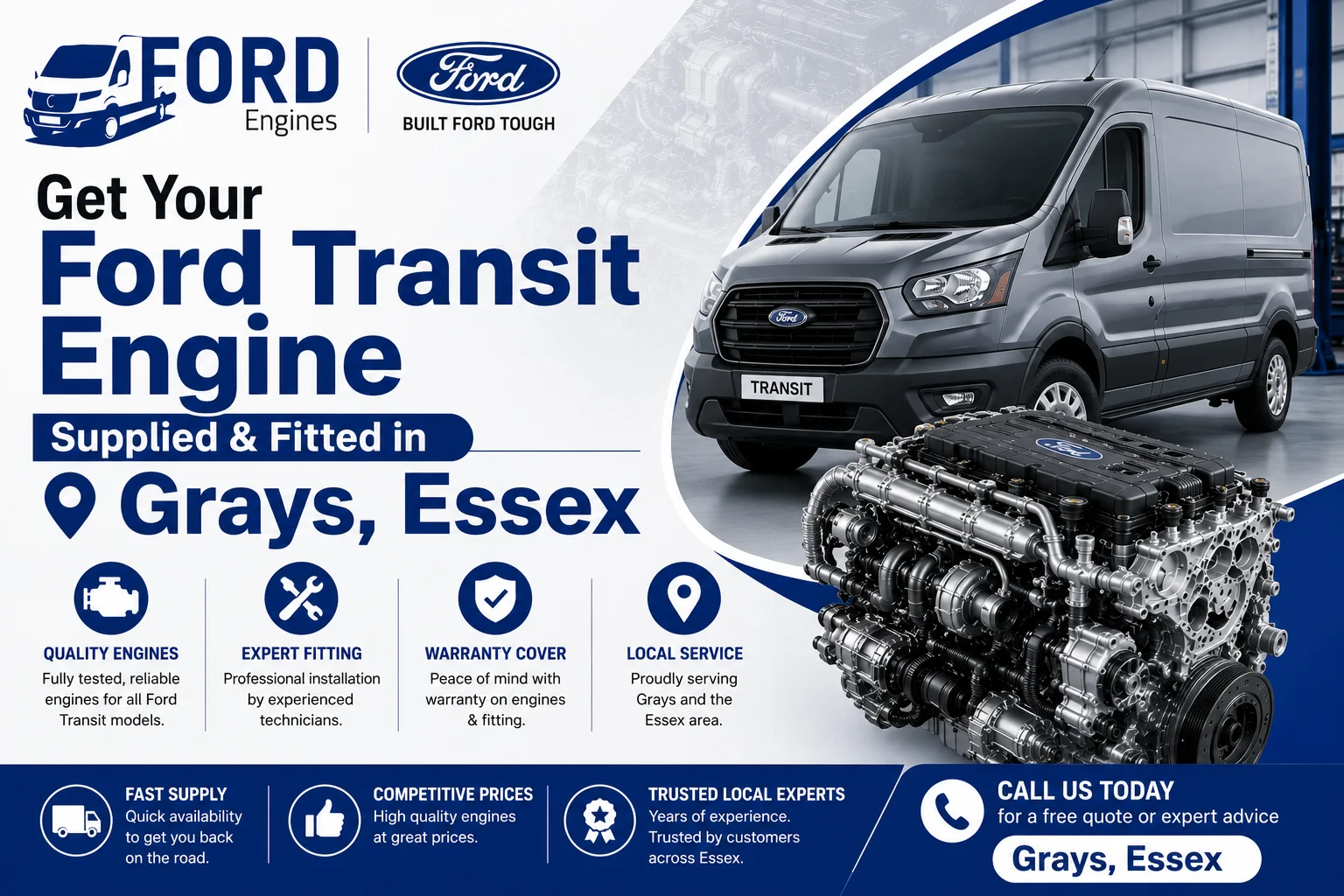
If you've read this far, you've probably already got a good idea of what's wrong with your van, or you're weighing up whether a replacement engine makes sense. Either way, the next step is getting a proper assessment from someone who works on Transit engines every day.
Why Choose Fordengines.co.uk for Supply and Fit?
We specialise specifically in Ford Transit engines, which means we're not guessing our way through unfamiliar territory the way a general garage might. We know the common failure points on the EcoBlue, TDCi, and Duratorq ranges, and we can usually tell you what's likely going on before we've even lifted the bonnet.
Warranty, turnaround time & what's included
- Engines supplied with a clear warranty, so you know exactly what's covered
- Honest advice on repair versus replacement, we won't sell you a new engine if a repair will do the job
- Fitting carried out by technicians who work on Transit vans day in, day out
- Realistic turnaround times, because we know a van off the road costs you money
Get a Free Engine Quote Today
Whether you're dealing with a knock you can't explain, a warning light that won't clear, or you already know you need a replacement engine, get in touch for a straightforward, no-obligation quote. We're based in Grays, Essex, and we're happy to talk you through your options over the phone before you commit to anything.
Frequently Asked Questions
What is the best Ford Transit engine for reliability?
The 2.4 TDCi has one of the strongest reputations for long-term durability, particularly in high-mileage commercial use. The 2.0 EcoBlue is also reliable when serviced regularly, especially on vans that get regular motorway use rather than constant short trips.
How long do Ford Transit engines last?
With proper maintenance, most Transit diesel engines can comfortably reach 200,000 to 250,000 miles, and some go well beyond that. Engine life comes down heavily to servicing history, driving conditions, and how quickly problems are addressed when they arise.
What causes Ford Transit engine failure?
The most common causes are neglected servicing, ignored warning lights, turbocharger failure sending debris through the oil system, timing belt failure on interval-dependent engines, and prolonged overheating from coolant leaks.
Is it worth replacing a Ford Transit engine or buying a new van?
In most cases, replacing the engine is significantly cheaper than buying a new or newer used van, provided the rest of the vehicle is in good condition. It's a decision worth discussing with a specialist who can look at your specific van's overall condition, not just the engine.
Which Ford Transit engine has a timing belt?
Several 2.2 TDCi variants use a timing belt, which needs replacing at manufacturer-recommended intervals regardless of visible wear. Many 2.4 TDCi and newer EcoBlue engines use a timing chain instead, which doesn't have a fixed replacement schedule but should still be inspected periodically.
How much does a Ford Transit engine rebuild cost compared to replacement?
A rebuild can sometimes be more cost-effective if the damage is limited to specific components, but a full replacement engine often works out better when multiple issues are present, since you're getting a fully tested unit rather than a repaired one with unknown remaining life in other parts.
Engine trouble in a Transit is rarely the end of the road — most problems are fixable, and even a full replacement engine is usually a far better investment than replacing the whole van. If you're dealing with any of the symptoms covered above, don't wait for it to get worse. Get in touch with our team in Grays, Essex today for a free, honest assessment and quote — we'll tell you straight whether you need a repair, a rebuild, or a full replacement engine, and we'll get your Transit back on the road with minimum downtime.