

That rattle you heard on cold start this morning wasn't nothing. If you drive a Ford with a 1.0 EcoBoost or 2.0 EcoBlue engine, it might be the first sign of a problem that, left unchecked, can turn a four-figure repair into a five-figure engine replacement. Ford wet belt problems have become one of the most searched, most misunderstood, and most feared issues among Ford owners in the UK, and for good reason. Unlike a traditional cambelt that fails predictably and gives you time to react, a wet belt can deteriorate quietly inside the engine, shedding material into the oil system long before you notice anything wrong.
This guide breaks down exactly what a wet belt is, why it fails, how to spot the warning signs early, what replacement actually costs, and what to check before buying a used Ford that has one. No jargon for the sake of it, no vague scare stories, just what you actually need to know, drawn from how these failures play out in real workshops on real engines.
What Is a Ford Wet Belt and Which Models Are Affected?
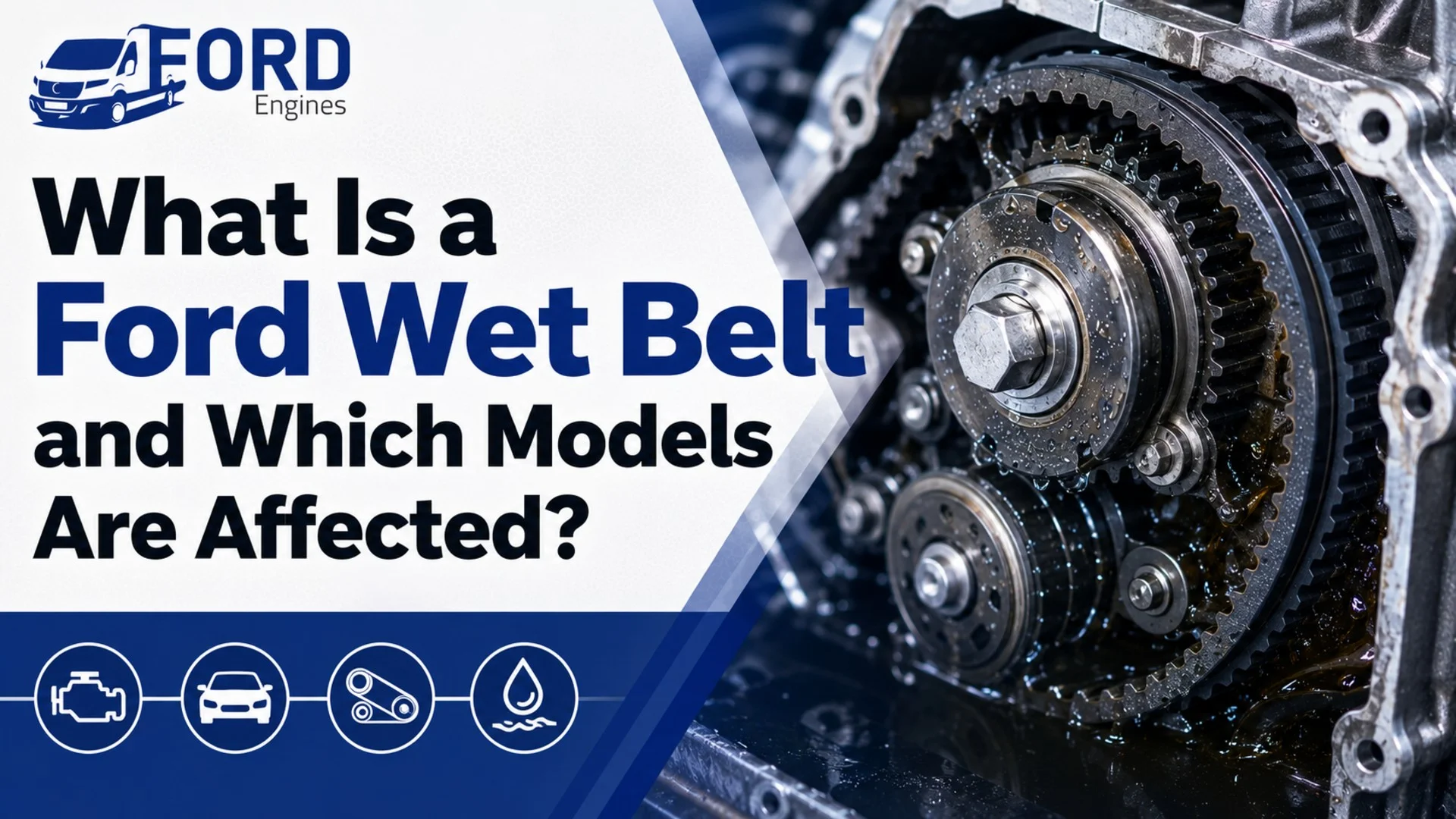
What Is a Ford Wet Belt? (And How Is It Different from a Timing Chain or Dry Belt?)
A wet timing belt is exactly what it sounds like, a rubber timing belt that runs submerged in engine oil, rather than sealed away in a dry housing like a conventional cambelt, or bathed in oil like a timing chain.
Ford introduced this design to cut friction, reduce weight, and squeeze out better fuel economy on smaller-capacity turbocharged engines. On paper, it's a clever piece of engineering. In practice, it's created one of the most talked-about reliability concerns in Ford's recent engine lineup.
The core issue is material compatibility. Standard timing belt rubber wasn't originally engineered to sit in oil indefinitely. Over time, and especially when oil condition isn't kept in check, the belt material starts to break down from the inside out. That's the root of almost every Ford wet belt problem you'll read about.
Which Ford Engines Use a Wet Belt?
Not every Ford has a wet belt, so it's worth checking your specific engine before assuming the worst. The wet belt setup appears across two main engine families:
Ford 1.0 EcoBoost Petrol Models (Fiesta, Focus, Puma, EcoSport, B-Max, C-Max)
The 1.0-litre EcoBoost, Ford's compact three-cylinder turbo petrol engine, uses a wet timing belt on many production years. You'll find it in:
- Ford Fiesta (2012 onwards)
- Ford Focus
- Ford Puma
- Ford EcoSport
- Ford B-Max
- Ford C-Max
- Ford Kuga (selected 1.0 and 1.5 EcoBoost variants)
Ford 2.0 EcoBlue Diesel Models (Transit, Transit Custom, Ranger)
The 2.0 EcoBlue diesel engine takes a slightly different approach. Rather than the main timing belt itself running wet, it's the oil pump drive belt that sits submerged in oil, but the failure mechanism and consequences are strikingly similar. This affects:
- Ford Transit
- Ford Transit Custom
- Ford Ranger
If your Transit, Transit Custom or Ranger has had unexplained oil pressure warnings, it's worth having the oil pump belt specifically checked, not just the main timing components.
Why Does Ford Run the Timing Belt in Oil?
The logic behind a wet belt design comes down to friction reduction. A belt running in oil experiences less resistance than a dry belt running against air and a tensioner, which translates into small but measurable fuel economy and CO2 emissions gains, important for a manufacturer chasing efficiency targets across a compact-engine range.
The trade-off is durability. Where a dry timing belt might comfortably run for 100,000 miles or more with minimal fuss, a wet belt's lifespan is far more sensitive to oil quality, oil change frequency, and the exact oil specification used. Get any of those wrong, and the belt's service life can drop dramatically.
Ford Wet Belt Problems, Causes and Warning Signs
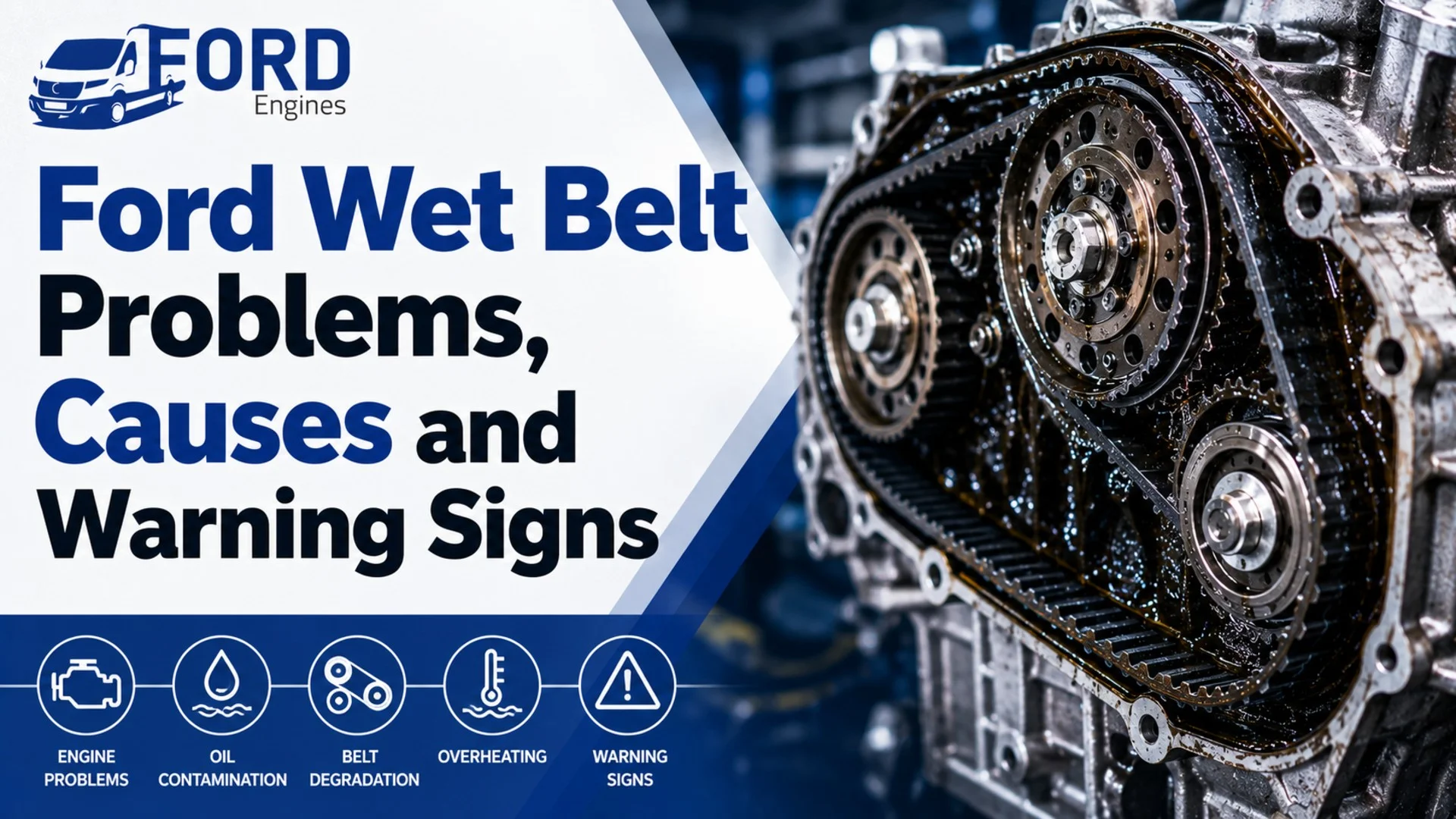
What Causes Ford Wet Belt Failure?
Wet belt failure rarely happens for one isolated reason. It's usually the result of several contributing factors compounding over time.
Incorrect Engine Oil or Extended Oil Change Intervals
This is, by far, the most common root cause. Wet belts are only compatible with the correct oil specification, typically a low-viscosity, low-SAPS oil that Ford specifies for these engines. Using the wrong oil, or letting oil sit well past its recommended change interval, accelerates belt degradation significantly.
Extended service intervals, some manufacturers have historically recommended intervals of 12,000 miles or more, don't always suit a wet belt's real-world tolerance for degraded oil, particularly on engines that do a lot of short journeys.
Age, Mileage and Natural Belt Degradation
Even with perfect servicing, rubber degrades with age and heat cycling. A wet belt operating well past the 60,000-70,000 mile mark, or one fitted to an older vehicle regardless of mileage, carries meaningfully higher failure risk. Belt material can crack, swell, or lose its bond with the reinforcing cords inside it.
Short Journeys, Heavy Loads, Towing and Poor Service History
Driving conditions matter more than most owners realise:
- Frequent short journeys mean the engine oil rarely reaches optimal operating temperature, accelerating fuel dilution and oil contamination
- Heavy loads and towing, particularly relevant to Transit, Transit Custom and Ranger owners, put sustained extra stress on the oil pump belt
- Commercial or high-mileage use compounds wear faster than typical private use
- Patchy service history, missed oil changes, or servicing done with non-specification oil are the single biggest predictors of early wet belt failure
If a vehicle you're looking at ticks several of these boxes, treat the wet belt as a priority inspection item, not an afterthought.
Ford Wet Belt Failure Symptoms to Watch For
Catching a wet belt problem early is almost always the difference between a manageable repair and a full engine rebuild. Here's what to listen and watch for.
Rattling or Ticking Noise on Cold Start
A rattling, ticking, or chain-like noise in the first few seconds after starting the engine, one that fades as the engine warms up, is one of the most consistently reported early warning signs. It typically points to belt material starting to degrade or tensioner components under strain.
Low Oil Pressure Warning Light
An oil pressure warning light, especially one that appears intermittently or under load, should never be ignored on a wet belt engine. This is often the first hard evidence that belt debris is beginning to interfere with oil flow.
Poor Running, Misfiring or Difficulty Starting
As belt wear progresses, you may notice rough idling, hesitation under acceleration, or the engine struggling to start cleanly. These symptoms often get misdiagnosed as unrelated ignition or fuel issues, which is why a proper wet belt inspection matters if the usual fixes don't resolve them.
Other symptoms worth flagging include an illuminated engine warning light, visible metallic or rubber debris in the oil on a dipstick check, and any unusual timing-related fault codes read during diagnostics.
How Wet Belt Debris Blocks the Oil Pickup and Causes Low Oil Pressure
This is the part of the story most articles gloss over, and it's the mechanism that turns a relatively cheap belt problem into serious engine damage. Understanding it helps explain why early detection matters so much.
The failure chain typically runs like this:
- Old or incorrect oil allows the belt material to degrade faster than it should
- Belt degradation causes small fragments and stripped teeth to break away from the belt
- Belt debris circulates through the engine oil system
- Debris reaches the oil pickup strainer, partially or fully blocking it
- Oil flow is restricted, reducing the volume of oil reaching the pump
- Oil pressure drops, sometimes suddenly, sometimes gradually
- Engine components, bearings, camshaft, turbocharger, lose adequate lubrication
- Component wear accelerates, often resulting in major internal damage
This is why a "small" wet belt fault can escalate so quickly. It isn't just a timing component issue, it's a lubrication system issue, and lubrication failure is one of the fastest ways to destroy an otherwise healthy engine.
How Long Do Ford Wet Belts Last, and What Does Replacement Cost?
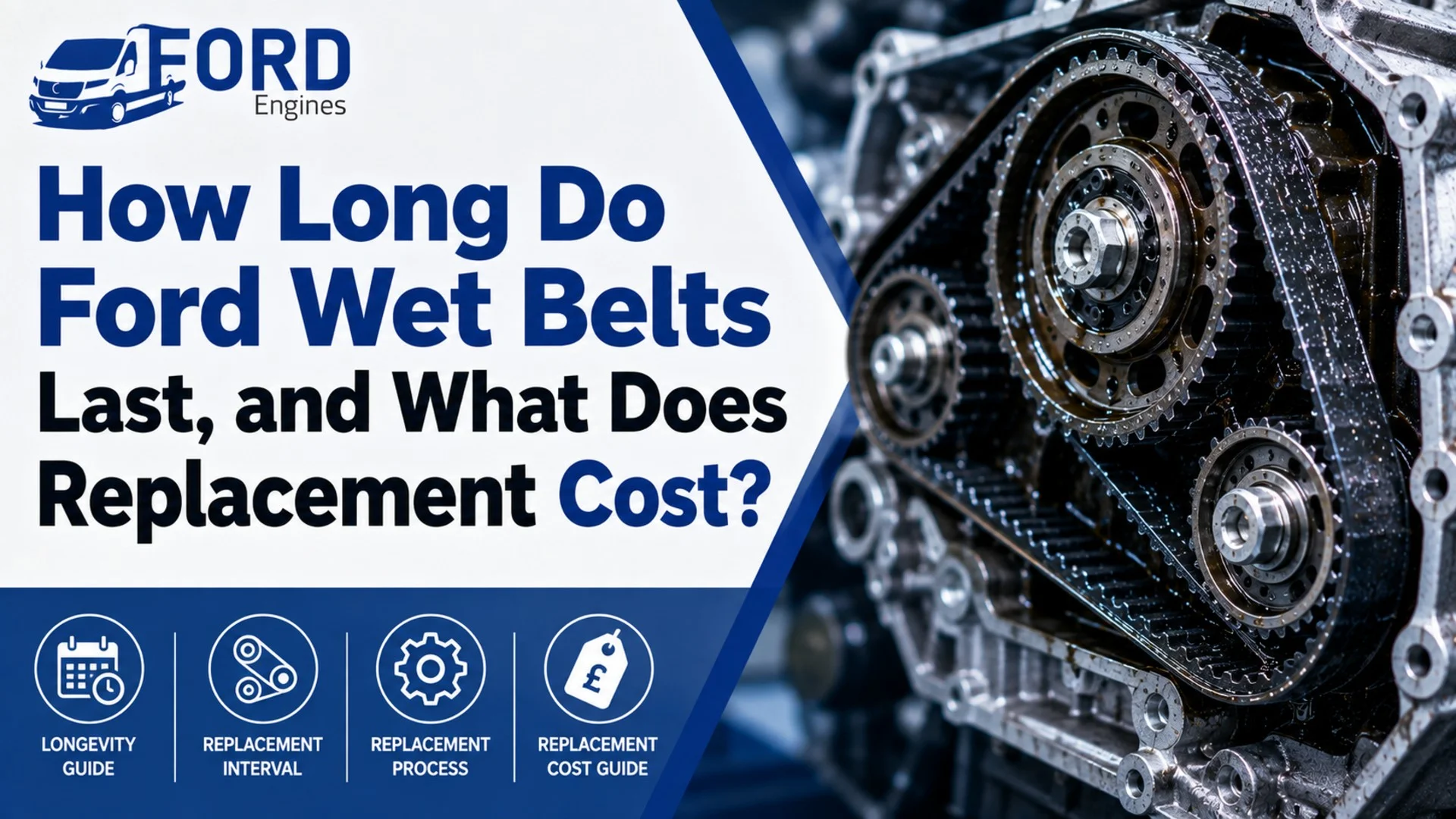
How Long Does a Ford Wet Belt Last? (Recommended Replacement Interval)
Ford's official position on wet belt replacement intervals has shifted over the years as failure data has come in, and figures vary by engine and model year, so always confirm the exact interval for your specific vehicle rather than relying on a general figure. As a working guide:
- 1.0 EcoBoost wet belt: many specialists now recommend proactive replacement in the region of 60,000-100,000 miles, or roughly 10 years, whichever comes first, noticeably more conservative than some original factory guidance
- 2.0 EcoBlue oil pump belt: interval recommendations vary by application and use case, with commercial and heavy-duty use typically warranting earlier replacement
Given the consequences of failure, most independent Ford specialists now advise treating these figures as maximums, not targets, inspecting sooner rather than later, particularly on higher-mileage or older vehicles.
How Much Does Ford Wet Belt Replacement Cost in the UK?
Replacement cost depends heavily on the engine, the vehicle's condition, and whether any secondary damage has already occurred. Here's a realistic breakdown for planning purposes.
Scenario | Typical UK Cost Range |
| Ford EcoBoost wet belt replacement (belt only, no damage) | £500 - £900 |
| Ford EcoBlue oil pump belt replacement | £600 - £1,000 |
| Wet belt replacement with tensioner and water pump | £700 - £1,200 |
| Engine damage from failed belt (partial rebuild) | £2,000 - £4,500+ |
| Full engine replacement after catastrophic failure | £4,500 - £8,000+ |
Ford EcoBoost Wet Belt Replacement Cost
For Fiesta, Focus, Puma and similar 1.0 EcoBoost models, a straightforward belt replacement, done proactively, before any failure symptoms appear, typically sits toward the lower end of the range. The moment debris has entered the oil system, costs climb sharply because the job now involves oil system cleaning, pickup inspection, and often bearing or turbo assessment.
Ford EcoBlue Wet Belt Replacement Cost
Transit, Transit Custom and Ranger repairs tend to sit slightly higher, reflecting the labour involved in accessing the oil pump belt and the larger engine platform. Commercial vehicle owners should also factor in vehicle downtime as part of the real-world cost of delaying a repair.
The clearest financial lesson here: a proactive belt replacement is consistently a fraction of the cost of a reactive one. Waiting for symptoms to appear is the single most expensive decision a wet belt owner can make.
Can You Still Drive With a Failing Wet Belt?
If you're already seeing warning signs, rattling, an oil pressure light, or an engine warning light, driving the vehicle further is a genuine risk, not just an inconvenience. Once belt debris starts restricting oil flow, every mile driven increases the chance of irreversible engine damage.
The safest course of action is to stop driving, avoid restarting the engine unnecessarily, and get the vehicle inspected by someone who understands wet belt failure specifically, not every general garage will know to check the oil pickup strainer as part of a standard diagnostic.
How to Prevent Ford Wet Belt Failure
Prevention is straightforward, even if it requires more discipline than some owners are used to with modern engines.
- Use the exact oil specification Ford lists for your engine, never substitute for convenience or cost
- Don't stretch oil change intervals, even if the vehicle's service reminder allows it, shorter intervals than the factory default are cheap insurance
- Have the belt proactively inspected or replaced at the mileage or age points outlined above, rather than waiting for symptoms
- Keep a full, verifiable service history, this protects both engine health and resale value
- Listen for cold-start noises and act on them immediately rather than waiting to see if they go away
None of this eliminates risk entirely, but it dramatically reduces the odds of an unexpected failure and keeps repair costs firmly in the "routine maintenance" category rather than the "engine rebuild" category.
Should You Buy a Ford With a Wet Belt? Plus Common Questions
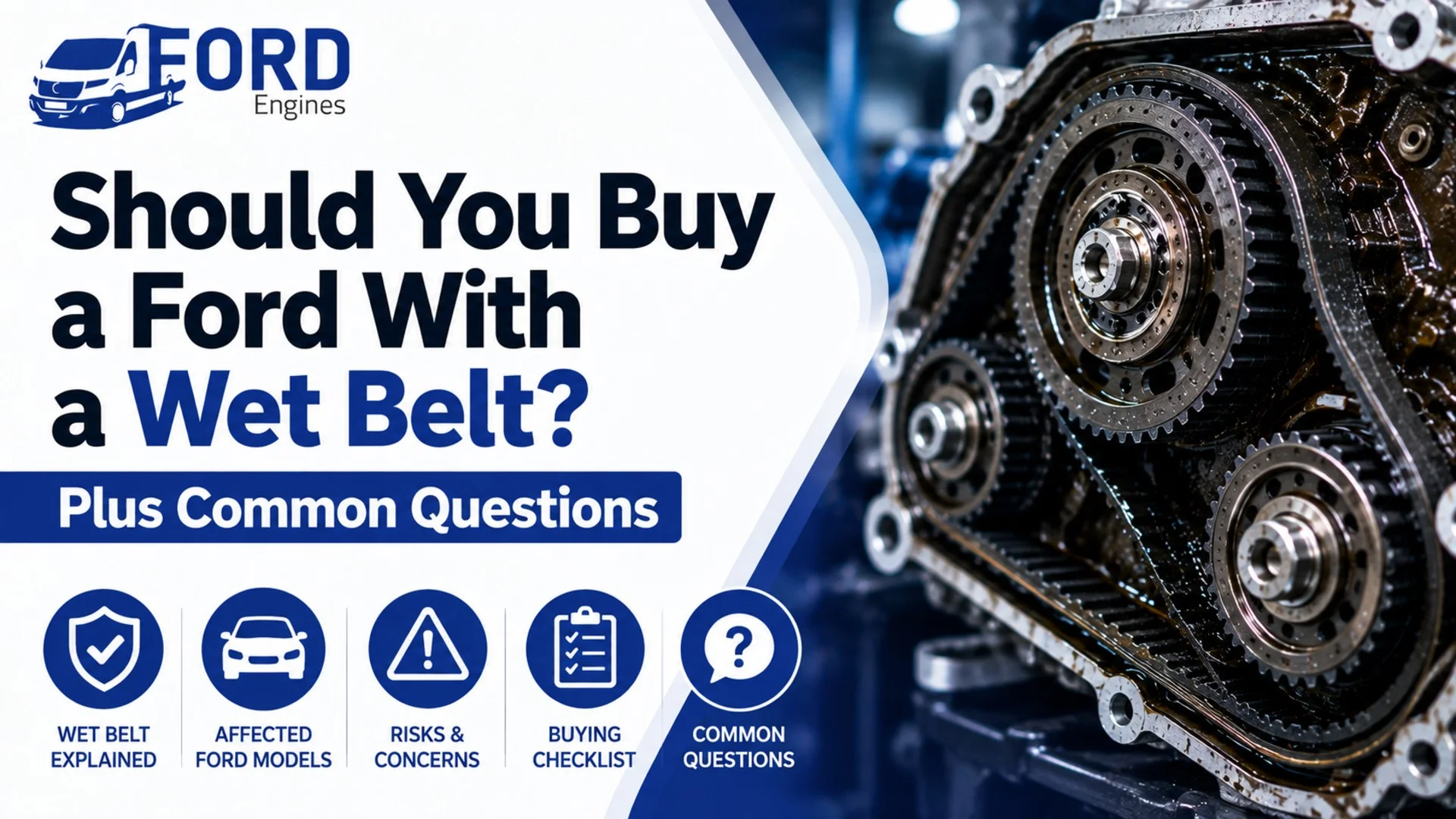
Should You Buy a Used Ford With a Wet Belt? (Buyer's Checklist)
Wet belt anxiety is real, and it's justified, but it shouldn't automatically rule out buying an otherwise good Ford. It should change how you buy one.
Before committing to a Fiesta, Focus, Puma, EcoSport, Transit, Transit Custom or Ranger with a wet belt engine, check the following:
- Full service history, specifically confirming oil changes were done on schedule with the correct specification oil
- Evidence of wet belt replacement, including invoices showing parts and mileage at replacement
- Current mileage and engine age against the recommended replacement interval
- Engine code, to confirm exactly which wet belt configuration the vehicle has
- Any history of oil pressure warnings, ask directly, and check for related fault codes in the vehicle's diagnostic history
- A pre-purchase inspection from someone who can specifically assess wet belt condition, not just a general used-car check
- Confirmed replacement cost if the belt is due soon, factored into your offer or budget
- Any remaining engine warranty, and what it does and doesn't cover for wet belt failure
A car with full documentation and a recently replaced belt is a very different proposition to one with a patchy history and an unknown belt age, even if they're the same model, year, and mileage. Treat the wet belt the way you'd treat a cambelt on any other used car: as a cost to plan for, not necessarily a reason to walk away.
Ford Wet Belt Problems: Frequently Asked Questions
Is the Ford Wet Belt Engine Reliable?
The underlying 1.0 EcoBoost and 2.0 EcoBlue engines are otherwise well-regarded for efficiency and performance. Reliability concerns are specifically tied to the wet belt component and how well it's been maintained, a well-serviced example with a known belt replacement history is a fundamentally different risk profile to a neglected one.
Can Wet Belt Failure Be Repaired, or Does It Need a New Engine?
It depends entirely on how far the failure has progressed. Caught early, noise or a warning light with no debris contamination, a belt replacement alone may resolve it. Once debris has circulated and caused bearing or component wear, repair can extend to a partial rebuild or, in severe cases, full engine replacement.
Is Ford Wet Belt Failure Covered Under Warranty?
This varies by vehicle age, mileage, and whether the failure can be linked to a manufacturing defect versus a maintenance issue. Vehicles still within Ford's original warranty period may have cover, though claims are frequently scrutinised for service history compliance. Independent extended warranties vary significantly in what they'll cover for wet belt-related damage, so it's worth checking the policy wording specifically rather than assuming general engine cover applies.
Get Your Ford's Wet Belt Checked Before It Becomes a Bigger Problem
Ford wet belt problems are manageable when they're caught early and genuinely serious when they're not. The difference between those two outcomes almost always comes down to timing, knowing your belt's age and mileage, watching for the early warning signs, and acting on them before debris has a chance to reach the oil pickup.
If you're hearing a cold-start rattle, you've had an unexplained oil pressure warning, or you simply don't know when your wet belt was last inspected, don't wait for it to get worse. Get in touch with the team at Ford Engines for a proper wet belt inspection, honest advice on replacement timing, and a clear, fixed-price quote, before a routine maintenance job turns into an engine rebuild.