

That faint ticking noise on a cold morning start. The oil pressure light that flickers off after a few seconds. A slight hesitation when you pull away from the lights. On their own, these things feel easy to dismiss, most drivers do dismiss them, right up until the engine starts running rough or the warning light stays on for good.
If your Ford has a wet belt engine, that hesitation could be the most expensive mistake you make this year. Wet belts don't fail gradually and gently, they degrade quietly for months, then let go in a way that can take the oil pump, the pickup strainer, the turbo, and sometimes the whole engine down with them. The good news is that a failing wet belt almost always gives warning signs first. You just need to know what you're looking and listening for.
This guide walks through every symptom of Ford wet belt failure, which engines and models are affected, why the belt fails in the first place, and what to actually do about it before a £150 repair turns into a £3,000 engine rebuild.
What Are the Symptoms of a Failing Ford Wet Belt?
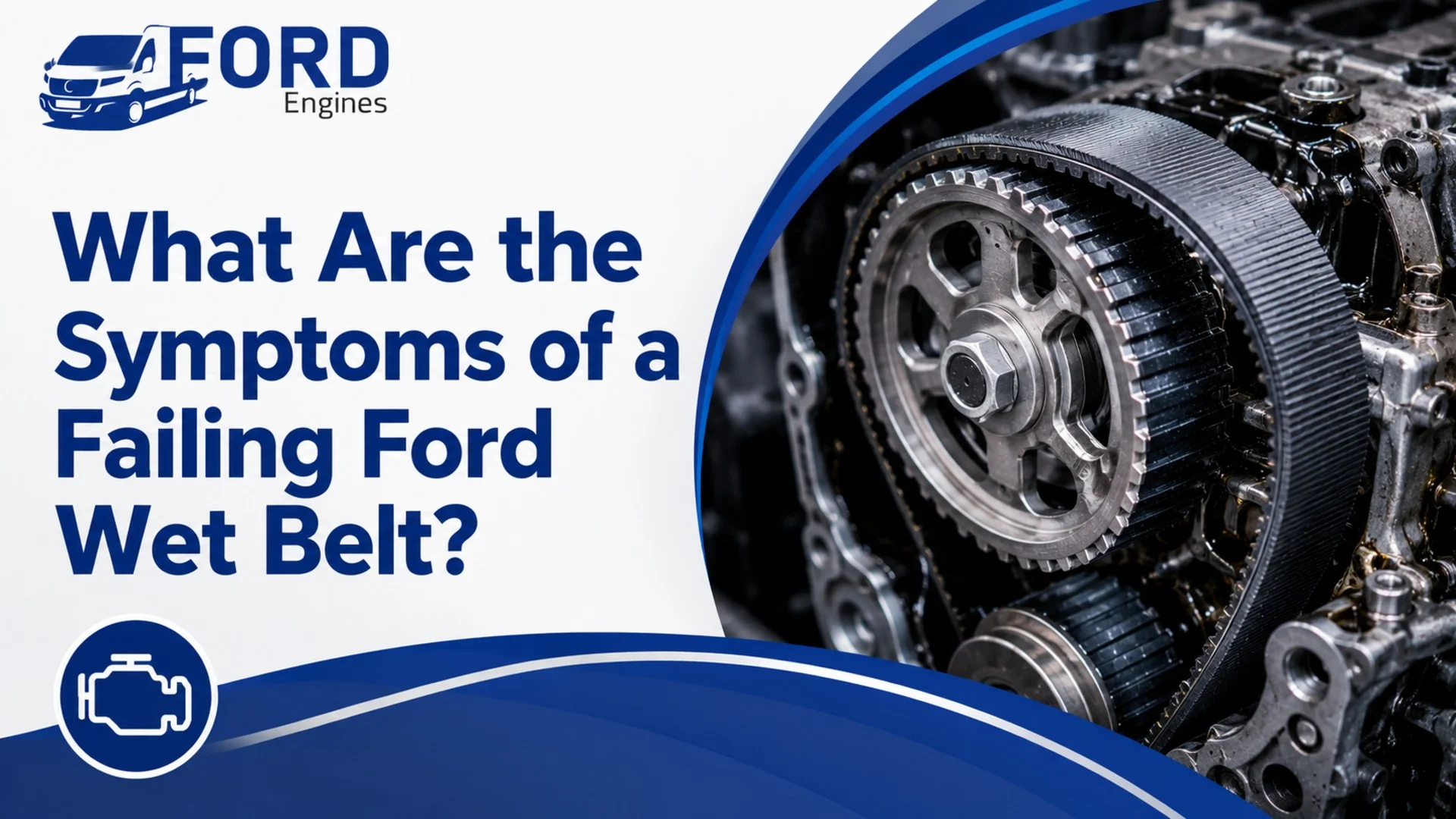
A wet belt, also called a belt-in-oil system, sits inside the engine and runs submerged in engine oil rather than out in the open like a traditional cambelt. Ford introduced this design on several EcoBoost and EcoBlue engines to reduce friction and improve efficiency. It works well when it's healthy. The problem is that the rubber compound the belt is made from wasn't built to survive indefinitely in an oil bath, and as it breaks down, it sheds material directly into your engine's lubrication system.
Here's what that degradation typically looks like from the driver's seat, roughly in the order symptoms tend to appear.
Low Oil Pressure Warning Light
This is the symptom that catches most owners off guard, and it's one of the clearest signs of wet belt problems. As the belt sheds rubber fibres and debris, that material travels through the oil system and can partially block the oil pickup strainer in the sump. Less oil reaches the pump, oil pressure drops, and the warning light appears, sometimes briefly on startup, sometimes staying lit under load. Never treat this light as a minor annoyance. Low oil pressure caused by a blocked pickup is one of the fastest routes to serious engine damage, because starved bearings and camshaft surfaces don't get a second warning before they fail.
Rattling or Ticking Noise on Cold Start
A worn or delaminating wet belt often produces a distinct rattle or ticking sound in the first few seconds after starting the engine, especially in colder weather when the oil is thicker and takes longer to circulate. It may disappear once the engine warms up, which is exactly why so many drivers ignore it. Don't. A noise that only shows up on cold start is frequently the earliest audible symptom of wet timing belt wear, appearing well before any dashboard warning.
Loss of Power Under Acceleration
If your Ford suddenly feels sluggish, hesitant, or noticeably down on power when you accelerate, a stretching or slipping wet belt can be the cause. As the belt loses tension or begins to skip on the pulleys, it disrupts the precise timing between the camshaft and crankshaft that the engine relies on. Even a small timing shift is enough to noticeably affect how the car drives.
Rough Idle or Engine Misfire
Timing that's even slightly out of sync can cause the engine to idle unevenly, shake at traffic lights, or misfire under load. This happens because the valves are no longer opening and closing exactly when the engine management system expects, throwing off the combustion process cylinder by cylinder.
Contaminated Oil or Rubber Debris in the Sump
This is the symptom mechanics find rather than drivers, but it's arguably the most telling one. During an oil change or inspection, black sludge, small rubber particles, or fibrous debris in the sump is a near-certain sign the wet belt is breaking down internally, even if the car is still driving normally.
How to Spot Rubber Debris in Engine Oil
- Check the oil colour and texture, healthy oil should be relatively clean and free-flowing; wet belt contamination often leaves it gritty or unusually dark
- Look at the dipstick or filler cap for small black flecks or fibrous strands clinging to the metal
- Ask your garage to inspect the oil filter and pickup strainer during any service, since debris tends to collect there before it's visible elsewhere
- Don't assume a normal-looking oil change means the belt is fine, early-stage degradation can be present without obvious contamination
Difficulty Starting or Random Stalling
Some owners report intermittent starting problems or the engine cutting out unexpectedly, particularly at low revs. This tends to happen when timing disruption becomes severe enough to affect combustion consistency, or when oil starvation has already caused wear elsewhere in the engine.
Limp Mode and Check Engine Light
When the engine control unit detects timing correlation faults, oil pressure irregularities, or misfire patterns, it will often trigger the check engine light and, in more advanced cases, put the car into limp mode, deliberately restricting power to protect the engine. If your Ford has gone into limp mode without an obvious cause, a wet belt check should be high on the list of things to rule out.
Ford Wet Belt Symptoms by Engine and Model
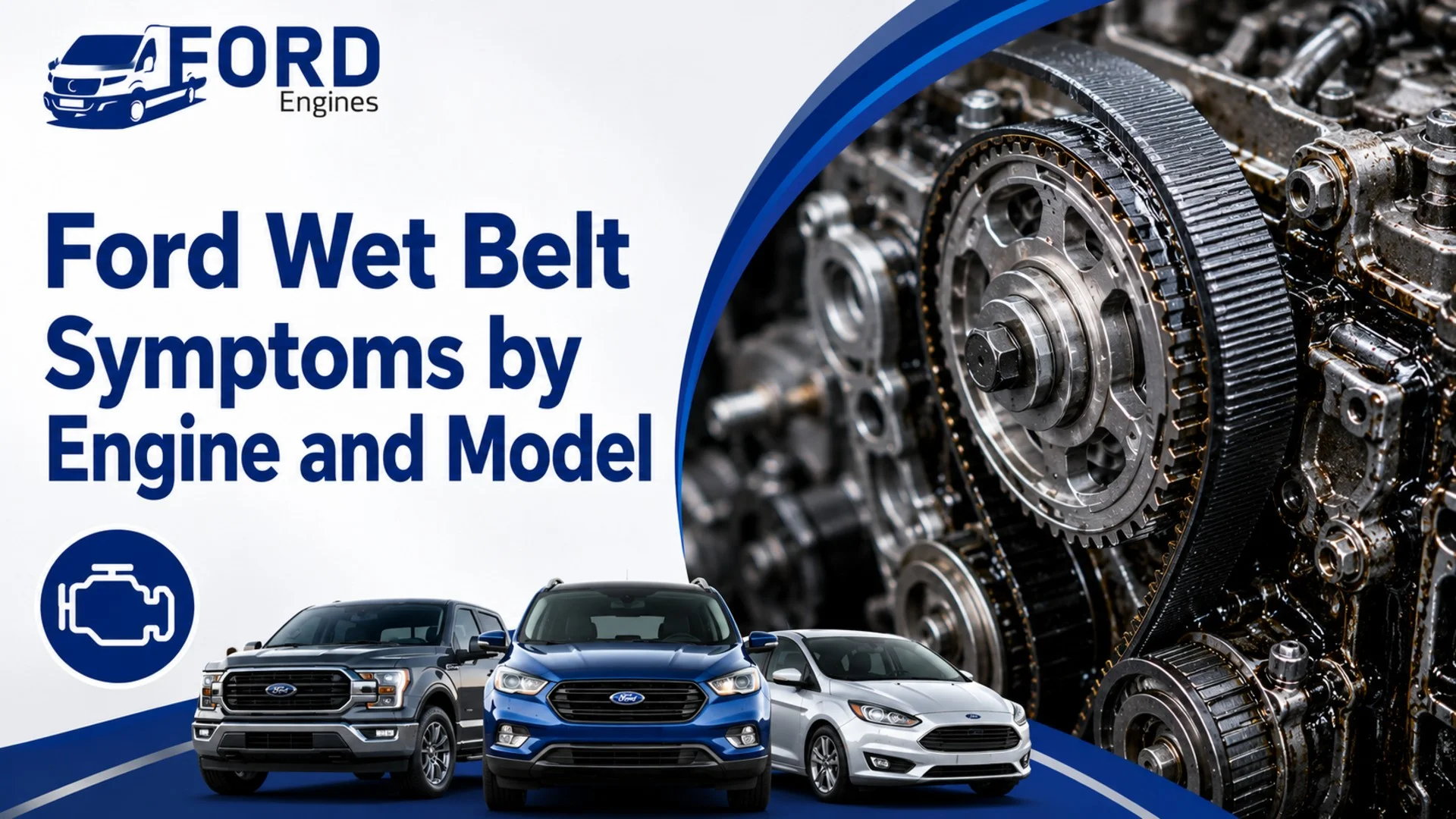
Not every Ford wet belt engine behaves identically, and treating them all the same misses an important distinction. Ford uses wet belts across two very different engine families, fitted to two very different sets of vehicles.
Ford 1.0 EcoBoost Wet Belt Symptoms (Fiesta, Focus, EcoSport, Puma)
The 1.0-litre EcoBoost is the engine most associated with wet belt problems in the UK, largely because of how widely it was fitted, Fiesta, Focus, EcoSport, and Puma have all used it. On this engine, symptoms tend to appear earlier than owners expect, sometimes well inside 60,000–70,000 miles if the car has had frequent short journeys, poor servicing, or the wrong oil specification used at some point in its history. Typical early warning signs on the 1.0 EcoBoost include a light cold-start rattle, a flickering oil pressure light, and a subtle drop in responsiveness that's easy to mistake for normal wear.
Ford EcoBlue Wet Belt Symptoms (Transit, Transit Custom, Ranger, Kuga, Mondeo)
The EcoBlue diesel engines, found in the Transit, Transit Custom, Ranger, Kuga, and Mondeo, also use a wet belt design, and given how many of these are commercial vehicles doing high daily mileage, the stakes of ignoring symptoms are often higher. A Transit doing multi-drop deliveries five days a week puts far more cumulative strain on the belt than a Fiesta doing the school run. Watch for the same core symptoms, low oil pressure warnings, unusual engine noise, loss of power, rough running, but treat them with extra urgency on a van or fleet vehicle, since downtime and towing costs stack up fast on top of any repair bill.
Why Do Ford Wet Belts Fail, and How Serious Is It?
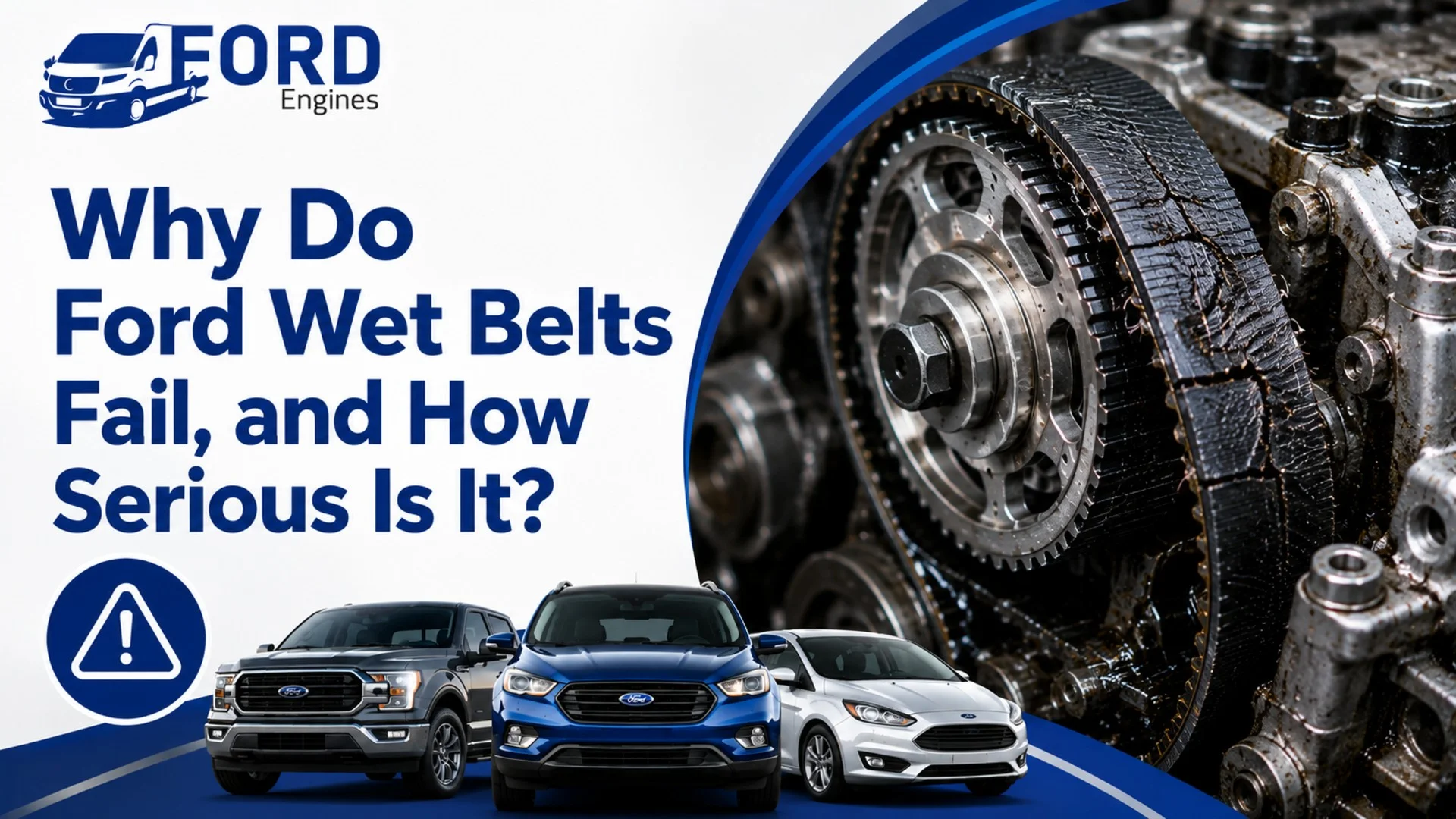
Understanding why wet belts fail helps explain why the symptoms matter so much. It isn't a random fault, it's a predictable chain reaction, and every stage makes the next one worse.
How Wet Belt Degradation Leads to Engine Damage
The wet belt is made from a rubber compound that sits permanently submerged in engine oil. Over time, and faster if the wrong oil is used, service intervals are stretched, or the car does mostly short trips that never let the oil reach full operating temperature, that rubber starts to break down at a molecular level. Small fibres and particles shed into the oil. Some of that debris circulates harmlessly for a while. Eventually, enough of it collects at the oil pickup strainer in the sump to restrict oil flow.
From there, the sequence typically runs like this: reduced oil flow leads to low oil pressure, low oil pressure leads to poor lubrication of the camshaft, crankshaft, bearings, and turbocharger, and inadequate lubrication under load leads to accelerated wear or sudden failure of those components. In the worst cases, the belt itself skips a tooth or snaps, timing is lost entirely, and valves collide with pistons, an outcome that usually means a replacement engine rather than a repair.
Symptom, Likely Cause and Risk Level at a Glance
Symptom | Likely Mechanism | Risk Level |
| Low oil pressure warning | Debris blocking the oil pickup strainer | Critical |
| Cold-start rattling or ticking | Belt or timing component wear | High |
| Loss of power under acceleration | Timing disruption or belt slip | High |
| Rough idle or misfire | Camshaft/crankshaft timing thrown out | High |
| Black debris or sludge in oil | Belt material breaking down | High |
| Sudden stalling or no-start | Severe timing or oil pressure fault | Critical |
| Engine seizure | Prolonged oil starvation | Critical |
How Is a Ford Wet Belt Diagnosed by a Specialist?
A proper diagnosis goes well beyond plugging in a code reader, though that's usually where it starts. A thorough inspection typically includes:
- A diagnostic scan to check for stored fault codes, particularly anything relating to timing correlation, misfires, or oil pressure
- An oil pressure test to confirm whether readings are within Ford's specified range at idle and under load
- Sump and oil filter inspection for rubber debris, fibres, or unusual sludge that indicates belt breakdown
- A visual condition assessment of the belt itself where access allows, checking for cracking, glazing, or fraying
- Service history review, since the correct oil specification and consistent service intervals are directly tied to how long a wet belt lasts
- Timing correlation checks, comparing camshaft and crankshaft position data to confirm the belt hasn't slipped
A specialist who's genuinely familiar with Ford wet belt engines will run through all of this before recommending replacement, rather than jumping straight to a quote based on symptoms alone.
Can a Failing Wet Belt Cause Low Oil Pressure or Engine Failure?
Yes, and it's the single most important thing to understand about this fault. Low oil pressure caused by wet belt debris isn't a side effect to monitor; it's often the first clear sign that the engine's lubrication system is already compromised. Left unaddressed, it progresses to bearing wear, camshaft damage, turbocharger failure from oil starvation, and in advanced cases, complete engine seizure. This is precisely why wet belt failures have such a poor reputation compared with traditional cambelt failures, the damage isn't confined to the belt and timing components, it spreads through the entire oil circuit.
What to Do If You Notice Ford Wet Belt Symptoms
Recognising the symptoms is only useful if you act on them. Here's what that actually looks like in practice.
Can You Still Drive a Car With a Failing Wet Belt?
Technically, often yes, for a while. Practically, it's a gamble that gets worse the longer you take it. A car showing early symptoms like a cold-start rattle might run for weeks or months without incident. But because wet belt failure is progressive and the point of complete failure is unpredictable, every mile driven with known symptoms increases the chance of being stranded, or turning a belt replacement into an engine rebuild. If you're seeing a low oil pressure warning specifically, treat that as a stop-and-check situation, not a drive-it-and-see one.
How Much Does Ford Wet Belt Replacement Cost?
Costs vary depending on the engine, the vehicle, and whether any secondary damage has already occurred, but replacing a wet belt proactively, before failure, is consistently far cheaper than repairing the fallout from a belt that's already let go. A straightforward wet belt replacement is a scheduled, planned job. An emergency repair following oil starvation or a snapped belt can mean replacing the oil pump, bearings, or in severe cases the entire engine, which multiplies the bill many times over. This gap in cost is exactly why early symptom recognition matters so much, the sooner it's caught, the smaller the invoice.
Frequently Asked Questions
What does a failing Ford wet belt sound like?
Most commonly, a light rattling or ticking noise on cold start that may fade once the engine warms up. As the fault progresses, this can develop into a more persistent rattle, whining, or grinding noise, particularly under load or during acceleration.
How often should a Ford wet belt be replaced?
This depends on the specific engine and Ford's guidance for that model, but many owners and specialists now recommend replacement earlier than the official interval, particularly on vehicles used mainly for short journeys or with an uncertain service history. If in doubt, an inspection will confirm the belt's actual condition rather than relying on mileage alone.
Can a wet belt fail without warning?
It's uncommon for a wet belt to fail with absolutely no warning signs at all, but it's entirely possible for those signs, a faint rattle, a brief warning light flicker, to go unnoticed or be dismissed until failure happens. This is why routine inspection matters more with wet belt engines than it did with traditional cambelts.
Should I replace a wet belt before it fails?
In almost every case, yes. Because failure can escalate quickly from a belt fault to widespread oil starvation damage, proactive replacement based on age, mileage, or early symptoms is significantly cheaper and lower-risk than waiting for a definitive failure.
Is an oil pressure warning light always a wet belt issue?
Not always, low oil level or a genuine oil pump fault can trigger the same light. But on a Ford with a known wet belt engine, it should always be one of the first things checked, given how directly belt debris affects oil pickup and pressure.
Get Ahead of Wet Belt Failure Before It Gets Expensive
A wet belt doesn't fail out of nowhere. It rattles, it flickers a warning light, it costs the engine a little of its power, and it leaves debris behind for anyone who knows to look for it. The symptoms are there, the only question is whether they're caught in time.
If your Ford, whether it's a Fiesta or Puma running a 1.0 EcoBoost, or a Transit or Ranger on EcoBlue power, is showing any of the signs covered here, don't wait for the check engine light to make the decision for you. An inspection now costs a fraction of what a neglected wet belt can cost later, and it's the only way to know for certain whether you're looking at routine maintenance or an urgent repair.
Book a Ford wet belt inspection with a specialist who understands these engines properly, and get a clear answer on where your car actually stands.