
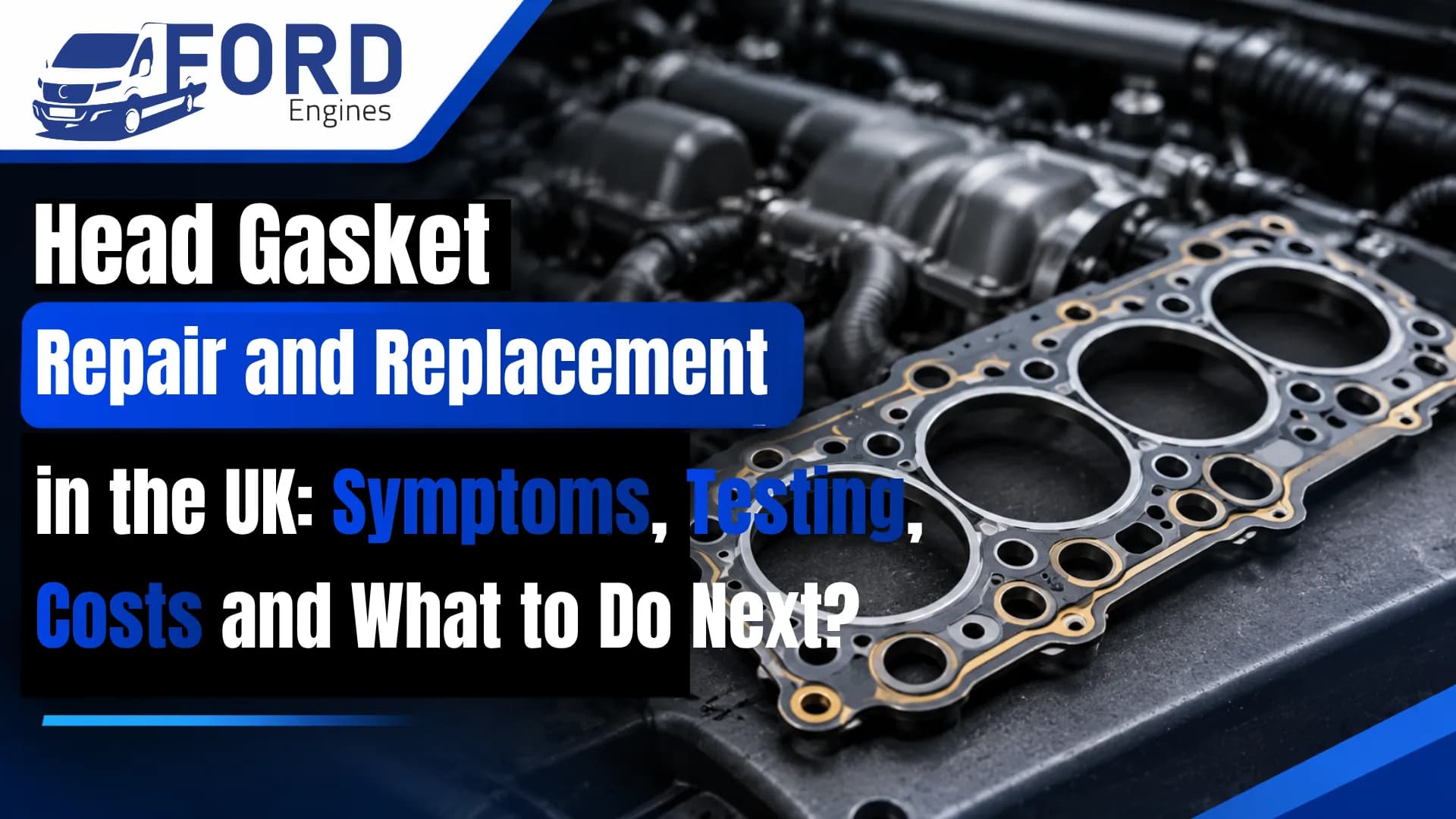
Your temperature gauge is creeping up. The coolant level keeps dropping, yet there is no puddle on the drive. Maybe there is white smoke at the exhaust that smells faintly sweet. If any of this sounds familiar, you are probably worried about one thing: the head gasket.
A head gasket is the seal that sits between the cylinder head and the engine block. It keeps combustion pressure inside the cylinders, stops engine oil and coolant from mixing, and holds the whole top end of the engine together as one sealed unit. When it fails, the damage can spread quickly.
This guide explains how to recognise a blown head gasket, how a garage confirms it, whether you can keep driving, and what a proper repair involves. If you would rather speak to someone now, the team at Ford Engines can inspect the car and talk you through your options.
What Is a Head Gasket, and How Do You Know If Yours Has Blown?
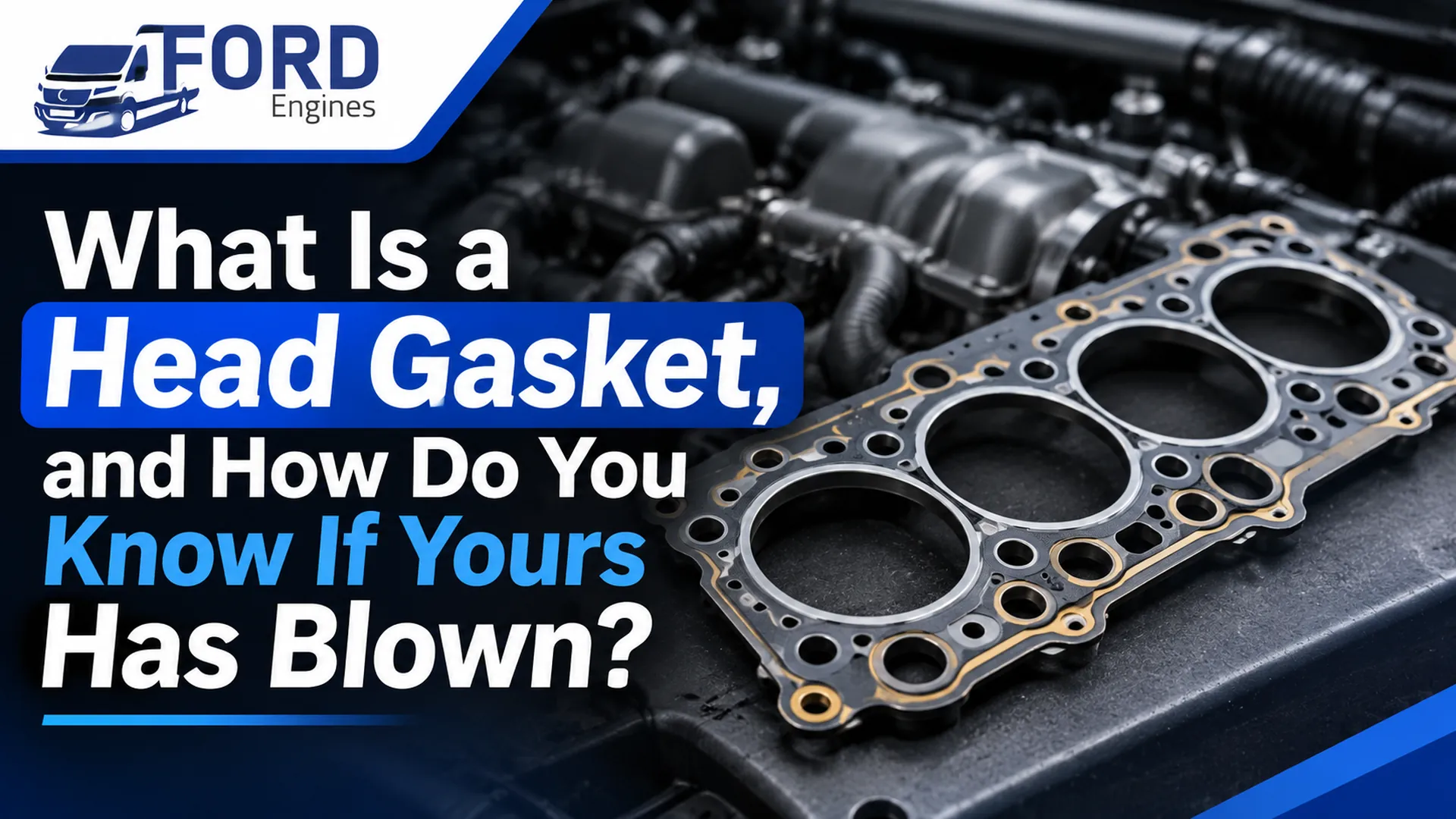
Think of the head gasket as the referee between three very different environments. On one side are the combustion chambers, where pressure and heat are extreme. On the other are the oil galleries and coolant passages, which must stay completely separate. The gasket is a thin layer, often multi-layer steel in modern engines, that has to cope with constant thermal expansion and contraction while keeping everything where it belongs.
When that seal breaks down, one of three things usually happens. Combustion gases escape into the cooling system, coolant leaks into the cylinders or the oil, or pressure leaks between neighbouring cylinders. Each leads to different warning signs, which is why a blown head gasket can look quite different from one car to the next.
What Are the Symptoms of a Blown Head Gasket?
The most common head gasket symptoms are listed below, with an explanation of what each one means.
- White smoke from the exhaust. Coolant is entering the combustion chamber and burning off as steam. The smoke is thick, persistent and often sweet-smelling. A thin wisp on a cold morning is normal condensation, so the key is whether it keeps going once the engine is warm.
- Engine overheating. Combustion gases pushing into the cooling system disrupt coolant circulation and create air pockets. The temperature gauge climbs even when the radiator and fan are working.
- Milky or creamy engine oil. Coolant mixing with engine oil creates a pale, mayonnaise-like sludge. Check under the oil filler cap and on the dipstick.
- Coolant disappearing with no visible leak. If the level keeps falling but the ground stays dry, the coolant may be going somewhere internal.
- Bubbling in the coolant reservoir. Constant bubbles with the engine running can mean exhaust gases are being forced into the coolant.
- Misfires and rough idle. Coolant on a spark plug or a loss of compression in one cylinder upsets the combustion process.
- Loss of power. When a cylinder cannot hold pressure, the engine simply makes less power.
- External leaks. Oil or coolant seeping from the joint between the head and block is a sign the seal is giving up.
One symptom on its own is rarely proof. Two or three together make a blown head gasket much more likely, and that is the point to stop driving and book a proper diagnosis.
Can You Have a Blown Head Gasket Without White Smoke or Overheating?
Yes. This catches many owners out, because the classic signs are not guaranteed.
If the gasket fails between two cylinders, you may only notice a rough idle and reduced power. If it fails along an oil passage, the first sign might be contaminated oil with no smoke at all. A small coolant leak into the combustion chamber may burn off so slowly that the exhaust looks normal, with the only clue being a coolant level that needs topping up every week or two.
Head gasket failure can also happen without a dramatic overheating event, particularly on engines with age, mileage, a history of poor cooling system maintenance or an earlier repair that was not done to the correct standard. If something feels wrong, trust the pattern rather than waiting for a textbook symptom.
Is It a Blown Head Gasket or a Cracked Cylinder Head, Radiator Leak or Faulty Thermostat?
Several faults mimic head gasket failure, and guessing wrong is expensive either way. This comparison shows how they differ.
Possible fault | What it looks like | How it differs from a blown head gasket |
| Blown head gasket | Overheating, coolant loss, white smoke, milky oil | Combustion gases or fluids cross between systems internally |
| Radiator or hose leak | Coolant loss, overheating | Coolant is usually visible externally, and there is no oil contamination |
| Faulty thermostat | Overheating or slow warm-up | The cooling system tests normally, with no gases in the coolant |
| Failed water pump | Overheating, coolant weeping near the pump | Often accompanied by noise or a leak at the pump housing |
| Oil cooler leak | Oil and coolant mixing | The leak is at the cooler, not inside the engine, and the combustion gas test is negative |
| Cracked cylinder head or engine block | Similar to a blown gasket, but the problem returns after a gasket repair | Needs pressure testing of the cylinder head and block to confirm |
| Condensation under the oil cap | A light, watery film | Common on short journeys, and the oil on the dipstick stays clean |
A cooling fault can also cause a blown head gasket, because sustained overheating is one of the main reasons gaskets fail. That is why a good garage checks the whole system rather than just replacing the gasket and sending you on your way.
How Do You Test for a Blown Head Gasket, and Can You Keep Driving?
Symptoms point you in a direction. Testing gives you the answer. Without it, you risk paying for a repair you do not need or missing the real fault.
How Do Mechanics Confirm Head Gasket Failure?
A professional head gasket diagnosis normally combines several checks, because each test has strengths and limits.
Combustion gas test. A block tester draws air from the coolant reservoir through a chemical fluid. If combustion gases are present, the fluid changes colour. It is a quick and reliable indicator that exhaust gases are entering the cooling system.
Cooling system pressure test. The system is pressurised and monitored. If pressure drops with no external leak, coolant is escaping internally. This test is useful, but it cannot tell you which cylinder or passage is affected.
Compression test. A gauge measures how well each cylinder holds pressure. A low reading in one cylinder, or in two neighbouring cylinders, suggests a breach in that area. A compression test shows that pressure is being lost, but it does not show where it is going.
Cylinder leak-down test. Compressed air is fed into each cylinder, and the technician listens and watches for where the air escapes. Air bubbling in the coolant points to the head gasket. Air at the oil filler suggests piston ring wear. Air at the exhaust or intake points to valves.
Oil and coolant inspection. Milky oil, oil droplets in the coolant reservoir and a sweet-smelling exhaust all help build the picture.
Cylinder head pressure test. Once the head is off the engine, it can be pressure tested for hairline cracks. This step matters because a cracked head will destroy a new gasket.
No single test tells the whole story. A garage that relies on one quick check may miss a cracked head or blame the gasket for a fault that lies elsewhere. If your car shows warning signs, a diagnostic appointment is a far better first step than a repair quote based on guesswork.
Can You Drive With a Blown Head Gasket, and What Happens If You Do?
The short answer is that it is not advisable. A blown head gasket will not necessarily stop the car on the spot, but every mile adds risk.
Here is a realistic scenario. A driver notices the temperature gauge rising on the motorway, tops up the coolant and carries on. The gasket leak worsens, coolant levels fall again and the engine overheats. The cylinder head warps from the heat. What might have been a straightforward gasket job now needs cylinder head skimming, and possibly a replacement head. In the worst cases, the engine block cracks or the bearings starve of lubrication, and the conversation turns to a rebuild or replacement engine.
Other risks of continued driving include:
- Coolant contaminating the engine oil, which reduces lubrication and accelerates wear
- Coolant entering the exhaust and damaging the catalytic converter, or the diesel particulate filter on diesel models
- Hydraulic lock, where liquid in a cylinder stops the piston from completing its stroke and bends internal components
- A failed MOT, since excessive smoke and emissions problems can lead to a fail
- Being stranded, which is rarely convenient or safe
If you must move the car a short distance, keep the engine as cool as possible, avoid hard acceleration and do not keep topping up and carrying on. The sensible move is to stop, get the car checked and make a decision with the facts in front of you.
How Much Does Head Gasket Replacement Cost in the UK, and Is It Worth Repairing?
Head gasket replacement cost in the UK varies widely, and anyone quoting a single fixed figure without seeing the car is not giving you the full picture. The work involves a lot of labour, because the cylinder head has to come off, be inspected, and then be refitted and timed correctly. How much that involves depends on the engine.
What Affects the Price, and What Should a Head Gasket Quote Include?
These are the main factors that shape head gasket repair cost UK drivers are quoted.
- Engine layout and access. A four-cylinder petrol engine is generally quicker to work on than a V6 or V8, or a heavily packaged turbocharged diesel where components must be moved out of the way.
- Labour hours. Dismantling, cleaning, reassembly and testing take time, and this is usually the largest part of the bill.
- Cylinder head skimming. If the head is no longer flat after overheating, it needs machining and resurfacing so the new gasket can seal properly.
- Head bolts. Many engines use stretch bolts that should be replaced rather than reused, and the correct torque sequence is essential.
- Timing belt or chain, and water pump. With the engine already stripped down, inspecting or replacing these can save you paying for the same labour twice.
- Fluids and consumables. New engine oil, coolant and a fresh filter are part of the job.
- Additional damage. A cracked head or damaged block changes the whole equation, and a good garage will tell you before going further.
When you compare quotes, ask direct questions. A quote is only useful if you know what it covers.
- Does it include cylinder head skimming if the head needs it?
- Are new head bolts and a full gasket set included?
- Will the timing belt or chain, and the water pump, be inspected or replaced?
- What warranty applies to the work?
- What happens if more damage is found once the head is off?
- Will the cooling system be tested and bled before the car is returned?
Is a Blown Head Gasket Worth Repairing?
For most cars, yes, provided the rest of the engine is sound. The decision usually comes down to three things.
First, the extent of the damage. A gasket that failed early, on an engine that has not run hot for long, is a very different job from one that failed after severe overheating. Second, the overall condition and value of the vehicle. If the car is otherwise in good order, repair is often more sensible than replacing it. Third, the alternatives. An engine rebuild or replacement unit may be better value when the block is damaged or the engine has deeper wear.
A quick guide to the options:
Situation | Usually the best route |
| Early failure, head is flat and uncracked | Head gasket replacement with new bolts |
| Head warped but repairable | Replacement plus cylinder head skimming |
| Cracked cylinder head | Replacement or repaired head, then new gasket |
| Block damage or heavy internal wear | Engine rebuild or replacement engine |
| Repeat failure after a previous repair | Full investigation of the cooling system and head condition |
A good garage will lay these options out honestly, including when not to repair.
Get a clear answer on your car. If you suspect a blown head gasket, Ford Engines can carry out a proper diagnosis and give you a written quote that explains exactly what is included. Contact the team to arrange an inspection and find out where your engine stands before the damage gets worse.
Frequently Asked Questions
What are the symptoms of a blown head gasket?
The most common signs are white exhaust smoke, engine overheating, milky oil, coolant loss with no visible leak, bubbles in the coolant reservoir, misfires and reduced power. Two or more together strongly suggest head gasket failure.
Can you drive with a blown head gasket?
It is not advisable. Continued driving can warp the cylinder head, contaminate the oil and cause serious engine damage that turns a manageable repair into a major one.
How do you test for a blown head gasket?
Garages combine a combustion gas test, a cooling system pressure test, a compression test and a cylinder leak-down test. Each shows a different part of the picture, so using more than one gives a reliable result.
What causes a head gasket to blow?
Overheating is the main cause. That can come from low coolant, a faulty thermostat, a failing water pump or a blocked radiator. Incorrect head bolt torque, a warped cylinder head and poor previous repairs also contribute.
Can a blown head gasket be repaired?
Yes. The standard fix is to remove the cylinder head, inspect and machine it if needed, then fit a new gasket and head bolts. Liquid sealants are sometimes sold as quick fixes, but they rarely give a lasting result.
How long does it take to replace a head gasket?
It depends on the engine, but it is a multi-day job in most cases, because of the dismantling, inspection, any machining and the testing afterwards. Your garage can give a realistic timeframe once they have seen the car.
Does a cylinder head always need skimming?
No. It needs skimming only if it has lost flatness, which is checked with a straight edge and feeler gauges. Heads that have overheated badly are the most likely to need it.
Can a head gasket fail again after replacement?
It can, usually when the root cause is not fixed. If a cooling fault, warped head or incorrect torque is left unaddressed, the new gasket faces the same stress. That is why a thorough diagnosis matters as much as the repair.
Can a car pass an MOT with a blown head gasket?
Possibly not. Excessive smoke or emissions problems linked to the fault can lead to a fail, and a car with a clear cooling or oil leak may also be flagged.
Final Thoughts
A blown head gasket is serious, but it does not have to be the end of the car. Acting early, getting an accurate diagnosis and choosing a repair that addresses the real cause can save the engine and a lot of money in the long run. Put off the decision and a gasket job can become a cylinder head job, or worse.
If your car is showing any of the warning signs above, do not wait for it to get worse. Contact Ford Engines to book a diagnostic inspection and get a clear, honest quote for your head gasket repair or replacement.