
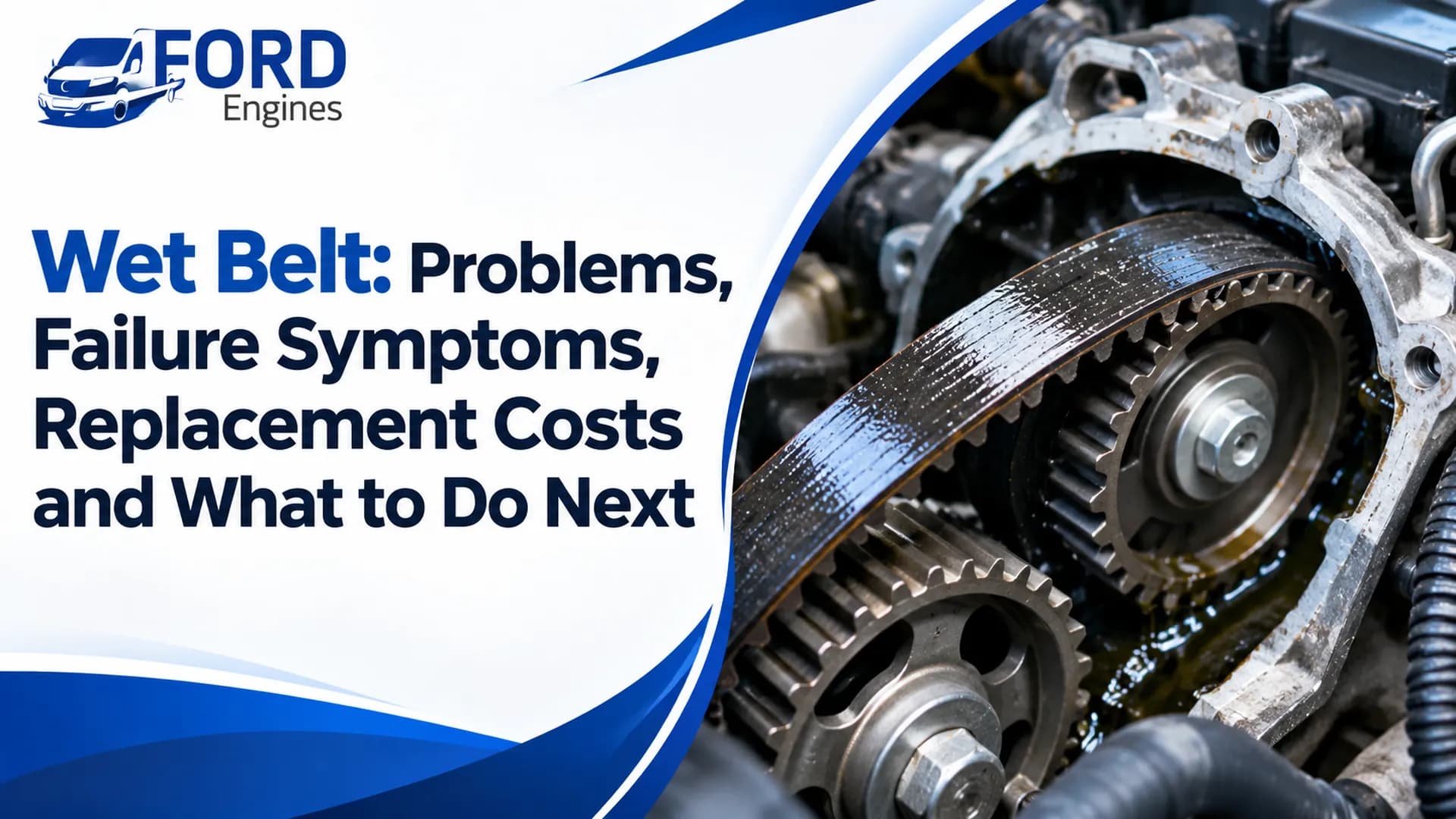
An oil pressure light flickers on. Or there's a faint rattle on a cold start that wasn't there last month. Or you're about to buy a used Fiesta and someone has just mentioned the words "wet belt" with a worried look.
If any of that sounds familiar, you're in the right place. A wet belt is a rubber belt that runs in engine oil, and on the engines that use one, its condition matters far more than most owners realise. Left alone, a deteriorating wet timing belt can shed debris into the oil, starve the engine of lubrication and turn a manageable job into an engine failure.
This guide covers how a wet belt works, how it fails, what replacement involves and when a belt job simply isn't enough. If you already suspect a problem, speak to a Ford engine specialist at FordEngines.co.uk. Send us your registration and we'll help you work out what you're dealing with.
The short version: a wet belt is a rubber timing belt or oil pump belt that runs inside the engine, bathed in oil. It can degrade, release rubber particles and block the oil pickup. Correct servicing, the right oil and timely inspection are what keep it healthy.
What Is a Wet Belt and Which Ford Engines Have One?
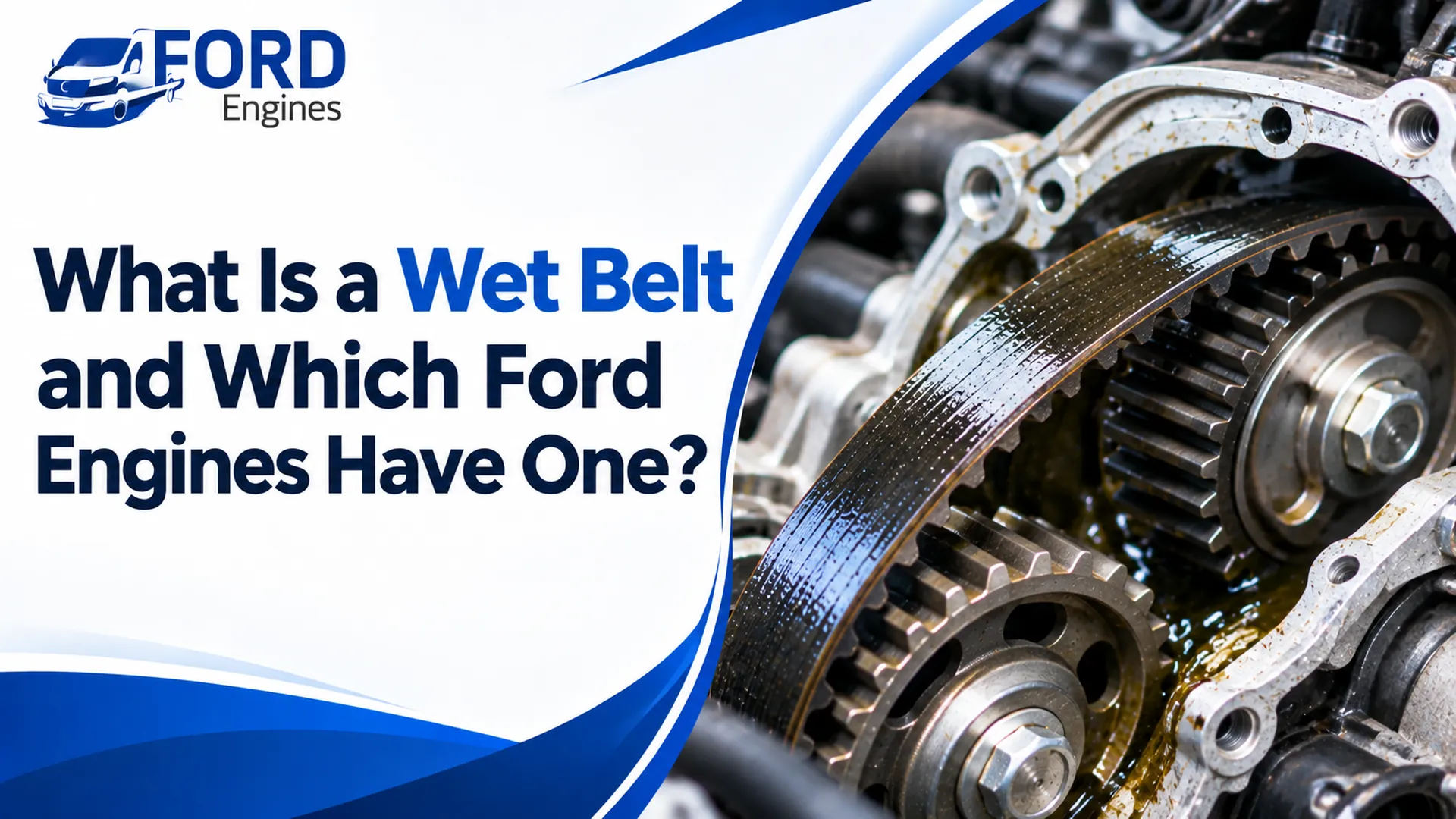
Most drivers have heard of a cambelt. Fewer know that some modern engines hide the belt inside the engine, where it runs in oil rather than in open air behind a plastic cover. Manufacturers adopted the design for good reasons: it can reduce friction, help with fuel economy and allow a compact, quiet engine. The trade-off is that the belt now shares its environment with engine oil, and that oil has to stay in good condition for the belt to survive.
How Does a Wet Timing Belt Work, and How Is It Different From an Oil Pump Belt?
A wet timing belt, sometimes called a wet cambelt, links the crankshaft to the camshaft. It keeps the valves opening and closing in step with the pistons. In a belt-in-oil system, the belt runs inside the engine, lubricated by the same oil that protects everything else.
An oil pump belt does a different job. It drives the oil pump, which pushes oil around the engine. Some engines use a wet belt for timing, some use a belt only for the oil pump, and some use both. A few engines with a timing chain still rely on a belt to drive the oil pump. Mixing these up is one of the most common mistakes in online advice, and it matters, because the replacement scope is different for each.
Here is how the three main systems compare.
System | Where it runs | What it drives | Main concern |
| Wet belt | Inside the engine, in oil | Camshaft timing and, in some designs, the oil pump | Rubber degradation and oil contamination |
| Dry cambelt | Outside the engine, behind a cover | Camshaft timing | Age and mileage wear |
| Timing chain | Inside the engine, in oil | Camshaft timing | Stretch and tensioner wear over time |
The common thread is lubrication. A dry cambelt that fails usually stops the engine suddenly. A wet belt that deteriorates can cause trouble more quietly, by compromising the oil that every moving part depends on.
Which Ford Engines Have a Wet Belt, and How Can You Check Yours?
This is where care matters. Not every Ford EcoBoost has a wet timing belt, and not every Ford with a wet belt has the same design. The version, production year and engine code all make a difference.
In broad terms, the engines most associated with wet belts in the Ford range include:
Engine family | Typical applications | What to know |
| 1.0 EcoBoost three-cylinder | Fiesta, Focus, Puma, EcoSport, B-Max, C-Max and others | Widely associated with belt-in-oil timing on applicable versions |
| 1.1 Ti-VCT | Fiesta | Confirm by engine code, as designs vary |
| 2.0 and 1.5 EcoBlue diesel | Transit, Transit Custom, Tourneo, Ranger and selected cars | Belt-in-oil systems on applicable versions, with some also using an oil pump belt |
| Larger EcoBoost petrol engines | Focus, Mondeo, Kuga, S-Max, Galaxy | Design varies by engine, so verify the exact unit |
Treat that table as a starting point and never as a final answer. Ford has revised parts, oil guidance and service advice over the years, and two cars with the same badge can carry different engines. Models such as the Ford Fiesta, Focus and Puma each span several engine options, so the model name alone tells you very little.
Other manufacturers use belt-in-oil designs too. The PSA group's PureTech engines, found in Peugeot, Citroën, Vauxhall and DS models, are well known examples, and Honda's 1.0 VTEC Turbo and selected Volkswagen group engines also feature in discussions about wet belts. Each case depends on the exact engine, so check before you assume.
Here is how to find out what your car has:
- Registration number. This is the quickest way for us to match your vehicle to its likely engine.
- VIN. It shows how the car was built, and it's on your V5C document and at the base of the windscreen.
- Engine code. Stamped on the engine and often listed in your service paperwork.
- Service history. Look for references to a belt, oil pump belt or specific oil specification.
- Handbook and manufacturer schedule. These show whether a belt inspection or replacement is recommended for your engine.
If you'd rather not guess, send us your registration and we'll confirm your engine before you spend anything.
What Are the Signs of Wet Belt Failure, and Can It Damage Your Engine?
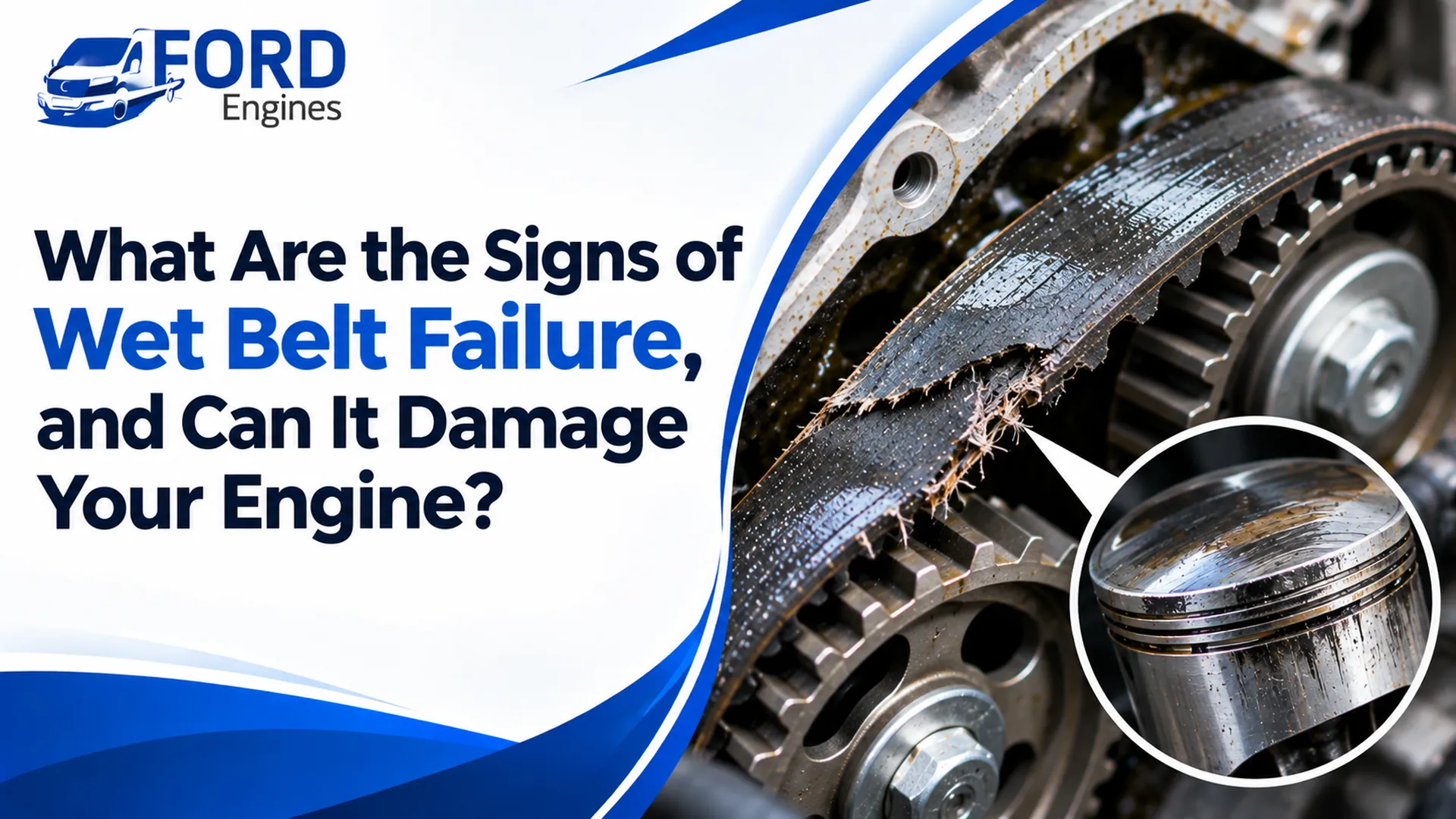
Yes, it can. The frustrating part is that wet belt trouble can build quietly. Some cars give clear warnings. Others give very little until the damage is done. That's why knowing the signs, and acting early, is worth more than any amount of reassurance from a clean service record.
What Are the First Warning Signs of a Failing Wet Belt?
Watch for any of these symptoms:
- Oil pressure warning light. The most serious sign. It can mean the oil pickup is restricted or the pump isn't delivering enough oil.
- Engine management light. A fault code relating to timing or engine performance can point towards belt trouble.
- Rattling or unusual noise on a cold start. Timing irregularities or lubrication problems can show up as noise first thing in the morning.
- Rough idling or misfiring. If the timing is slipping, the engine may run unevenly.
- Loss of power or hesitation. The engine may feel flat, particularly under load.
- Rubber debris in the oil. Small dark particles or a gritty texture in the oil on the dipstick or filler cap are a serious red flag.
One honest caveat: a wet belt can deteriorate with few obvious symptoms, and a full service history doesn't guarantee safety. Some owners do everything right and still find a belt in poor condition. Others find nothing wrong at the same age. The only way to know is to inspect it.
A safety note. If the oil pressure light comes on while you're driving, stop as soon as it's safe to do so. Don't carry on to see how far you get. Continuing to drive with low oil pressure is one of the quickest ways to turn a repairable problem into a failed engine.
How Does Wet Belt Deterioration Lead to Engine Failure?
The failure chain is worth understanding, because it explains why a rubber belt can threaten an entire engine. It usually unfolds like this:
- The belt begins to degrade. The rubber cracks, wears or starts to break up.
- Rubber particles enter the engine oil. Fragments circulate through the lubrication system.
- The oil pickup strainer begins to block. Debris gathers on the strainer at the start of the oil circuit.
- Oil pressure drops. The pump can no longer draw enough oil.
- Oil starvation sets in. Components that depend on a constant oil supply stop getting it.
- Internal damage follows. Main bearings, big-end bearings and the turbocharger are all vulnerable, and in severe cases the engine seizes.
Several things speed this process up. Using oil that doesn't meet the manufacturer's specification can accelerate belt wear. So can delayed oil and filter changes, a build-up of sludge, excessive engine heat and a driving pattern dominated by short journeys, where the engine rarely reaches a stable operating temperature.
None of this means every wet belt fails early. Plenty last well. But the engines that do run into trouble often show the same pattern, which is why correct servicing and inspection carry so much weight.
Is It Worth Repairing the Engine, or Do You Need a Replacement After Wet Belt Failure?
It depends entirely on what the belt has taken with it. If the belt has been caught early, with no debris reaching the oil pickup and no loss of oil pressure, a replacement belt kit may be all you need. Once debris has circulated, the picture changes.
Here is a simple way to think about the options:
Situation | Likely route |
| Belt worn but no contamination found | Belt replacement, with inspection |
| Debris in the sump and pickup, no internal damage | Belt replacement plus sump and pickup cleaning |
| Bearing or oil pump damage | Engine rebuild or replacement |
| Turbocharger or widespread internal damage | Reconditioned or used replacement engine |
| Engine seized | Replacement engine in most cases |
Imagine a Fiesta that comes in with an oil pressure warning and a faint rattle. If the belt and pickup are checked promptly and the bearings are unharmed, a thorough belt job may solve it. Imagine the same car after weeks of driving with the light on. The better answer may be a tested used or reconditioned Ford engine, fitted with the belt and lubrication system properly dealt with from the start.
When damage goes beyond a belt, a replacement engine is often the more practical and dependable route. If that's where you've landed, get expert advice about wet belt failure and ask us about a replacement engine matched to your car's code and specification.
How Much Does Wet Belt Replacement Cost, and When Should You Do It?
No two jobs are identical, so every wet belt replacement is quoted individually. What matters more than a headline number is understanding what sits behind a quote, so you can judge whether a quote is complete or hides gaps that appear later.
What Affects the Cost of a Wet Belt Replacement in the UK?
Several factors shape the final cost of a wet belt replacement:
- Engine type. Some engines need far more dismantling than others to reach the belt.
- Belt kit contents. A full kit with tensioners, seals and fixings is a different proposition from a belt alone.
- Labour time. Access to the belt, and any extra work found along the way, affects how long the job takes.
- Oil and filter. The correct manufacturer-approved oil should be used when the engine is refilled.
- Sump and pickup cleaning. Where debris is found, cleaning is essential rather than optional.
- Oil pump belt. Some engines use a second belt, and it should be considered at the same time.
- Any damage discovered. If inspection reveals wear or contamination, the scope may expand.
A good quote will itemise these elements so you can compare suppliers properly. Be cautious about a low figure that excludes sump cleaning, oil or the oil pump belt, because the missing items tend to reappear later.
Here is what a thorough replacement typically involves:
- Confirm the engine code and check compatibility with the correct kit.
- Inspect the belt condition and look for signs of wear or contamination.
- Drain the engine oil.
- Remove the necessary components to reach the belt.
- Remove the existing belt and inspect the tensioner and sprockets.
- Check the oil pump and pickup strainer for debris.
- Clean the sump where required.
- Fit the new belt kit and set the timing carefully.
- Replace seals and gaskets as needed.
- Refill with approved oil and test oil pressure before the car is returned.
When should it be done? There's no single answer. Replacement intervals depend on the engine, the age of the car, its mileage and the manufacturer's current guidance. Some manufacturers have revised their recommendations over time, so an old forum post or a neighbour's advice isn't a safe guide. Check your manufacturer's service schedule for your exact engine, and ask a specialist to inspect the belt if you're unsure or you've just bought the car.
Regular, correct maintenance is the best protection you have. Use the specified oil, change it on time, avoid stretching service intervals and keep records. If you drive mainly short distances, tell your garage, because that pattern can age oil faster than a long motorway commute.
Thinking of buying a used car with a wet belt engine? It's not a reason to walk away, but it's a reason to ask questions. Check the service history for oil changes and any belt work, ask which engine it carries, and have the belt and oil condition inspected before you commit. A car with a documented, recent belt replacement is a very different proposition from one with gaps in its history.
Ready to see where your car stands? Request a wet belt quote and we'll set out what's included, so you can compare it with confidence.
Who Should You Contact About a Wet Belt Problem, and What Happens Next?
Choose someone who knows Ford engines, understands the difference between a wet timing belt and an oil pump belt, and is willing to look at the whole lubrication system rather than only the belt. A specialist should be as honest about when a belt job is enough as about when it isn't.
What Should You Ask a Wet Belt Specialist Before You Book?
Before you hand over the keys, put these questions to any garage or specialist:
- Will you confirm the exact engine code first? The wrong kit is a costly mistake.
- Will you inspect the belt before replacing it? Inspection tells you whether debris has already entered the oil.
- Do you clean the sump and oil pickup? On engines where it matters, skipping this risks repeating the problem.
- What kit quality do you use? Ask what's in it and who makes it.
- Which oil will you use? It should meet the manufacturer's specification for your engine.
- Do you test oil pressure afterwards? This is a sensible final check.
- What warranty applies to parts and labour? Get the terms in writing.
- Is the quote itemised? You should see what's included and what isn't.
A specialist who answers these plainly is a good sign. One who dodges them is worth avoiding.
What happens next if you contact us? The process is straightforward. You send your registration and a few details about the symptoms. We confirm your engine and advise whether a wet belt inspection, a replacement or a replacement engine is the right route. You then receive a clear quote, and we agree the next step with you. If the engine has already suffered damage, we can also discuss reconditioned and used Ford engines, supplied with warranty cover and, where you want it, fitted.
Frequently Asked Questions About Wet Belts
How long does a wet belt last?
There's no single figure. Lifespan depends on the engine design, the oil used, how well the car has been maintained and how it's driven. Follow the manufacturer's schedule for your exact engine, and have the belt inspected if you're unsure.
Can you drive with a failing wet belt?
It isn't worth the risk. A deteriorating belt can release debris that restricts oil flow, and driving on can turn a repairable fault into engine damage. If the oil pressure light comes on, stop and get the car checked.
Can a wet belt fail without warning?
Yes, it can. Some belts show symptoms first, while others deteriorate with few clear signs. That's why inspection matters as much as watching for symptoms.
Is wet belt replacement covered under warranty?
It depends on the manufacturer, the age of the car, its service history and the warranty terms. Some owners have had success asking about goodwill support, so it's worth raising with the dealer. Always get the answer in writing.
Can regular oil changes prevent wet belt failure?
They help a great deal, especially when you use the correct oil specification. But they can't guarantee a belt will never fail. Regular changes lower the risk; they don't remove it.
Does the Ford Fiesta, Focus or Puma have a wet belt?
Many versions of these cars use the 1.0 EcoBoost, which is widely associated with a belt-in-oil design on applicable versions. But engine choices vary by model year, so confirm using your registration, VIN and engine code.
Can a wet belt damage the turbocharger?
It can, indirectly. If debris restricts oil flow or oil pressure falls, the turbocharger can be starved of lubrication. That's one reason wet belt trouble can become an expensive problem if it's ignored.
Can a wet belt be replaced without replacing the engine?
Yes, provided the engine hasn't been damaged. If inspection shows clean oil, a clear pickup and healthy oil pressure, a belt replacement may be enough. If bearings, the oil pump or the turbo have been harmed, a rebuild or replacement engine is usually the better route.
What is the difference between a wet belt and a timing chain?
A wet belt is a rubber belt running in oil. A timing chain is a metal chain, also lubricated by engine oil. Chains generally tolerate wear differently, but they have their own concerns, such as stretch and tensioner wear. Neither is automatically better, and the right choice depends on the engine design.
Can you replace a wet belt yourself?
It's rarely a sensible home job. Access is difficult, timing must be set precisely and mistakes can destroy an engine. A specialist with the right tools and procedure is the safer choice.
Wet Belt Trouble Doesn't Have to End Your Engine
A wet belt is a clever design with one real weakness: it depends on clean oil and correct servicing. Catch the problem early, and a careful inspection and replacement can protect your engine for years. Leave it too long, and rubber debris, oil starvation and internal damage can turn a modest job into an engine replacement.
FordEngines.co.uk helps UK owners at every stage. That includes confirming whether your car has a wet belt, advising on inspection and replacement, and supplying tested used and reconditioned Ford engines when the damage goes beyond a belt. Send us your registration, tell us what you're noticing, and we'll give you straight advice on the right next step. Request your wet belt quote today, or speak to a Ford engine specialist about your car.